
Jump To Section

Learn From The Pro's
There is no universal color that repels all bugs, although certain species are attracted to certain hues. But just because you can’t fight insects with the power of palettes, you can deter them in other ways. Keeping them away from your yard helps keep them out of your home.
What Color Repels Bugs?
Bug species are distinct from each other, with each species having its own unique traits, tastes, and behaviors, even when it comes to color. Just as a New York Jets fan may favor green and white, bugs are attracted to certain hues and throw shade at other shades. The latter is most relevant to those trying to actively avoid pests; knowing what color repels bugs is one of the simplest ways to deter their presence.
Mosquitoes are especially frustrating fliers, not only because of their persistence on warm summer evenings, but because they bite and spread disease (in people and pets). While you can employ a “swat” team to get rid of them, you might reduce their presence by wearing light colors; these lack contrast and make it harder for mosquitoes to identify hosts. They also tend to ignore green, purple, and blue, as they blend into the background. They favor red, orange, cyan, and black instead, because human skin reflects in the red-orange spectrum.
Flies don’t like yellow, greenish-yellowish, silver, or light grey, as they’re too reflective and tend to confuse them. They prefer dark colors, especially brown, deep navy, and black; dark tones resemble food and the contrast found on horses, cattle, and other livestock. They also like blue; studies suggest that they’re three times more attracted to blue than yellow (yellow is often used in fly control devices).
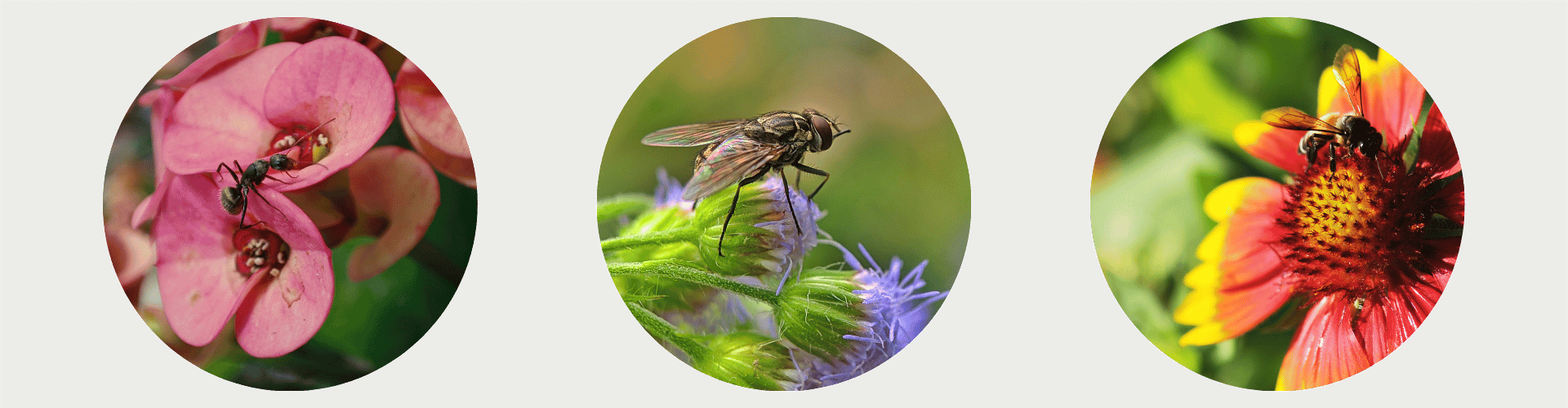
Some ant species have color vision and favor bright and vibrant colors over dull ones; they don’t like sage green and earth tones, preferring floral-like colors, such as pink, yellow, and orange, that resemble food sources. However, the color spectrum plays a minor role in ant behavior; they follow pheromone trails more than any hue-focused highway.
Roaches are nocturnal and photophobic, which means they are extremely sensitive to light and avoid bright colors, like ivory, white, and yellow. They might not consciously choose one color over the other, but their survival instincts direct them toward dark colors where they can blend in, hide, and lurk in the shadows.
Wasps aren’t repelled by any color, but they can’t see red, and they’re uninterested in bland earth tones (like khaki, tan, or deep gray). Both light and dark colors can attract them but for different reasons. Dark colors make people look threatening, like badgers, bears, or birds, which puts wasps on the defensive and ups the odds of an attack. Bright colors (with flowerish tones) make people look appetizing, increasing wasps’ interest. Wasps are especially drawn to Hawaiian shirts with vivid floral patterns.
So, what color deters bugs? There’s no clear answer; it just depends on which insect you’re trying to avoid.

Common Bug Deterrents
Tones might not fully tame bugs, even if you carefully choose your wardrobe. So, what are the other ways to keep bugs from bothering you during deckside dinners, time outside, or indoors?
When spending time in the great outdoors, you can help deter bugs by wearing EPA-approved insect repellent (especially during mosquito season). If wearing the repellent on your skin feels filmy, or you don’t want direct contact with chemicals, spray the repellent on your clothes or on the cushions of outdoor furniture. Infused candles or torches act as deterrents as well, as several insects don’t like the scent of citronella or essential oils. Many insects don’t like smoke and find heat and air movement disruptive.
Running outdoor fans may prove especially effective in warding off insects that are weak fliers, including mosquitoes, gnats, midges, leafhoppers, and flying ants. Keeping gutters clear is important as well, as clogged gutters build up moisture, attracting a slew of pests (most annoyingly, mosquitoes). In fact, anything with water, from bird baths to pet bowls, lures everything from mosquitoes, cockroaches, termites, springtails, and millipedes to roly-polys, silverfish, earwigs, and ants. Thus, removing moisture removes your property’s appeal as a pest paradise.
Cutting back vegetation prevents insects from using your trees and bushes as a hideout, as does keeping the yard free of debris, clutter, and firewood (if you store firewood, store it away from your deck, on the side of the home, or in a shed). Replacing outdoor lighting with bug bulbs, which are designed to emit warm yellow or amber-colored light (rather than white or blue tones), also creates wavelengths that bugs are less attracted to.
Why Bugs Bug You
If you’re wondering what color repels bugs, it’s probably because bugs bug you. You’re certainly not alone in your disgust: people are, at least in part, evolutionarily programmed to be startled, afraid, and turned off by creepy crawlers and freaky fliers.
There are several reasons for this repulsion, including invasion of personal space, surprise encounters, hygiene concerns, cultural conditioning, and bad experiences (being stung, bitten, or crawled upon). Bugs also spread disease, which doesn’t do their reputation any favors, and many are gross-looking, making us fearful of their ickiness.
Bugs also bug people because of their unpredictability; they don’t know if the spider crawling on their bedroom wall is going to crawl in their mouth when asleep, they don’t know if the wasp flying around the back porch is going to get a bee in its bonnet and sting, and they don’t know if the roach in their kitchen cabinet is going to contaminate the dinner plates.
Bugs are also unpredictable in how dangerous they are. Spiders, for instance, may or may not be venomous, something that’s hard to tell just by sight. Ticks may or may not harbor Lyme disease. And mosquitoes may or may not have West Nile. For an unidentifiable bug, it’s impossible to know if it will bite, spread disease, or cause allergic reactions, and fearing the unknown is very human.
Keeping Bugs at Bay
You can reduce the odds of insects entering your home by sealing cracks and gaps, repairing tattered window screens, keeping food sealed and cleaning up crumbs and spills quickly and completely, taking out the trash regularly and storing it with the lid on tightly, and repairing leaky pipes, which offer a water source.
If you see bugs several times a day, see them in groups, or otherwise suspect an infestation, acting as fast as possible is the best way to keep bugs at bay. Many species reproduce at extraordinarily rapid rates: Wasp colonies can double every few weeks, a few houseflies can multiply into the hundreds in a month, cockroach populations can triple every four or so weeks, and a termite infestation can soar into the hundreds of thousands in a few years.

We Banish the Bugs
At Kapture, we banish bugs of all kinds . . . houseflies, roaches, wasps, mosquitoes, and more. Using eco-friendly, fast-acting, and family- and pet-safe solutions, we work quickly to treat homes and businesses. Our custom plans, preventative maintenance, and same-day appointments help protect your property today and well into the future.