Jump To Section

Learn From The Pro's
New Jersey is home to more than 20 native snake species. While many of these snakes are harmless, they’re not something you want slithering around your property. The easiest way to repel them is to deter their prey; a pest-free property isn’t inviting to reptiles and encourages them to go elsewhere.
Snake Repellent to Keep Away Slimy Slitherers
There are many types of snake repellent on the market. They’re often sold as sprays and applied to yards, sheds, foundations, gardens, and barns. They tend to use strong-smelling solutions full of odors that snakes don’t like. These include essential oils and sulfur (which often smells like rotten eggs).
Physical barriers, such as fine-mesh fencing, can also act as a snake deterrent, as can habit modification. Revamping your yard to remove natural hiding places (such as brush, debris, tall grasses, and wood piles) might encourage snakes to slither past your property toward areas that give them more shelter.
Homemade repellents are used, but their effectiveness is more anecdotal than evidence-based. Nonetheless, some homeowners swear by ammonia or vinegar; some even use fox urine. This can be purchased online; you don’t need to ask any woodland creatures for samples.
Even with the above, perhaps nothing deters snakes more than keeping your property pest-free. Because snakes feed on mice, rats, and insects, any home with an abundance of these critters, creatures, and crawlies is sure to attract a snake or two.
Signs of Snakes on Your Property
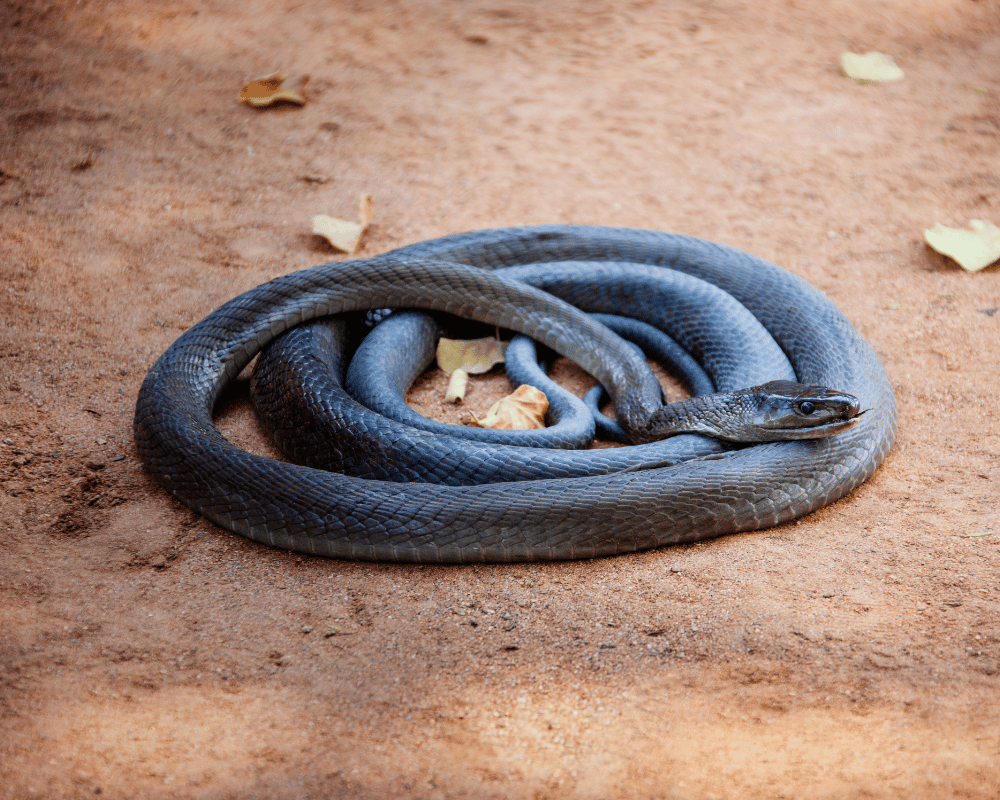
Snakes on your deck or in your garden shed aren’t as exciting as snakes on a plane, but they’re certainly enough to get your heart pumping. From poking out their heads as you’re pulling weeds to shimmying across your driveway, they have a way of eliciting fear even in those who aren’t especially snake-phobic. The reason is obvious; no one wants snakes in their yards or homes, even when they regard them as cute in a kind of warm, wormy way.
So, how do you know if you need snake repellent? Seeing snakes frequently is the clearest sign of their presence, but it’s not the only one. Other signs include shed snake skins as snakes periodically shed their skin in (fittingly) sheds, basements, garages, and other sheltered areas, snake droppings (which look dark with chalky-white portions), and slither tracks (winding, S-shaped patterns in soil, dirt, sand, and other soft surfaces). You might also hear rustling in their go-to hiding places, including beneath porches and in firewood piles, tall grasses, and gardens.
Even if snakes are present, they come with some good news: snakes are solitary, and true infestations, where tons of snakes invade in large numbers, as with roaches, ants, or rodents, are highly unlikely. This isn’t to say you can’t have more than one at a time: some species gather together to survive cold weather, usually shacking up in dens, rock crevices, and burrows.
Mating season also invites more snake activity, as does a beneficial habitat. In other words, if your yard is full of good hiding places, shelter, and abundant food sources, you might attract several snakes at once. A true overtaking, however, usually only happens in Hollywood’s imagination.
Common Snakes Found in New Jersey
New Jersey is home to plenty of snakes, with more than 20 documented native species. Most of these are nonvenomous; while even the nonvenomous ones can bite, they don’t infect you the way rattlers and copperheads do. Dangerous or not, snakes have legal protections, and you’re not allowed to kill, injure, harass, or capture them and keep them as pets. That’s why snake repellent can be appealing.
Some of the snakes you’re more likely to encounter include:
Garter snakes: These are docile snakes found in yards, gardens, fields, and forests. Although harmless, they sometimes resemble more dangerous snakes (such as baby rattlesnakes).
Northern water snakes: True to their name, water snakes frequent bodies of water, such as ponds, streams, lakes, and marshes. They’re not venomous, but can easily be confused with scarier slitherers.
Eastern rat snakes: Rat snakes are big and, terrifyingly, exceptional climbers. They can climb everything from trees and brick walls to poles, siding, and sheds; they can even successfully climb nearly vertical surfaces. Despite this visual, rat snakes aren’t dangerous to people. They are dangerous to rats, feeding heavily on rodent populations.
Eastern copperheads: One of New Jersey’s most feared and venomous snakes, copperheads are mainly found in the northern part of the state. They’re not usually aggressive, but they will bite in self-defense, and their camouflage makes accidental encounters common. These venomous bites are rarely fatal with proper medical attention, which is why any suspected bite should always be treated as an emergency. Older adults, children, and those with underlying medical conditions are at the highest risk of serious reactions.
Timber rattlesnakes: Rattlesnakes are also venomous, but they are uncommon on residential properties. They’re most likely to be found in rocky and forested hillsides and swampy wilderness areas. They don’t go out of their way to bite, but they might if they feel threatened, sometimes warning you with a rattle beforehand. Pets are more likely to get bitten than people; while humans give rattlers space, dogs and cats let curiosity get the best of them.
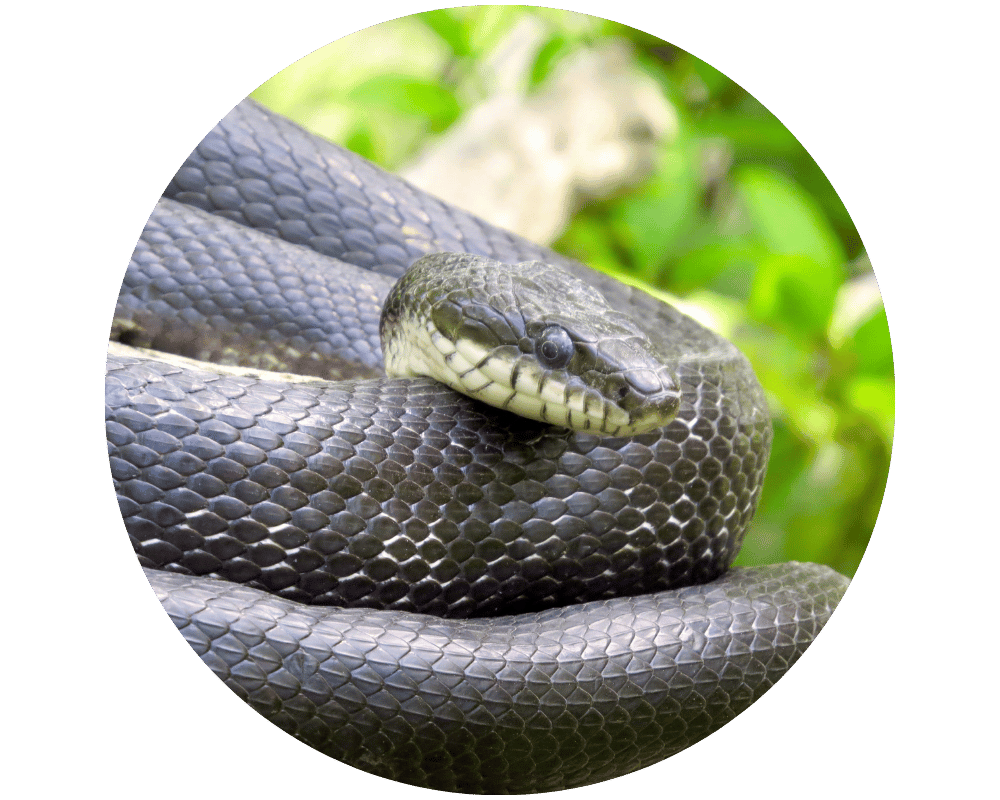
Eastern Rat Snake
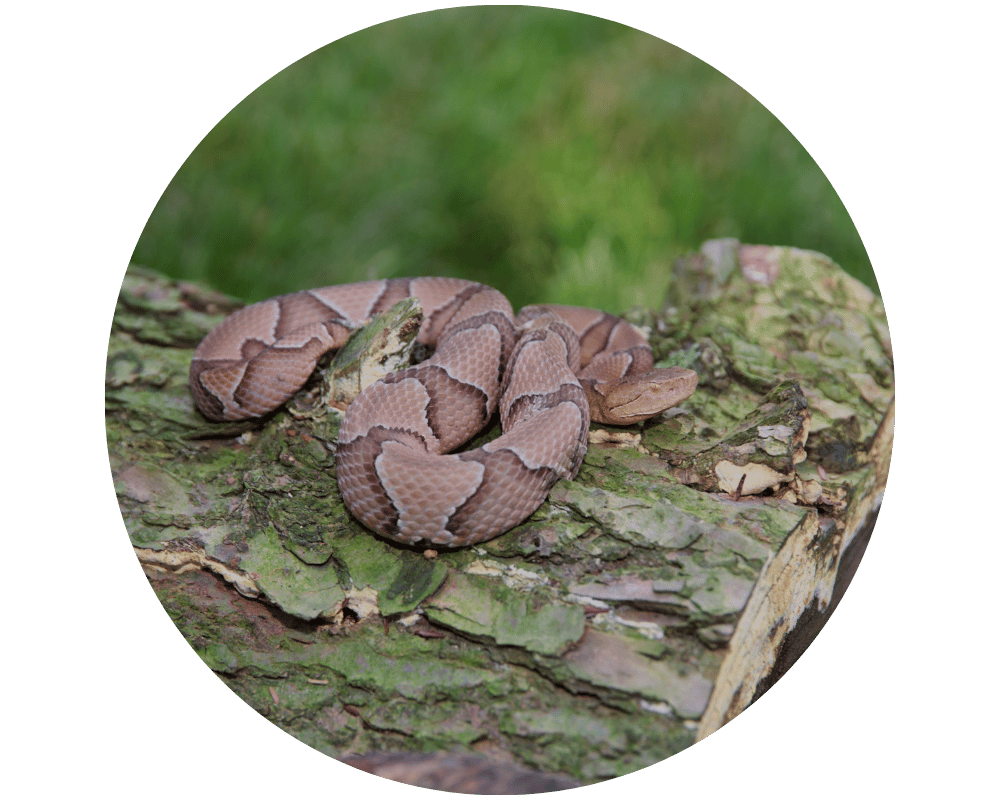
Eastern Copperhead
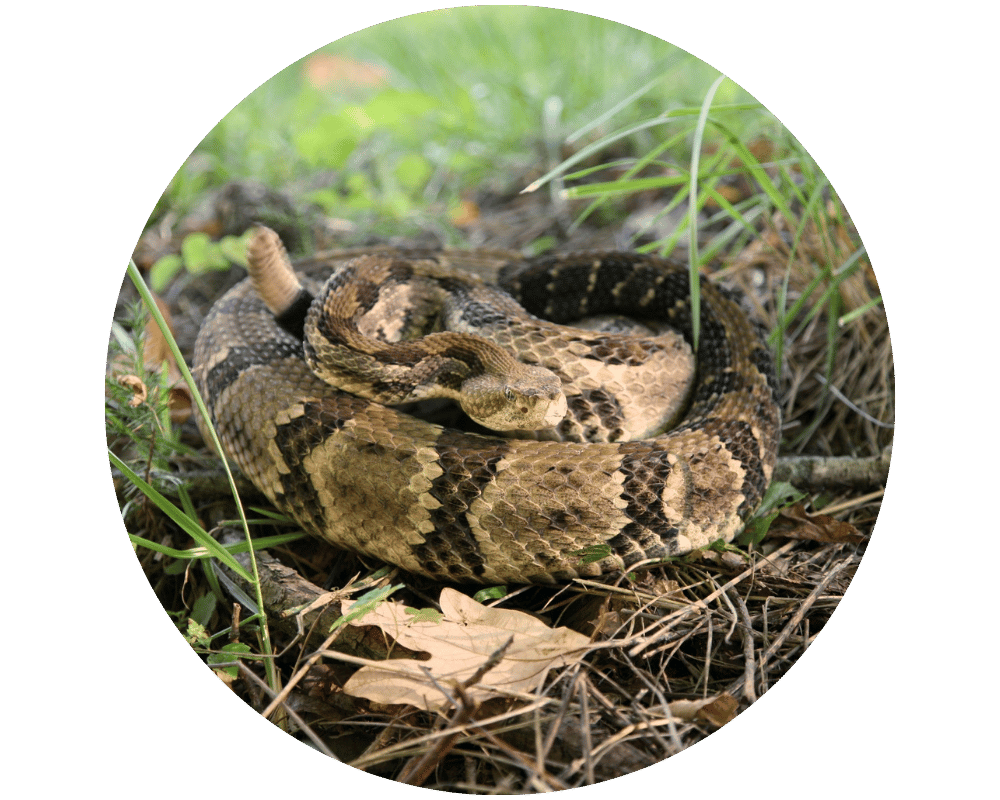
Timber Rattlesnake
How Other Pests Lure Snakes
As mentioned above, one of the best snake repellents is keeping your property pest-free. Because snakes eat mice, rats, and insects, they’re drawn to any property where pests are plentiful; if you deter the prey, you’ll also deter the predator.
So, how do you ensure rodents and bugs don’t roam your halls?
There are several ways to pest-proof your property, starting with entry points. Both mice and rats can wiggle through tiny gaps; mice need a space the size of a dime while rats need one the size of a quarter. Insects, of course, need even smaller spaces. Any pest might sneak in through foundation cracks, under doorways, via vents, or through gaps near utility lines. Sealing off this access is one of the most important steps to keeping unwanted guests out.
But pests are clever, and if your property is especially appealing, they’ll keep coming back and perhaps find a way in at some point. To avoid this, make sure you don’t have anything that attracts them, including easy-to-access food (uncovered pantry items, open dog food bags, spilled birdseed) or water (leaky pipes, clogged drains, moisture issues). For example: rats and mice are have an excellent memory; if they ever find food on your property, they’ll be encouraged to come back for seconds.
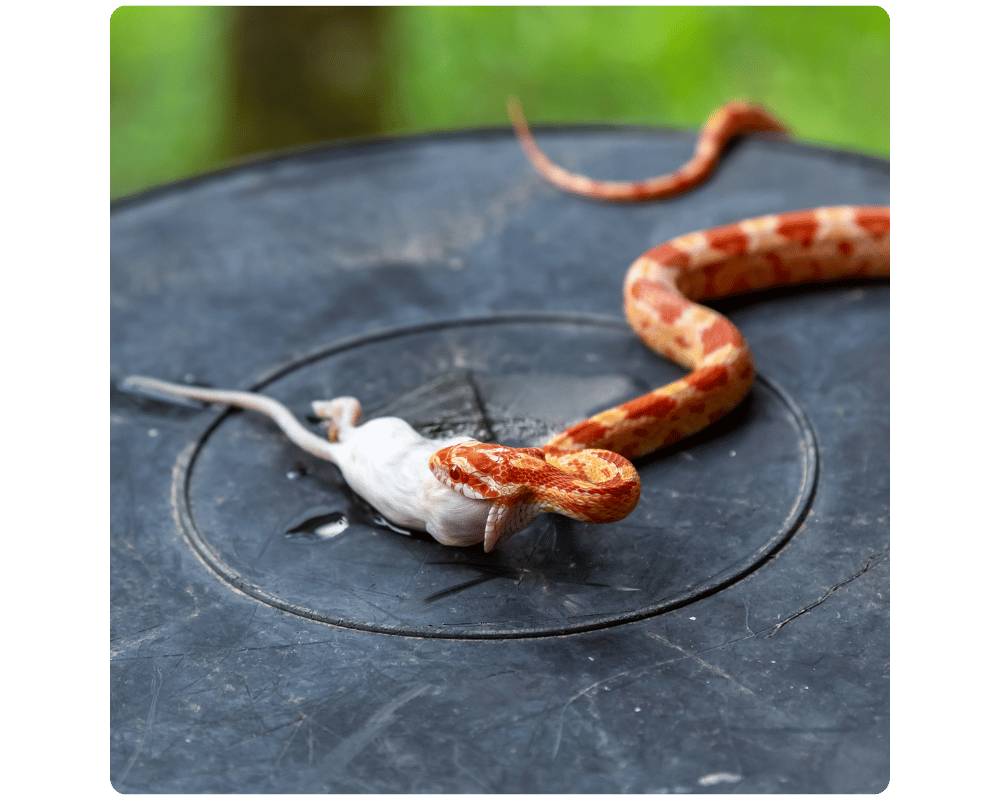
Keeping Snake Prey Away
At Kapture, we’re experts in keeping away mice, rats, and insects, which dramatically reduces your odds of encountering snakes. We offer same-day services, eco-friendly solutions, and family- and pet-safe treatments to help with all kinds of pests.
Whether you have a mouse problem in your mud room or rats running through the rafters, we can help. Contact us to learn more about our innovative, friendly, and flexible services.