Jump To Section

Learn From The Pro's
Silverfish are wiggly, fish-like insects that look scarier than they are. While they can be year-round infestations with a preference for moisture-prone places, they pose little threat to people or structures. Rather, they are most harmful to belongings.
Do Silverfish Bite?
Silverfish are small, silver-colored, scaly, and wingless insects. Adopting a fish-like shape and eel-like movements, they have a strange appearance that makes many people fearful in their presence. But do silverfish bite, or are they being judged unfairly for their creepy looks?
If you see a silverfish saunter across your kitchen floor, rest assured; they don’t bite or sting. They don’t have teeth, using their mouthparts like tiny jaws to chew on paper, glue, cardboard, artwork, mold, and natural fibers (as they feed on starch, proteins, sugar, and cellulose). However, these mouthparts aren’t strong enough to bite people.
Silverfish are night owls that emerge from cracks, crevices, and cabinets once the sun goes down. They’re found all over the United States, but particularly enjoy humid, warm weather. During hot temperatures, they thrive outdoors, living under logs, in leaf litter, mulch, and tree bark. When it comes to colder climates, they live indoors year-round (or at least attempt to); in homes, they prefer dark, damp areas, including basements, laundry rooms, crawl spaces, and attics.
New Jersey silverfish infest year-round; cold weather doesn’t kill them off because they’re already snug as a bug underneath your bathroom cabinet. They’re most likely to sneak in through gaps and cracks during extreme weather, including freezing temperatures, scorching heat, and overly dry conditions.
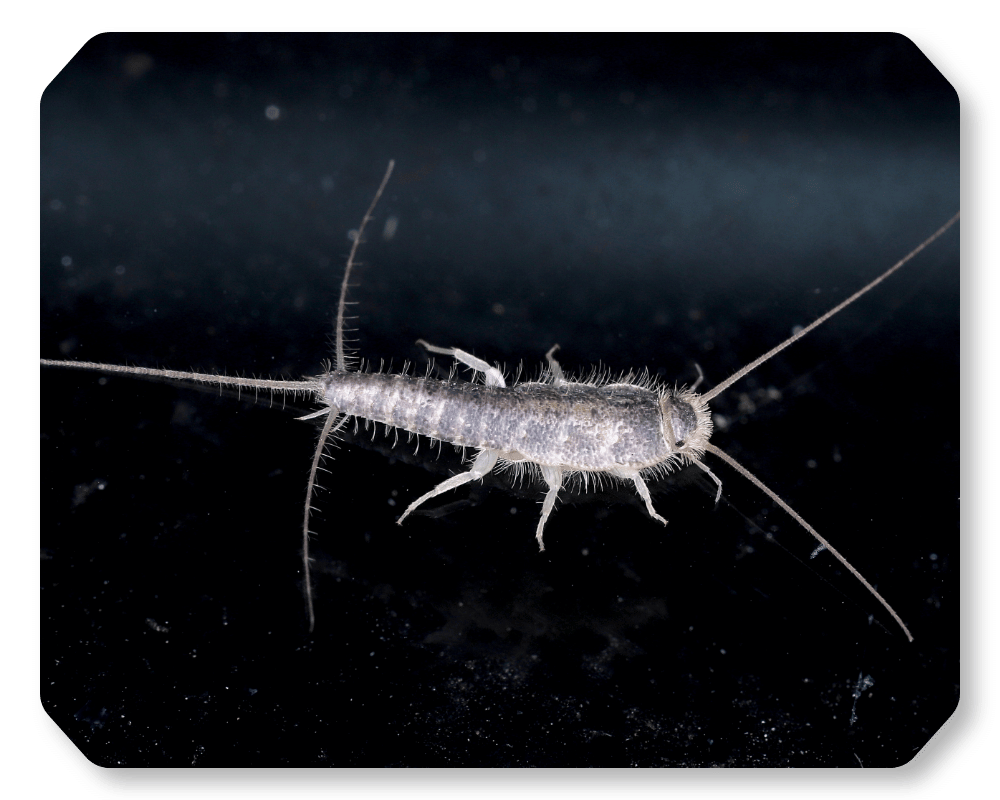
Silverfish are sometimes mistaken for firebrats, an elongated creature with a similar appearance. One big difference lies in their habitats; firebrats prefer hot environments (at least 90 degrees), and they’re frequently found near heat vents, furnaces, fireplaces, and ovens. Silverfish are too cool for these places, seeking out delightfully dank and mild areas (between 70 and 80 degrees) instead.
Are Silverfish Dangerous?
These icky insects aren’t venomous, don’t spread disease, and don’t bite people, but do silverfish bite structures the way termites or mice do?
No, they’re not known to damage homes or buildings or chew through wires and cables; while a termite colony threatens the structure of your house by feeding on the cellulose in its wooden frames, floors, and rafters, silverfish are pests in other ways.
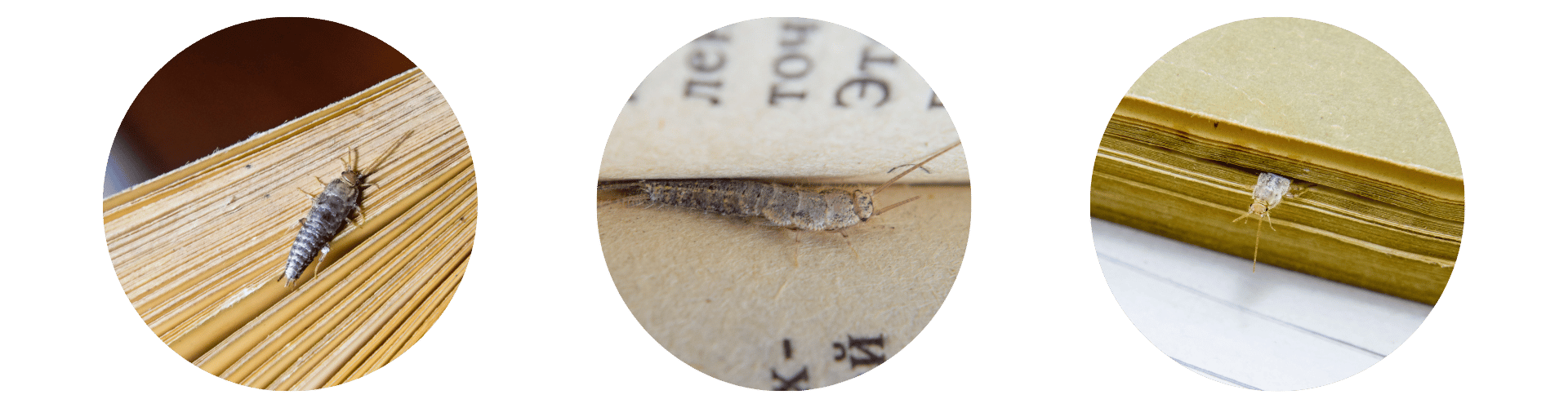
In fact, they’re most dangerous to your belongings; they won’t harm your foyer, but your Frida Kahlo painting is another story. Because of their eating habits, silverfish can ruin books, important documents (including birth certificates and letters), artwork, photographs, wallpaper, linens, clothing, keepsakes, magazines, crafts, and maps. They can even destroy high-value baseball cards and other collectibles or chew through paper money, particularly if it’s stored in boxes or cabinets and untouched for months at a time. Fortunately, there are options if this happens to you.
In addition to your prized Mickey Mantle trading card, silverfish eat regular foods as well, attracted to their starch and carbs. They have a penchant for the pantry and enjoy feasting on flour, cereal, oats, pasta, grains, and other dried goods. They’re not above digging into Alpo or Meow Mix, either.

How Do You Know If You Have a Silverfish Infestation?
Seeing silverfish regularly, instead of spotting a singleton once in a while, is a sign of an infestation somewhere on your property.They love to peruse at night in bathrooms, kitchens, basements, laundry rooms, and closets. You might also notice more subtle signs, including pepper-like droppings, yellow stains on paper products, sheets, and clothing, shed exoskeletons, and tiny, ovoid eggs in cracks in walls, under sinks, or inside boxes.
Of course, damaged belongings are signs of an infestation such as irregular holes in boxes, photos, paper, fabrics, artwork, and food packaging or maybe you’ve seen signs of feeding, like tiny bits of paper left behind.
We already know the answer to the question: Do silverfish bite? And that means bites on your skin (such as itchy, red, or inflamed bumps) are not signs of a silverfish infestation. Instead, they’re signs of another pest.
How Can You Prevent Silverfish Infestations?
Preventing silverfish infestations is similar to preventing other types of infestations. Key steps include keeping food tightly sealed, closing off entryways, minimizing clutter, reducing cardboard storage, protecting art and paper valuables, and vacuuming regularly (to suck up food debris and, possibly, silverfish eggs).
Since silverfish are drawn to humidity, reducing moisture reduces your home’s appeal. You can do this by fixing plumbing leaks, eliminating standing water, plugging in dehumidifiers, and properly ventilating damp areas.
If you see signs of an already established infestation, Kapture can help. Contact us to learn about our same-day services and tailored-to-you plans.