Jump To Section

Learn From The Pro's
Fleas are tiny insects that feed on blood and jump great distances. Because of their small size, they can be hard to spot and difficult to treat. Their rapid reproduction makes it easy for a minor issue to quickly turn into a full-blown infestation.
What Do Fleas Look Like?
If you’ve ever wondered, “What do fleas look like?” you’re probably not alone. These teeny tiny pests (measuring only a few millimeters) can be difficult to identify without a microscope, a mason jar, lots of patience, and uber-fast reflexes.
Fleas are generally reddish-brown in color, although some may adopt darker hues or appear shiny. Their bodies are flat, making them especially agile as they navigate coarse fur and feathers. True insects, they have six legs, including oversized hind legs that give them their unbelievable jumping abilities (and make them difficult to catch). They bound effortlessly and can leap 100 times their body length. That’s the equivalent of a grizzly bear hurdling the Washington Monument, a kangaroo leaping over the narrower parts of Niagara Falls, or a horse jumping over the Eiffel Tower.
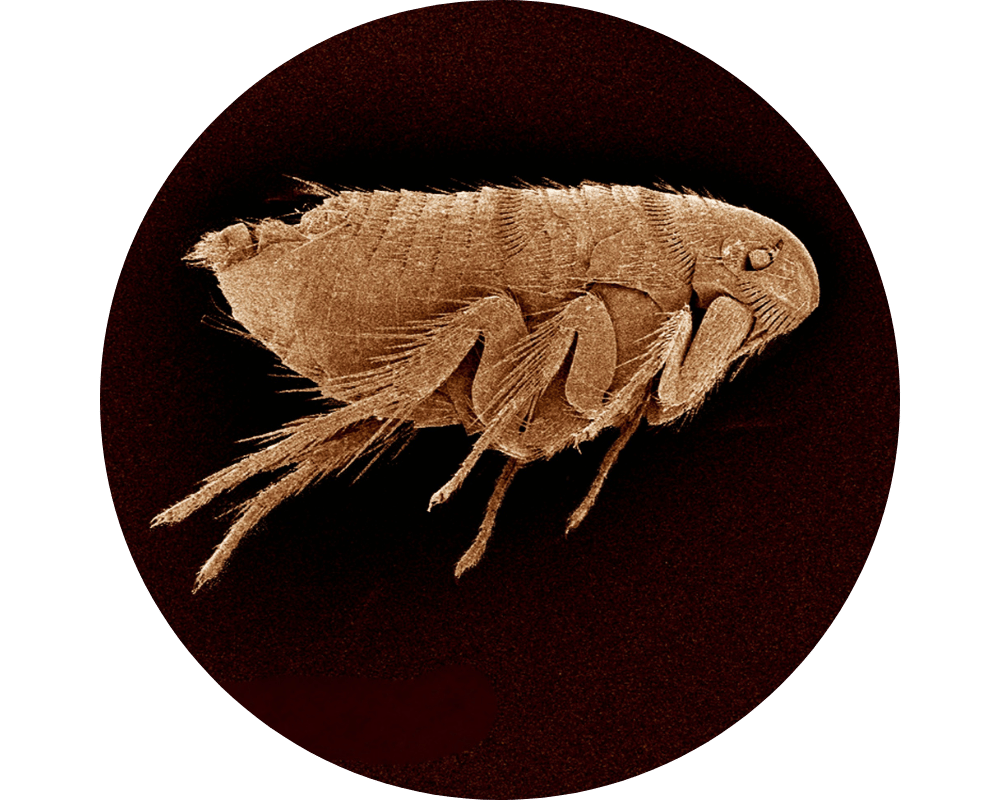
Fleas, like ticks and mosquitoes, are parasitic (and probably fans of vampire novels), with piercing mouthparts that allow them to break the skin. They prefer to feast on dogs, cats, livestock, and other furry animals over humans, but they do bite people from time to time. Busy bodies, they never stay in one place for long, hopping around frequently.
While it’s possible to spot an adult flea with the naked eye, you might not realize what you’re seeing, mistaking it for a small clump of mud or a crumb of bread. Flea larvae are tiny, pale, and worm-like, with a preference for dark spaces. Larvae can look like maggots or grains of rice. Flea dirt (feces) resembles pepper and appears as tiny black or brown specks in pet fur, bedding, carpet, and upholstered furniture. Often, these specks are the first sign of leaping lurkers.
So, when it comes to the question, “What do fleas look like?”, the answer really depends on what stage they’re in. But they’re hard to see either way!
The Dangers of Fleas
Like cockroaches, pantry moths, and other insects, fleas reproduce quickly, turning a minor infestation into a five-alarm flea problem in just a few months. Their bites cause intense itching, skin irritation, and allergic reactions, which might lead to secondary infections. They also spread disease, although they don’t present the risk they once did.
While fleas played a role in the Bubonic Plague, one of history’s darkest, most devastating eras, modern-day flea bites rarely lead to death. They can still spread bacteria (although this is uncommon), but antibiotics make flea-borne illness treatable. Fleas may also transmit tapeworms, typically when they are accidentally swallowed by cats or dogs, and heavy infestations can cause anemia, especially in puppies, kittens, and other small animals.
Although a few fleas in your home aren’t always cause for concern, indoor infestations are frequently tricky because fleas are excellent hiders and lay their eggs deep inside carpet fibers, couch cushions, and cracks in walls: places where you might not regularly look.