
Jump To Section

Learn From The Pro's
Spiders are often mistaken for insects, but they belong to the arachnid class. Unlike true insects, they lack wings or antennae and have eight legs instead of six. Arachnids can be just as disturbing indoors and often require professional help to treat infestations.
Are Spiders Insects?
Spiders are creepy crawlers found all over the planet (except Antarctica). Leggy lurkers, they prefer dark spaces where they can spin their webs and feast on flies in peace and quiet. But are spiders insects? No! Although they’re often lumped into the insect category, spiders belong to a different classification: arachnids.
Unlike insects, which have six legs, three body segments, and a pair of antennae, arachnids (like spiders) have eight legs, two body segments, and no antennae. They don’t have wings, commonly found on insects, and their eyes are simple rather than compound.

While not related to ants, roaches, mosquitoes, or bees, spiders won’t find themselves completely alone at the family reunion; they count scorpions, ticks, and mites as their cousins. Spiders, even amongst themselves, are extraordinarily varied; there are over 50,000 spider species, but only a small percentage (around 200) are venomous to humans.
So, are spiders insects? We now know they’re not . . . but are they pests? Yes! Spiders, like insects and rodents, can invade homes and offices (although only a small percentage do). This can be unsettling, especially for those who fear spiders. Clinical arachnophobia might affect only 15% of the population, but most people don’t want to sleep in a bedroom with a giant wolf spider crawling on the windowsill.
What Makes Spiders Different?
As discussed above, the question of “Are spiders insects?” can be answered partly by body segments, leg number, and wings. However, those are not the only features that set these arachnids apart.
Spiders possess several sensory hairs on their abdomens that help them protect themselves, detect vibrations, sense air movement, navigate, and climb. Specific hair strands contain receptors that detect chemical cues helpful in finding food, courting mates, and fending off rivals. Some spiders are hairier than others, which doesn’t make them seem warm and fuzzy; it only makes them seem scarier.
Of course, spiders are known for their artistry as well; many spin webs with silk stronger than steel. Unique species, such as the orbweaver, are regarded for their especially ornate webs, with some creations reaching several feet across. Yet this doesn’t mean web-making is a spider prerequisite; some spiders don’t spin webs at all. Wolf spiders, for instance, catch their prey on foot, chasing it across the kitchen floor. They are among the fastest spiders on land, able to cover two feet per second in short bursts.
Many spiders have very prominent eyes, with four sets staring at you at night. This surprisingly doesn’t lead to eagle-eyed vision: most species have less-than-average or poor eyesight. Nonetheless, there are exceptions: jumping spiders have exceptional eyesight, placing their preeminent peepers near the top of the animal kingdom. They also have excellent depth perception, allowing them to leap with extraordinary accuracy.
Unlike many insects (such as cockroaches and termites), spiders possess highly developed nervous systems that enable them to navigate, hunt, and avoid predators. Spiders demonstrate intelligence, too. While they’re not on par with mammals and birds and don’t think critically or adopt reason, they can solve problems, perform complex tasks, and learn from experience. All of this is impressive when you consider that the average spider brain is about the size of a grain of rice.
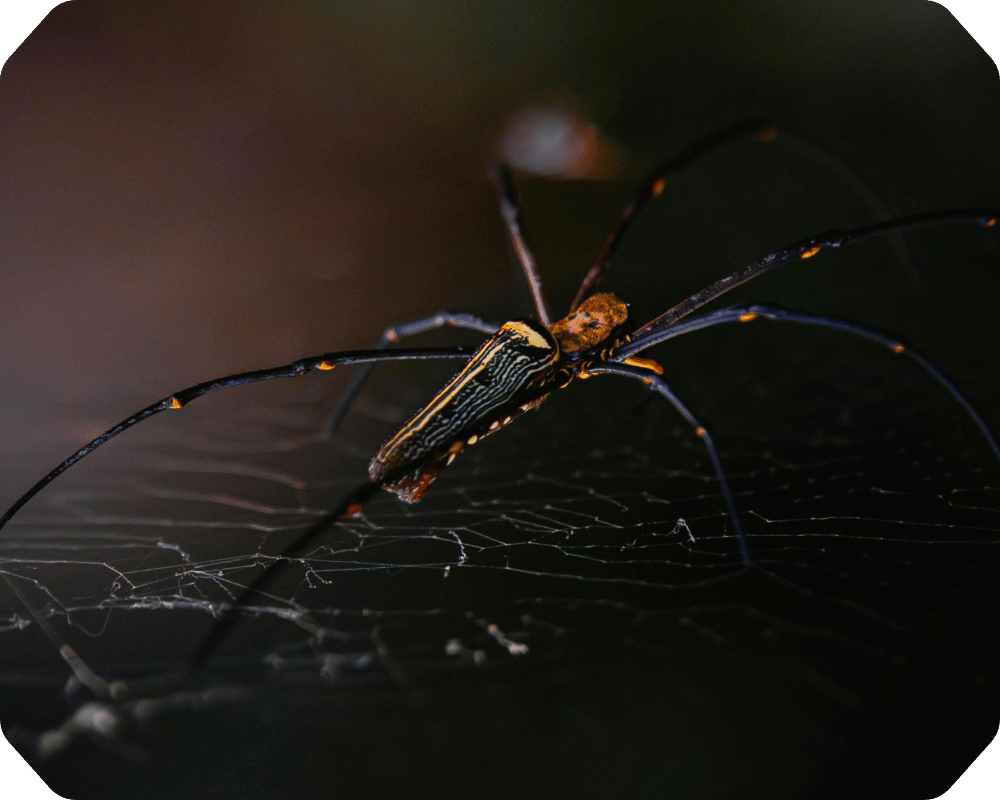
Orb Weaver
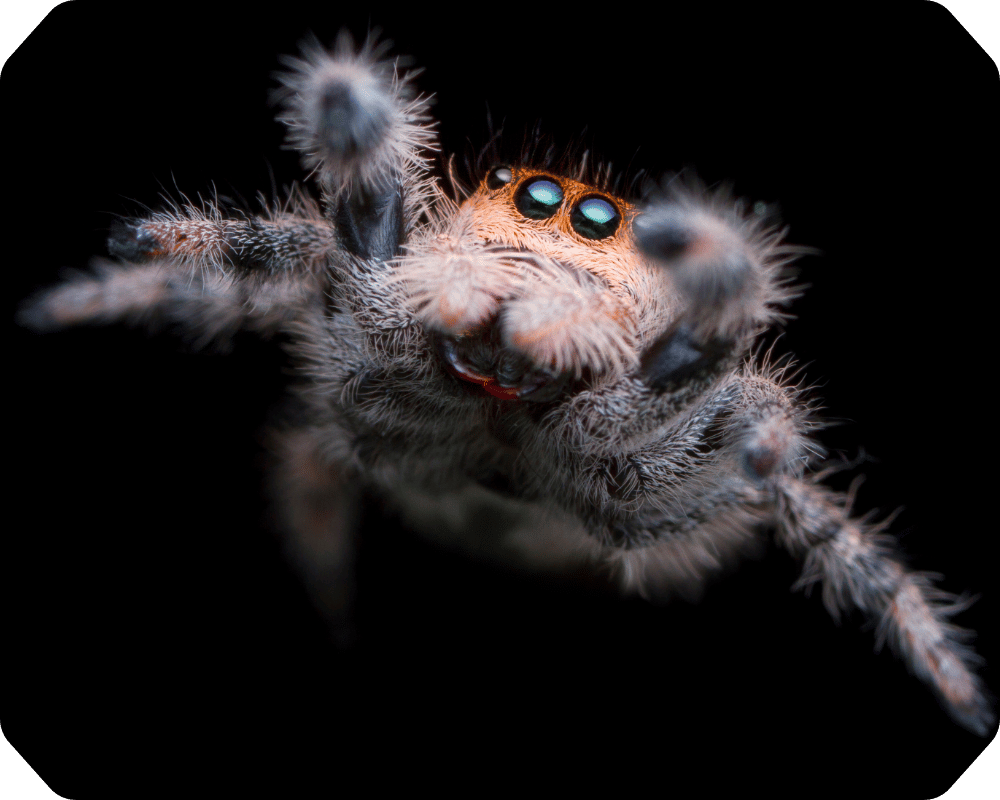
Jumping Spider

Spider Reproduction Rates
Spiders in homes or offices often elicit anxiety, yet the true threat frequently lies in their reproduction rates. Female spiders lay egg sacs that contain huge numbers of little spider babies. Depending on the species, this can range from a couple of dozen to hundreds or even thousands.
Spiders, unlike most species, don’t undergo metamorphosis from larvae to adults. Instead, infant spiders hatch as miniature versions of grownups, all ready to rock and roll into your living room. They get bigger over time, shedding their exoskeletons multiple times to accommodate their growing frames.

The Tangled Webs They Weave . . . We Remove!
It’s completely normal to wonder if spiders are insects because of several factors, starting with: spiders and insects look similar, they share behavioral patterns, and last but certainly not least . . . both “bug” us.
Spiders are in a league of their own, determined to wreak havoc on your property (or peace of mind) in their own special way.
If you’re having a spider issue, from a jump-scaring jumping spider to a cellar infestation, we can help! We use specialized, cutting-edge methods to get a leg up on these pests and keep them gone for good.