
Jump To Section
Millipede vs Centipede: They’ve Got Legs & Know How to Use Them
Seeing a long, leggy creature saunter across your floor can elicit the great millipede vs centipede debate: Did you see a millipede? Did you see a centipede? Or was it just a group of ants carrying a spaghetti noodle? While they look similar, these creatures exhibit distinct characteristics and innate behaviors.
Millipedes have more rounded bodies with two pairs of legs on most of their segments; they come in a spectrum of colors, with tropical species typically brighter than what you’ll find in New Jersey. They move slowly and methodically and stop, drop, and roll into balls when disturbed.
Centipedes have flatter bodies with one pair of legs per body segment. They come in various hues, though those found in homes are often yellow, grey, or brown. They are fast runners (about 10 to 20 times faster than millipedes) with fast reflexes and strong instincts.
Millipedes and centipedes are related but not as closely as you might assume. They’re considered distant relatives, belonging to different classes of arthropods. Millipedes (belonging to the Diplopoda class) are the more passive of the two; they’re decomposers that feed on dead leaves, decaying roots, compost, mulch, fungi, mold, and moss.
Centipedes (belonging to the Chilopoda class) are hunters, feeding on a variety of insects; some of the world’s biggest centipedes, found in the Amazon, Africa, Southwest Asia, the Southwest US, and other parts of the world, have more exquisite tastes, feeding on toads, lizards, and mice.
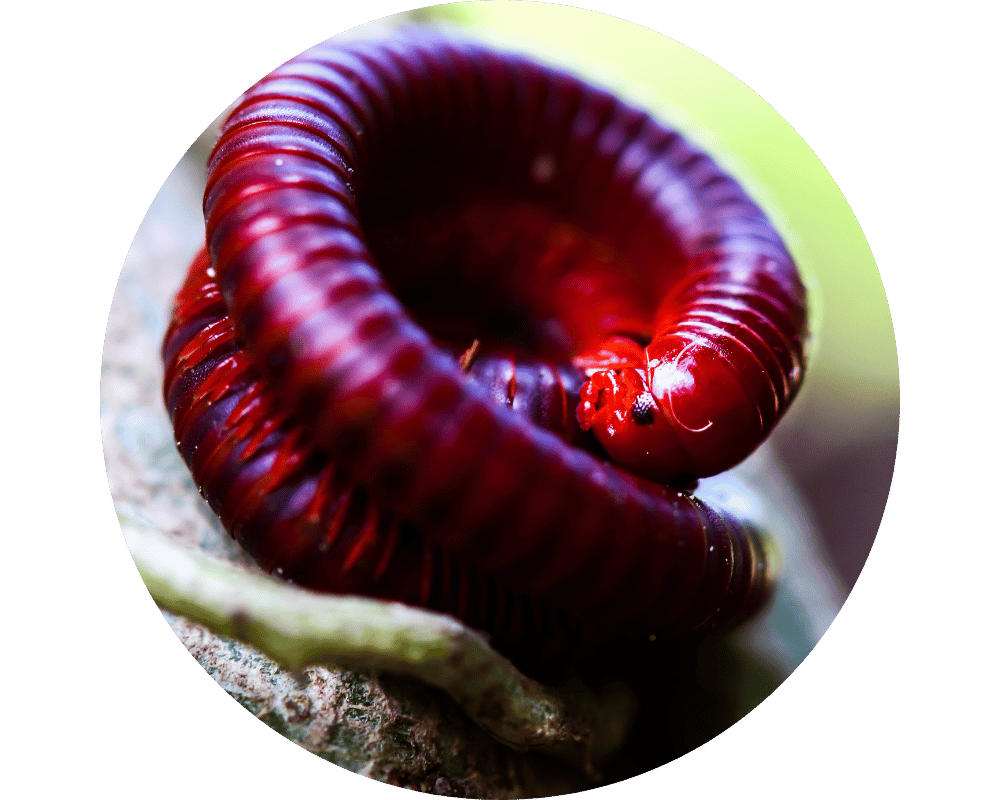
MILLIPEDE
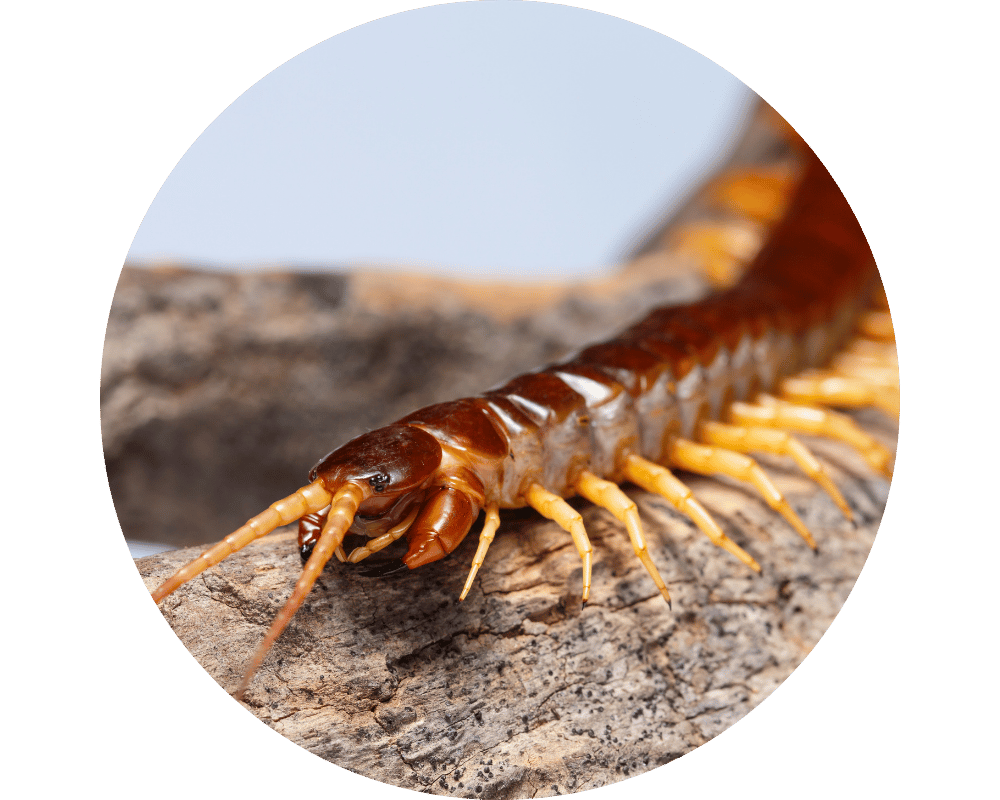
CENTIPEDE
Are These Arthropods Dangerous?
Unlike other types of pests, such as gnaw-happy rodents and cabinet-contaminating roaches, these leggy critters don’t cause surface or structural damage to homes. They can both be nuisances, but in the debate of millipede vs centipede, one creepy crawly is more irksome than the other.
Millipedes are shy creatures more afraid of you than you are of them; when threatened, they curl up in balls and wait for you to go away. Centipedes act much more aggressively, biting through a pair of modified legs (forcipules) that serve as pinchers if you frighten them. They’re not venomous to humans and won’t damage tissues or cause significant injuries, but people with allergies might have more intense reactions (including nausea, fever, chills, and swelling). Although it’s rare, centipede bites occasionally get infected, requiring more intense care.
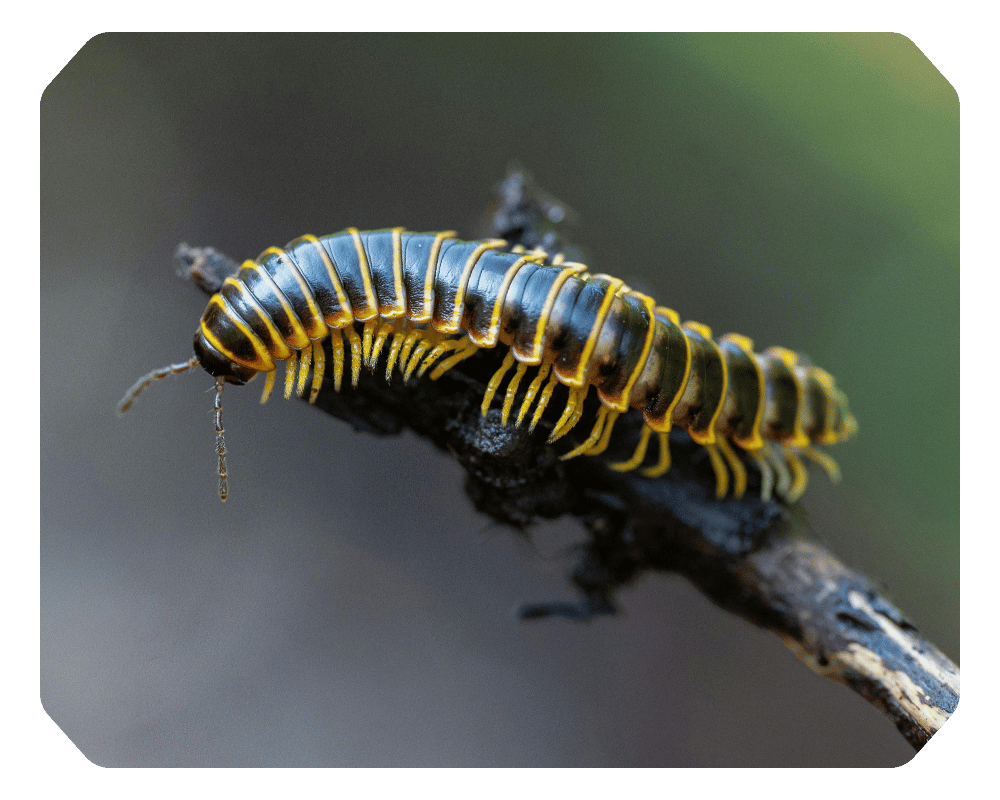
But for all their negative traits, centipedes are beneficial in some regards; they are pest controllers, preying on spiders, silverfish, ants, cockroaches, crickets, termites, and more. Their presence in your home might indicate an infestation by other pests, as they’re drawn to the insect buffet available inside your basement. Because they thrive in humidity, their presence can also indicate moisture issues. If left unattended, this moisture can cause damp wood, rot, and structural problems.
Of course, this doesn’t mean centipedes are your home’s handy helpers, pointing out what needs to get fixed like a contractor giving you a quote. Like millipedes, their presence can be distressing, especially in large groups or when encountered frequently.
Dectecting Infestations
Millipedes and centipedes can infest both outdoor and indoor environments, although they can’t flourish indoors and often end up in crawlspaces or laundry rooms when lost, chasing prey, or looking for a prime hide-and-go-seek spot. Their lack of destruction means the only sign of their presence might be visual verification, although other subtle hints exist.

Signs of millipede infestations include spotting large numbers clustered around doors, windows, or cracks in the foundation . . . especially after rainstorms or in humid weather, and in moisture-rich areas (crawlspaces, bathrooms, laundry rooms, or garages). You might see millipedes curled up in balls or dead ones on the floor, or you might smell musty odors. Nearby outdoor infestations, under mulch, in firewood, near rocks, or in leaf piles, make indoor infestations more likely.
Signs of centipede infestations include seeing these leggy lurkers sprint across the floor, ceiling, or walls, particularly at night (when they go on the hunt for midnight snacks). You might see them in basements, laundry rooms, under sinks, or wherever they can find moisture, as well as near storage rooms, garages, or other cluttered areas. Shed exoskeletons, which are left behind as centipedes grow, might be visible on tile, under cabinets, or in dustpans after sweeping.
Seeing a couple of millipedes or a once-in-a-while centipede usually isn’t a sign of an infestation. Frequent sightings or numerous critters are more indicative of a persistent pest problem.
Getting a Leg Up
It’s not always possible to avoid pest infestations (that’s why we’re here!), but you can deter unwanted guests to some degree. For millipedes vs centipedes, you’ll reduce the likelihood of either invasion by completing a few household chores.

When it comes to a millipede vs centipede, both are related to shrimp and thus need some sort of moisture to survive. Thus, eliminating excess water lessens the allure of your home, and spending a Saturday morning repairing leaky pipes, improving ventilation, and setting up dehumidifiers in damp areas might just compel these arthropods to leave a zero-star review on your pest bnb: “Terrible atmosphere and awful customer service. Management acted like they didn’t even want us there!”.
Sealing entry points is another item to add to your to-do list. It’s not just arthropods that enter this way . . . nearly all other pests do, too. Remove and replace damaged weatherstripping, seal gaps around doors and vents, recaulk areas around the foundation, and repair tattered window screens. Don’t leave your doors open all day either; while your cat might enjoy the freedom to come and go, open doors give a giant green light to creatures and critters of all kinds.
Other helpful steps include cleaning up your yard as millipedes and centipedes may congregate in mulch or leaves, trimming landscaping particularly if it’s touching or near your house, and swapping out bright outdoor lights for warm-colored, motion-activated bulbs.
Even with the above, the surest way to address an infestation (or assess whether you have one) is to reach out to our team of experts. At Kapture, we solve millipede mysteries, centipede conundrums, and pest issues, new or old, big or small.
