Jump To Section

Learn From The Pro's
Gnats aren’t a distinct species but rather a colloquial term for any tiny fly (ranging from fruit flies to drain flies and more). Gnats common to the US are more of a nuisance than a danger, although gnats in other parts of the world can spread disease. One of the most important factors in gnat control is reducing moisture and leaky pipes.
Gnat Control . . . Is It Necessary?
Gnats aren’t a specific insect but rather a general term for tiny flies; they belong to the same family as other flies and mosquitoes. They’re not as dangerous as some pests, mainly because they don’t easily spread disease or destroy your home, but they’re pesky little creatures that can make a big impact on your home’s ambiance. Fortunately, gnat control is straightforward, with a few simple steps to protect your property from Mother Nature’s menaces.
Like many pests, gnats thrive in moist conditions and turn standing water into their own watering holes. Plant saucers, buckets, leaky pipes, and drainage issues can all attract them to your home. Houseplants, in particular, provide excellent breeding grounds for gnats, especially when they’re overwatered.
Some species of gnats are drawn to food debris, organic scraps, garbage, and rotting fruit; you might see them flying near your trash can or hovering around that moldy apple in your fruit bowl. Drains are another hiding place, as many gnats thrive in dirty drains filled with old food and organic goodness. Throwing away old food, keeping counters clean, regularly scouring drains, and taking out the garbage daily can help minimize their presence.
Of course, gnats don’t just infest indoors; they create outdoor issues as well. In New Jersey, they’re most common from spring to fall, as warm, humid weather invites favorable conditions. If you live near wetlands, streams, or ponds, gnat control is even more vital, as gnats reproduce in marsh-like environments. Outdoor fans, scent barriers, and insect-repellent lighting help keep them away from your front and backyard.
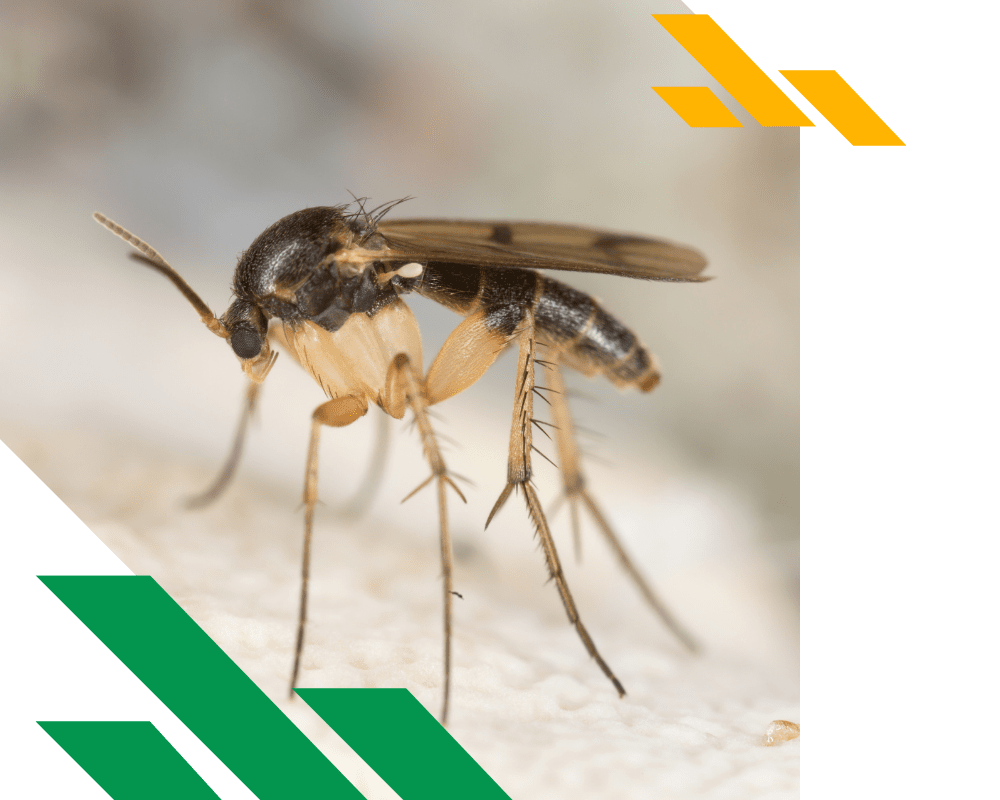
Do Gnats Bite?
Gnats are generally considered a nuisance species (especially the type most likely to enter homes), although some outdoor gnats do bite. Like their mosquito cousins, only female gnats bite, as they need blood proteins to fuel their reproductive cycles. Males, on the other hand, feed on plant nectar.
Gnats bite by using their tiny, jagged, and sharp mouthparts to cut, tear, and rip the skin. They can leave small, red, and itchy bumps that mimic mosquito bites. However, unlike mosquitoes, gnats common in North America don’t spread disease to people (only livestock). In other parts of the world, gnats are more dangerous; they can transmit serious diseases (such as river blindness) in parts of Africa and Central and South America.
No matter where they are in the world, gnats can cause allergic reactions, but these are typically less severe than those caused by bees. While bees inject venom that evokes a systemic reaction, gnats trigger allergies via saliva, causing a localized reaction. Bee allergies are life-threatening; gnat allergies can usually be treated via over-the-counter measures.
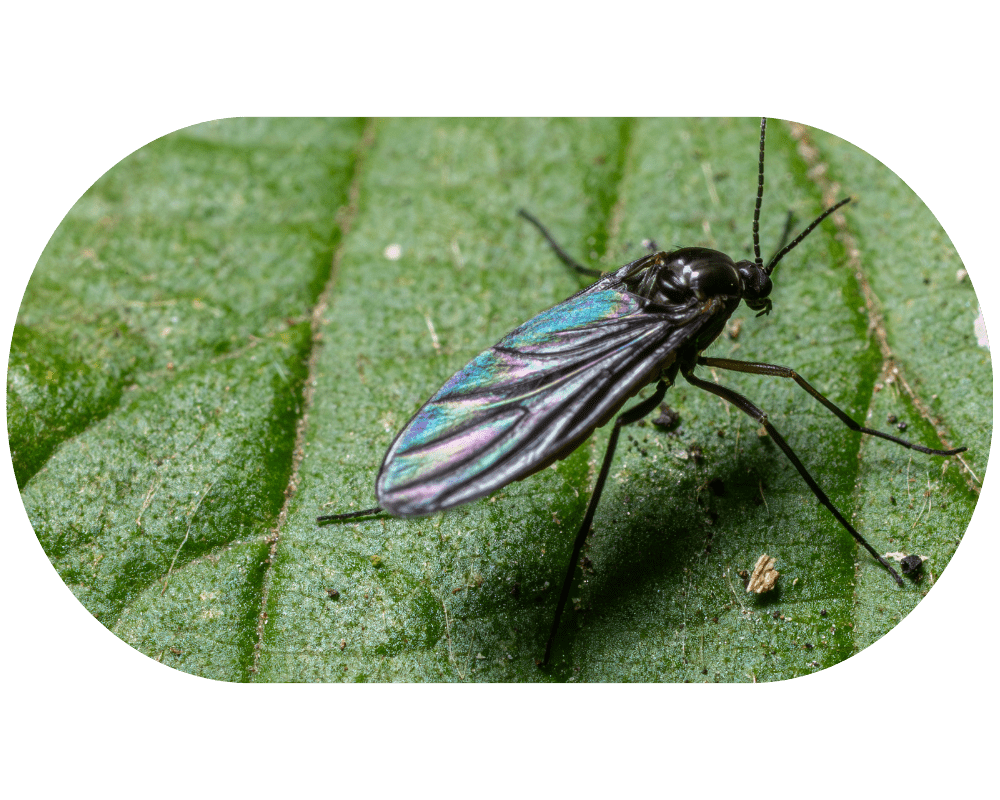
Gnat Lifecycle
Part of gnat control is understanding the gnat lifecycle. Like other insects, female gnats lay eggs in moist environments (often hundreds at a time), though this varies by species. Once the eggs hatch, their larvae feed on a variety of foods, including decaying organic matter, plants, and fungus. The larvae eventually enter the pupa stage and transform into adults. The adults mate, perpetuating the cycle.
Ideal conditions offer more rapid acceleration from eggs to adults, allowing gnats to develop quickly and populations to seemingly pop up overnight. Gnats typically spend less than two weeks in the larval stage and move into the pupal stage for a handful of days.
As adults, gnats’ sole purpose is to mate; they live short, sweet lives of about a week. Even with this, infestations feel hard to control because generations heavily overlap. To truly control an infestation, removing breeding sites (such as overly moist plants and dirty drains) is more effective than removing or killing gnats as you see them.
Interesting Gnat Tidbits
In homage to their small bodies, gnats come with tons of tiny tidbits and interesting facts. Swarms, for example, may contain hundreds of gnat individuals, sometimes even thousands. Occasionally, the swarms are dominated by male gnats hoping to attract females through insect romance.
Certain gnats, like fungus gnats, don’t possess strong flying skills and tend to stay low and close to where they hatched as eggs. Fruit flies, another species commonly described as gnats, don’t actually eat fruit. It turns out, they’re grosser than that: they eat yeast, fungus, and bacteria growing on decaying matter; sugar, alcohol, and vinegar byproducts; organic slime in the garbage disposal; and, most tasty . . . debris on dirty mops.
While annoying house guests, gnats play an important role in the ecosystem. They’re an important food source for a range of animals. Gnat larvae that develop in water are the primary meals of fish, frogs, and predatory water-bound insects. On land, gnats feed birds, bats, spiders, dragonflies, and a variety of amphibians.
Gnats are important decomposers as well; they reside in soil and help break down fungi, decaying matter, and mold. This helps recycle vital nutrients back into the earth, helping plants grow and thrive. Gnats are also pollinators of various wildflower and orchid species.
If you’re a chocolate lover, one type of gnat, biting midges, should hold a special place in your heart; tiny but mighty, they’re the only pollinator of the cacao tree. Without their presence, Hershey’s would be hampered, Nestle would be a no-go, and Almond Joys would be void of happiness. In other words, not midges, no chocolate!
Gnat Control All Year Long
Whether you’re dealing with flies in the bathroom, kitchen, or front yard patio, Kapture goes to bat to keep gnats away! We offer same-day services, fast-acting solutions, and eco-friendly, family-safe methods to deter these tiny troublemakers (and pests of all kinds!). Contact us today to learn more about our double-money-back guarantee, five-star reviews, and innovative products.