
Jump To Section

Learn From The Pro's
Water bugs occasionally invade New Jersey homes. However, most of the time, it’s a case of mistaken identity. Cockroaches look similar and are far more likely to be found inside your kitchen, bathroom, or living room. But no matter the pest on your property, we’re here to help.
Water Bugs in Houses
As their name implies, water bugs live in moisture-prone areas; they’re large aquatic insects that belong to the Belostomatidae family. They thrive in their natural habitats, frequenting ponds, lakes, marshes, streams, and other slow-moving bodies of water. But what about water bugs in houses? Are infestations common?
Water bugs don’t tend to invade homes the way rats, roaches, clover mites, ants, and other pests do. But this doesn’t mean you’ll never see one. If a water bug shows up in your laundry room or bathroom, there are usually two possibilities: it got lost and ended up there by accident, or it’s a case of mistaken identity.
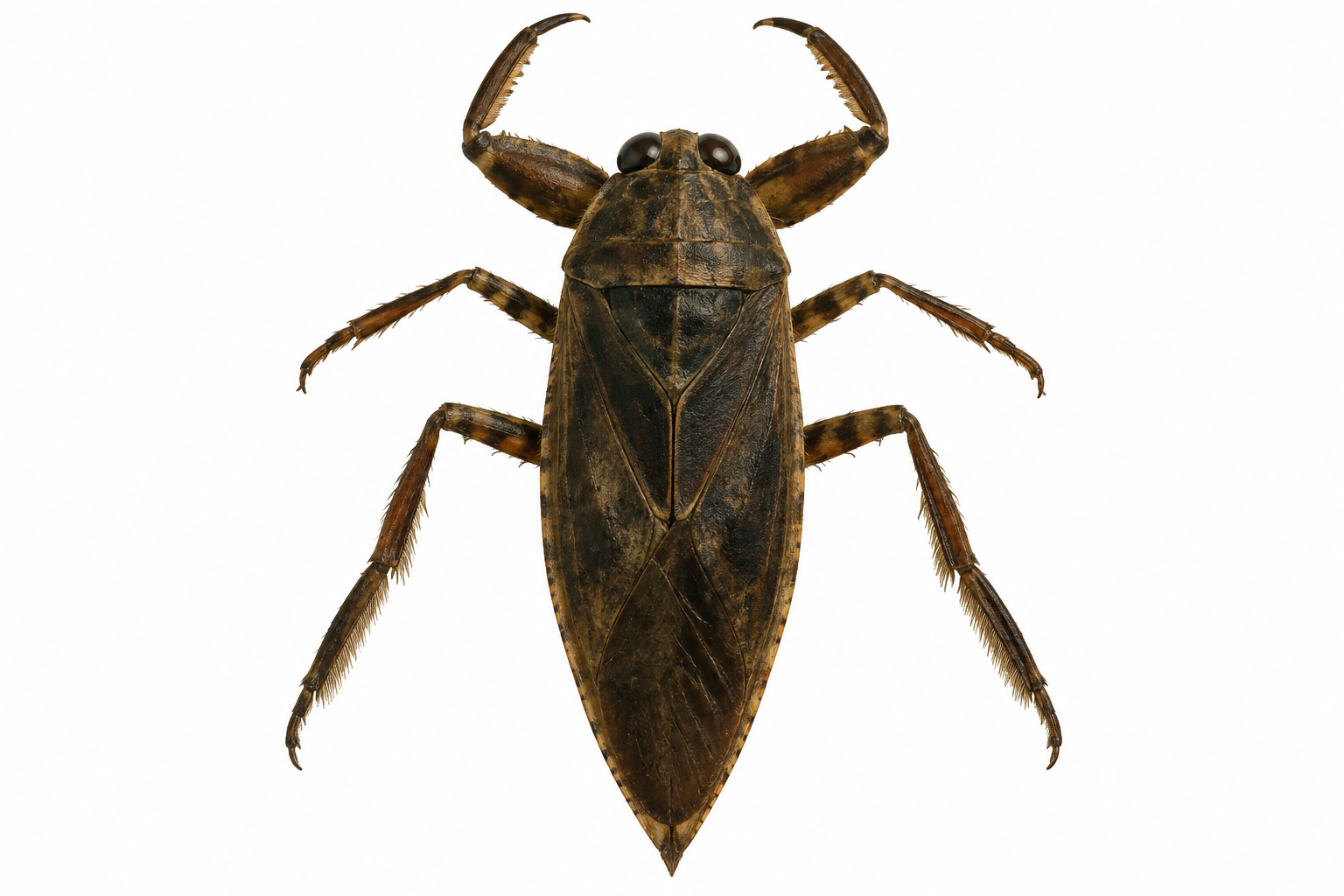
Water bugs, as a rule, need to be near water to flourish; they don’t want to be in your home any more than you want them there. But they can fly and, with their attraction to outdoor lights, they might take a wrong turn and find themselves trapped somewhere unfamiliar. This is much more likely if your property is near naturally occurring water sources. Even so, a water bug in your home is most often a case of mistaken identity . . . meaning they aren’t actually waterbugs at all.
Water bugs resemble cockroaches, especially certain species, and cockroach infestations are far from rare.
Cockroaches Vs. Water Bugs
There are several types of cockroaches commonly mistaken for water bugs in houses, including American, Oriental, and Smoky Brown cockroaches; diving beetles and water scavenger beetles also look like water bugs. Although all these bugs are found in New Jersey, only the American cockroach and Oriental cockroach regularly invade homes. So, what’s the difference between these insects?
Cockroaches live on land and seek out dark, hidden, and damp spaces, while water bugs live in water. Cockroaches have oval, flattened bodies, whereas water bugs are broader, leaf-like, and shorter. Cockroaches have long, obvious antennae; water bugs have antennae as well, but they’re hidden and difficult to see.
The behavior between the two species also differs. Cockroaches are fast runners, able to cover ground easily; water bugs aren’t made for running and are adapted for swimming instead. Cockroaches are survivors, geared to flourish in difficult circumstances; water bugs are good survivors, too, but only in water . . . they’re not accustomed to household environments or the comforts of your home.
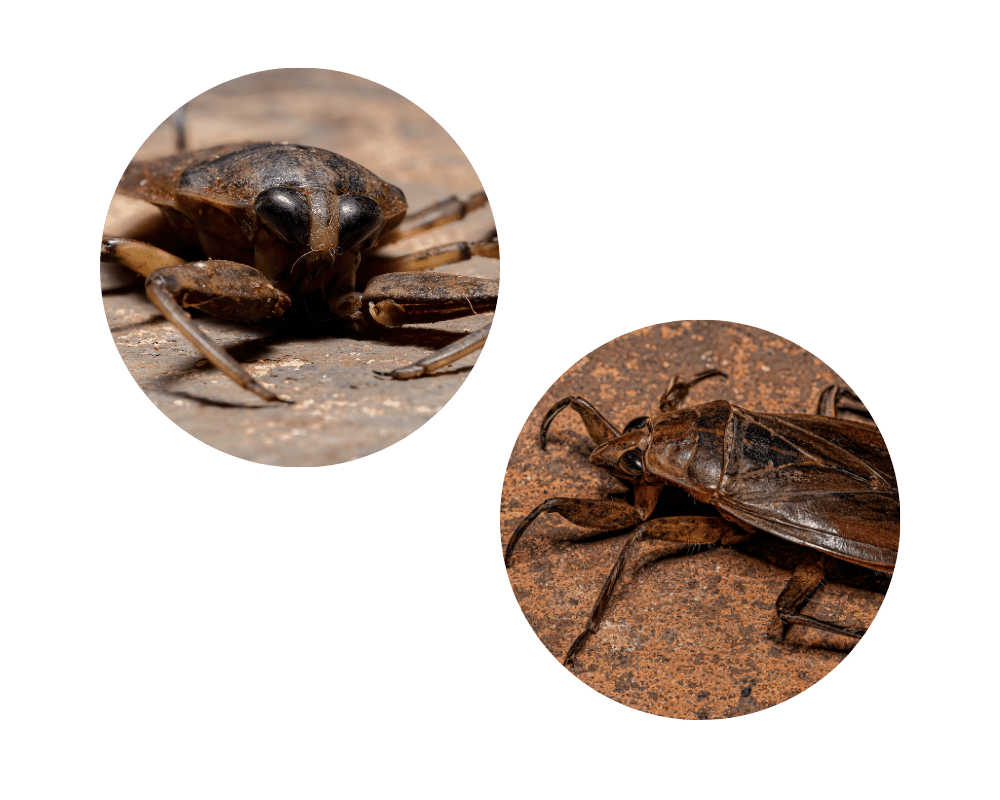
Cockroaches are also scavengers, which means they feed on things like pantry crumbs, trash, and pet food; water bugs are predators that eat tadpoles, snails, small fish, and small crustaceans, food that’s impossible to find in a residential home. Both cockroaches and water bugs eat plants and insects, which can help the latter survive indoors. Both types of bugs might even eat each other, but this is rare; while they’re each opportunistic feeders, their paths rarely, if ever, cross.
True water bugs are sometimes described as looking like an insect hybrid, something that would happen if a cockroach and a praying mantis had a baby.
Water Bug Bites
If you come across a true water bug, bites are possible . . . and painful! In fact, water bugs are known as “toe biters” because they sink their sharp mouthparts into the little piggies of swimmers out for a dip or splish-splashing around a pond. They have one of the more intense bites of all the insects in the animal kingdom; it’s worse than a horsefly bite and more comparable to the extreme sting of a yellowjacket. It delivers a powerful pinching sensation, followed by a sharp burning sensation.
While painful, water bug bites aren’t medically dangerous. They may cause swelling (occasionally severe) and a tingling sensation that feels serious, but these symptoms are short-lived and self-resolving. Washing the wound with soap and water, applying antibiotic ointment, and icing the affected area is usually all the treatment that’s necessary. It’s rare, but water bug bites can cause severe allergic reactions in some people.
Anyone who experiences hives, itching, or trouble breathing should seek medical treatment right away.
Although bites almost always occur outdoors, water bugs in houses can bite, too. If you find a water bug in your home and pick it up, handle it, step on it, or toy with it, it may bite in self-defense. Removing it without contact or calling a pest control company is a safer option.
How to Avoid Water Bugs
The best way to avoid water bugs is to avoid their natural habitats; in short, swim in pools rather than ponds. If you decide to head off to a lake or reservoir, wear swim shoes to protect your toes (or at least make bites less painful), avoid weedy, reedy, and marshy areas, and don’t swim underneath lights at night.
Indoors, the best way to avoid these irksome insects is to turn off exterior lights or switch out the bulbs. Water bugs are highly attracted to artificial lights, including bright white or blue bulbs, security lights, and UV lights. Warm-colored LED lights (amber or yellow “bug” lights) attract few water bugs (and pests in general).
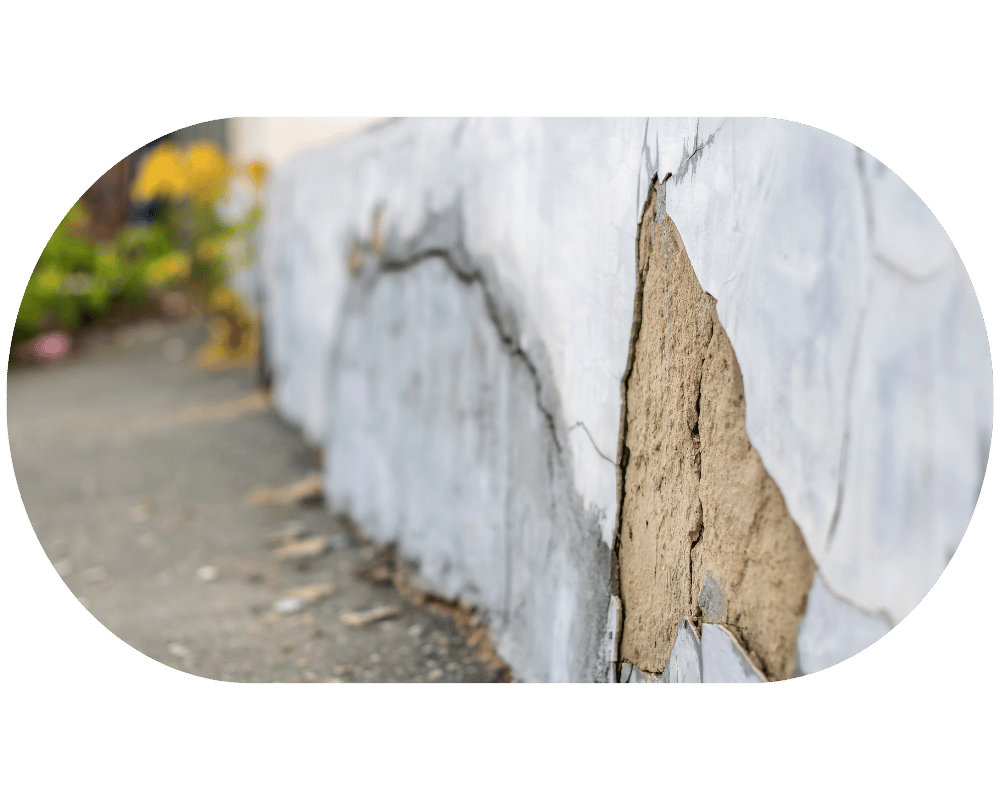
Because water bugs in houses aren’t actively trying to get into your home, repairing foundation cracks and gaps isn’t usually necessary (although this helps keep out various other New Jersey nuisances, including cockroaches). Tattered window screens and open doors, however, provide entry points for water bugs who’ve wandered off their beaten paths.

Water Bug or Roach? We Can Help!
Whether you’re dealing with a water bug in your house or a cockroach that looks like one, we’re here to help. Our team is flexible, friendly, and well-versed in a wide range of New Jersey pests.
We use the latest innovation, fast-acting and environmentally safe options, and preventive maintenance to remove pests of all kinds from your property and keep them away for good.