Jump To Section

Learn From The Pro's
Ants are common New Jersey pests that can be difficult to remove. Due to their small size and ability to protect the queen, infestations may persist without professional help. While most ants aren’t destructive, some species threaten your home’s structures, leaving you with hefty repair bills down the line.
How to Get Rid of Ants in Your Home
Ants are common in the Garden State and all over the country. Although tiny, they’re mighty and regarded as one of the most intelligent collectives on earth. But while they may be fascinating, they’re also annoying and bothersome, with many homeowners wondering how to get rid of ants and keep them from coming back for an encore.
Among the most vital steps is removing food sources, as this provides a major attractant. Ants take to spills, crumbs, pet food, and unsealed containers like ducks to water, even using chemical trails to tell other ants where to go for mealtime.
Just as they have to eat, they also have to drink, and leaky faucets under sinks, in basements, and around foundations provide them with a water source. Moisture issues outside caused by clogged gutters do as well. Outdoor vegetation helps them, too, as heavy foliage touching your house makes it more likely that outside ants will eventually become inside ants. Because of their teeny size, ants can sneak in through any narrow crack and gap; sealing these off (especially around doorways, windows, pipes, utility lines, and foundations) reduces their access.
Cleaning your floors regularly helps get rid of ants, and not only because this removes food debris. As mentioned above, ants use chemical trails to lead other ants to food. Scrubbing the floors removes these trails, making it harder for ants to get around, find food, and prosper.
Even with the above, the ultimate answer to the “How to get rid of ants?” question points to professional assistance. Ants are notorious for protecting their queens, which allows colonies to persist and flourish even if you remove the ants you see (as these are generally worker ants). Kapture’s professional pest control removes nests at their root, stopping ants and their antics right away.
Common Ant Species in New Jersey
It’s believed there are thousands of ant species worldwide, with some scientists estimating that Earth has around 22,000 species. In New Jersey, five of the most common include: odorous house ants, pavement ants, carpenter ants, citronella ants, and acrobat ants.
Odorous house ants are small, black or brownish, and known for giving off an unpleasant odor when squished (much like stink bugs). Pavement ants are the ants you often see on sidewalks and driveways; they nest underneath foundations, in sidewalk cracks, and below concrete slabs.
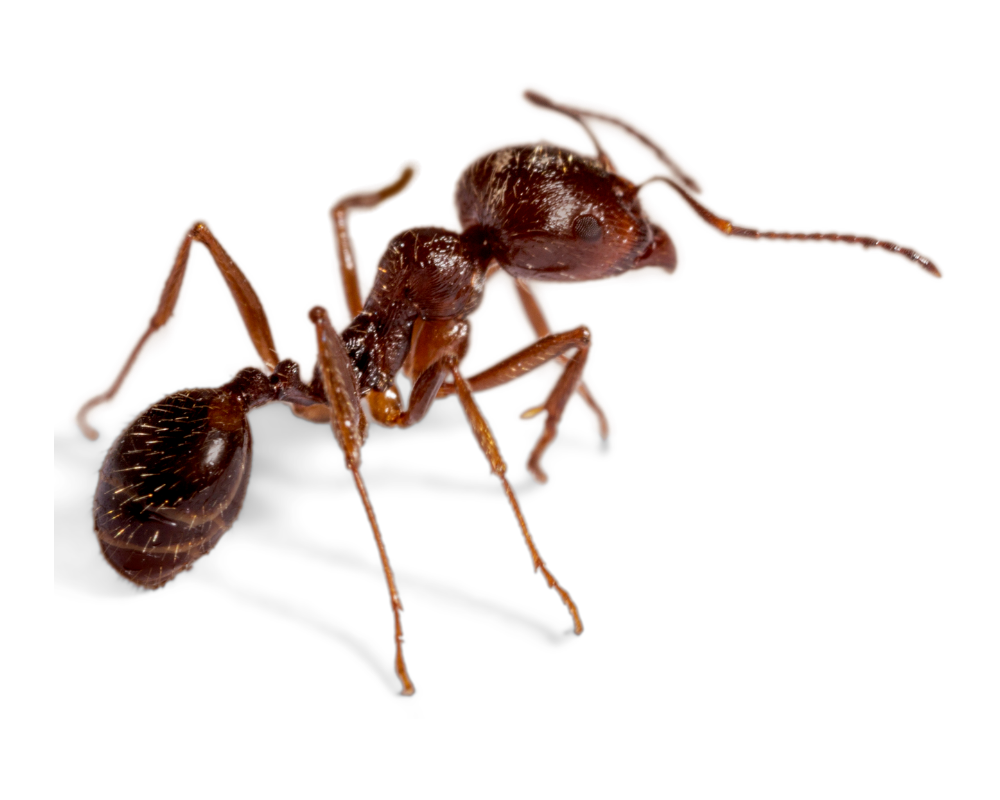
Pavement Ant
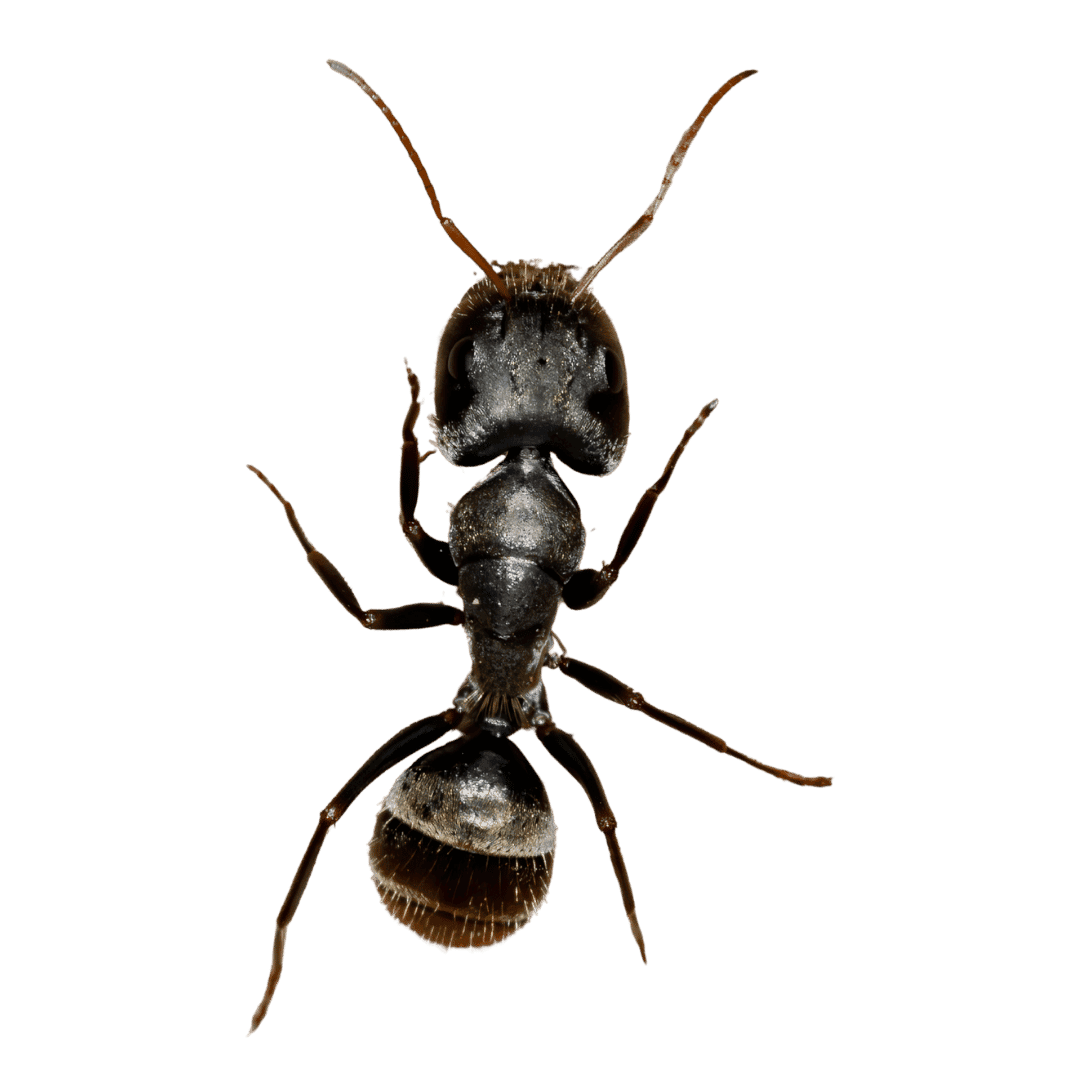
Carpenter Ant
Carpenter ants are more destructive than many other ant species, as they excavate wood to build their nests and intricate tunnel systems. Citronella ants are yellow and tend to nest in soil near foundations; when threatened or disturbed, they emit a citrus-like scent similar to citronella. Acrobat ants are small and flexible; they raise their heart-shaped abdomens in defense and like to nest in old, wet wood.
Ants, as a whole, are ancient . . . they began evolving into their modern-day species more than 100 million years ago. Today, these fascinating insects live all over the planet with the exception of Antarctica. They are impressively strong, adaptive, and organized, with each ant in the colony having a specialized job (including queen, worker, soldier, and reproductive male).
Do Ants Bite, Spread Disease, or Destroy Your Home?
Ants found in New Jersey do bite, but this rarely results in anything overtly painful. Some ants (especially red or fire ants) also sting, which can hurt and cause a local reaction, but it’s usually not medically significant; bullet ants are known for having the most painful sting in the animal kingdom, but they’re not native to New Jersey. Ants don’t spread disease the way mosquitoes and ticks do, but they may contaminate food, counters, and tabletops with garbage, microorganisms, urine, and feces.
Most species are nuisances rather than destroyers, although homeowners want to learn how to get rid of ants either way. One exception to this insect rule is carpenter ants. Because these ants actively tunnel through wood, they can weaken structures, eventually causing significant damage. While the damage these excavators cause is comparable to that of termites, it’s rarely as extensive; termites eat cellulose (the main component of wood) around the clock, whereas carpenter ants work at a much slower pace (and they don’t actually eat the wood they bore through).
Still, both pests have the potential to do costly damage if infestations go unaddressed.
Signs of an Ant Infestation
Sometimes, ant infestations are obvious; if you spill a Cherry Coke in the garage, a pile of ants is sure to appear in half an hour flat.
Other times, the signs are more subtle. But even when ants are trying to play it cool, there are ways to tell if they’ve made themselves at home in your home. Knowing how to get rid of ants starts with being able to recognize the signs.
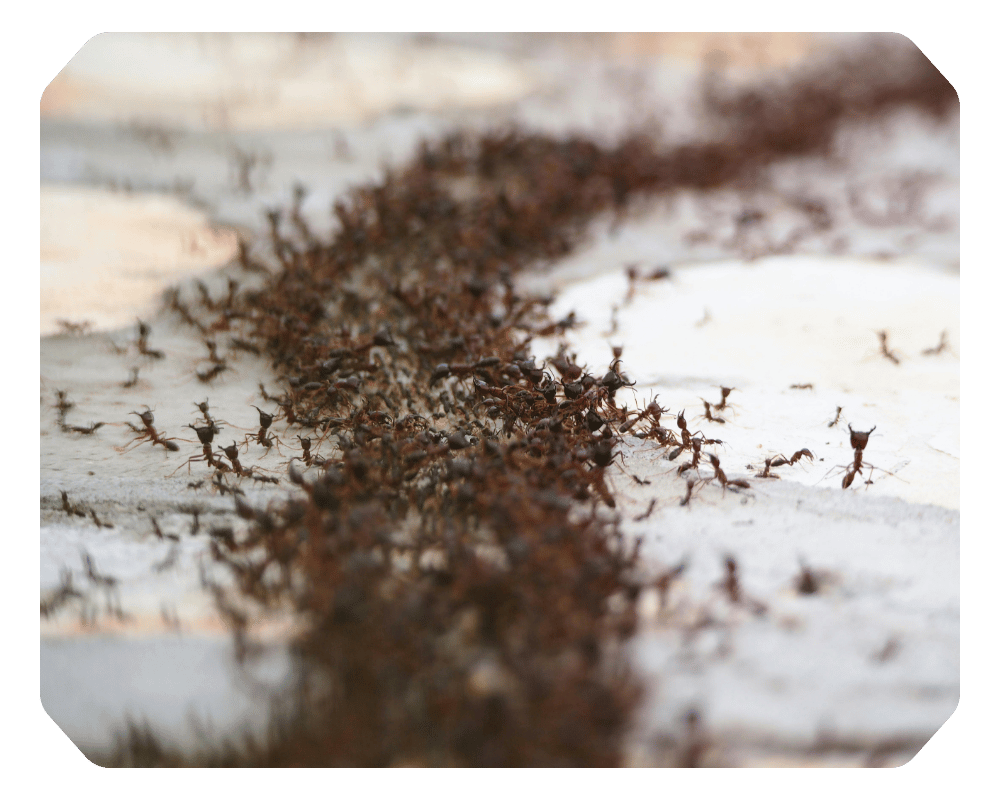
Ants walking in a trail along walls, baseboards, windows, floors, counters, or tables indicate an insect issue, as does seeing a large number of ants in the same place (such as the basement, garage, kitchen, bathroom, or laundry room). Winged ants indoors are another indication, as these flying fiends are reproductive ants, suggesting they’re setting up or expanding a colony.
Not surprisingly, carpenter ants tend to leave more evidence than other ant species, including small piles of sawdust-like material near wood. Large carpenter ant infestations might cause rustling sounds inside the walls (as the ants go about their business in the wall voids) or make wood look damaged or sound hollow.