
Jump To Section

Learn From The Pro's
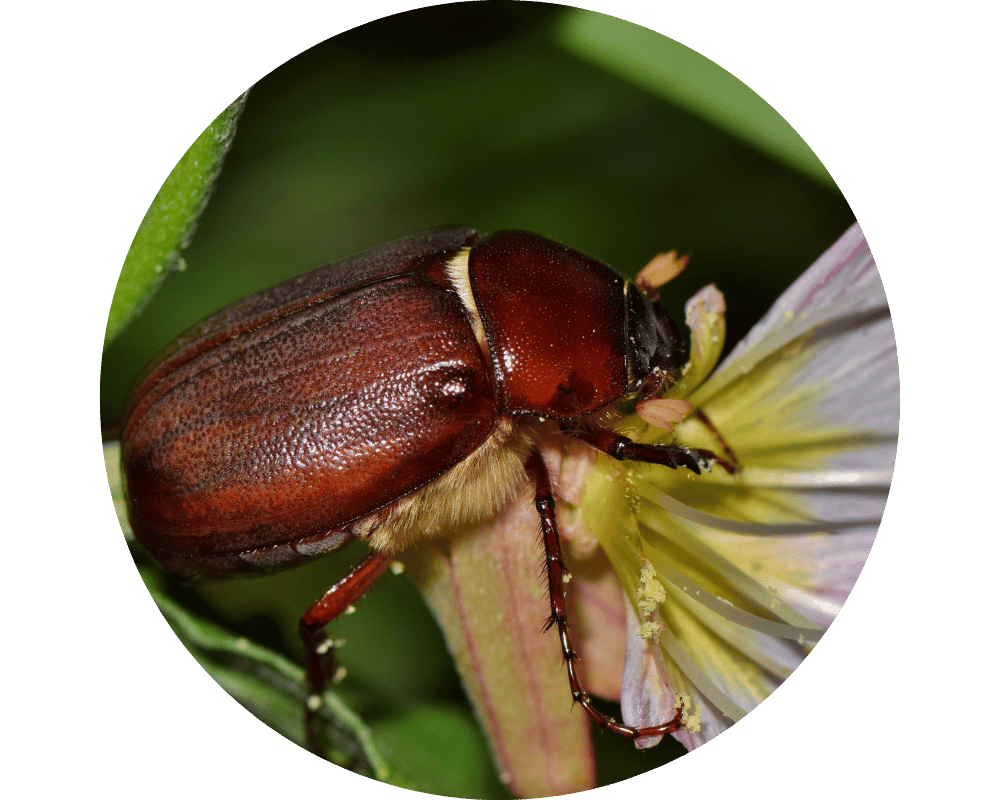
June bugs are a type of large beetle that don’t bite or sting. Although they don’t damage structures, they are somewhat harmful to lawns. They’re most prominent in spring and summer; true to their name, they often emerge in June.
What is a June Bug?
“June bug” is sometimes used as a term of endearment or to describe a Volkswagen. But what is a June bug in technical terms? These bugs are a type of large scarab beetle whose name pays homage to their lifecycle. They have predictable, seasonal existences; adults don’t survive the coldness of winter, but their grubs do.
June bugs live underground for the first few years, eventually emerging in late May or June (people occasionally call them May beetles for this reason). This isn’t a hard-and-fast rule, as they’re dialed into climate rather than Google Calendar: in some early-warming places, they might come out in April; in others, it might not be until July. Most June bugs are reddish-brown, but some are metallic green.
Once out and about, June bugs live in a variety of locations, including: lawns, fields, trees, gardens, leaf litter, and the edges of forests, often choosing places that make reproduction as easy as possible. They’re visible near lights at night and make their way over to porch lights and street lamps once darkness falls.
They’re clumsy flyers, like insects that imbibed a little heavily down at the pest pub, and they frequently run into windows and doors. They regularly run into people, too. Although this won’t hurt you, it can be startling, especially at night when you’re not quite sure what just brushed against your forearm (wayward insect or rabid bat?).
Because June bugs are a type of beetle (the most abundant species on Earth), they are prominent, but with a caveat: many beetles live all around the world, but June bugs typically don’t. They’re native to North America and can be found in the United States, Northern Mexico, Southern Canada, and elsewhere in the Northern Hemisphere.
Are June Bugs Dangerous?
We’ve answered the question, “What is a June bug?” So, let’s go a little further and explore whether or not June bugs are something you should be afraid of. June bugs aren’t dangerous to humans; they won’t bite you, sting you, or infect you with disease. They’re not dangerous to structures, either, certainly not when compared to other pests (such as termites or mice).
However, they can damage lawns, plants, and gardens. They don’t destroy farms like locusts or ravage plants like Japanese beetles or aphids, but they can cause some aesthetic destruction.
June bug grubs feed on grass roots, which cause brown patches and change the yard’s texture, causing it to lift up like a rug. The damage is typically limited unless the infestation is large; then, it can become striking.
Like many beetles, they adopt plant-based diets, feasting on tree leaves, shrubs, crop leaves, and flowers. June bugs belong to the Phyllophaga genus, which translates to “leaf eater.” Despite this, they rarely destroy farms or gardens; they’re nibblers, not annihilators.
How Do June Bugs Get Into the Home?
June bugs don’t infest homes the way rats, roaches, and ants do. They’re not attracted to crumbs or spills; they don’t reproduce indoors, and, being summer bugs, they don’t need to seek warmth. But just because they don’t infest intentionally, doesn’t mean you won’t encounter them indoors.
Because June bugs are drawn to light, they’re constantly hovering near doorways and windows, sometimes flying in when screens are tattered or missing or when doors are open.
Garages are a common point of entry, especially at night when the overhead light shines more brightly. If you’re working on your car, painting, or woodworking after hours and leave your garage door wide open, you might attract them.
When they get inside your home, they make themselves known. They fly toward lamps, chandeliers, television screens, and anything illuminated. They’re most noticeable after sunset for this reason.
Because June bugs aren’t actively trying to gain access to your home, there is very little you need to do to keep them out. Replacing ripped screens and keeping doors shut is usually enough. If one flies into your garage, shutting off the light and leaving the garage door open usually encourages them to mosey off, blowing your popsicle stand for a more luminous haunt.
June Bugs in the Yard
June bugs might not be interested in invading your pantry or crawlspace, but they are drawn to your yard. Fortunately, there are a few DIY measures that can reduce their presence (for stubborn bugs, Kapture can help!).
June bugs aren’t huge fans of strong-smelling odors, which means peppermint, neem, or garlic act as natural deterrents. Planting aromatic herbs in your garden also dissuades them (while giving you ingredients for dinnertime). Herbs they tend to dislike include mint, rosemary, and lavender, although anything with a strong scent might help.
Raking and aerating your yard regularly also helps . . . thick yards and debris attract nesting adults and provide somewhere to lay eggs. Limiting your water usage is another way to detract, as overwatered lawns create moist environments ideal for larvae.
Lighting plays a major role in attracting June bugs and many others! Harsh white and blue light bulbs attract bugs more potently than softer, yellower hues. Swapping out the bulbs makes your property less alluring; turning lights off when you’re not using them is an even better option.
Bright light is the biggest draw. If you’re wondering, “What is a June bug?”, keep your lights shining brightly, and you’ll find out eventually.


June Bug Treatment All Summer Long
If June bugs have taken over your property, we’re here to answer your mayday call. Our friendly and knowledgeable team will assess your lawn and home, create a custom plan, and offer preventative maintenance. We use fast-acting, eco-friendly, and family-safe solutions to shield you from pests of all kinds. Contact us today to learn how we can help!