
Jump To Section

Learn From The Pro's
Ants are not among the insects most likely to bite, but they can. Many species have jaws that penetrate human skin; some even use a bite-sting combo to make their marks memorable. Fortunately, ants in New Jersey are unlikely to do serious harm; those in Central and South America are the most feared.
What Does an Ant Bite Look Like?
If you’re wondering, “What does an ant bite look like?,” you’re not alone: it’s often hard to tell an ant bite from another insect bite. But ant bites aren’t one-size-fits-all; they can look different depending on the species and the person bitten.
In general, ant bites typically appear as small, raised, red bumps; the surrounding area may be swollen, irritated, or itchy. Bites may appear singularly or in clusters, especially if you have an ant infestation. Sometimes they look like mosquito or other bug bites.
Ants that bite and sting (such as fire ants) may leave more visible evidence. They can cause small, fluid-filled blisters or white, pus-filled bumps.
While ant bite signs might linger for hours and sometimes several days, the pain is usually momentary (the outlier here is the bullet ant, discussed below).
For most of us, common ant bites (such as from carpenter ants, pharaoh ants, sugar ants, or fire ants) are self-limiting and self-resolving. However, some people are more sensitive to ant venom, and life-threatening reactions are possible (although ant allergies are much less common than bee allergies). Even without allergies, repeatedly scratching itchy bites can cause serious infection . . . understanding what an ant bite looks like can be helpful in knowing how to best treat it.
Do All Ants Bite?
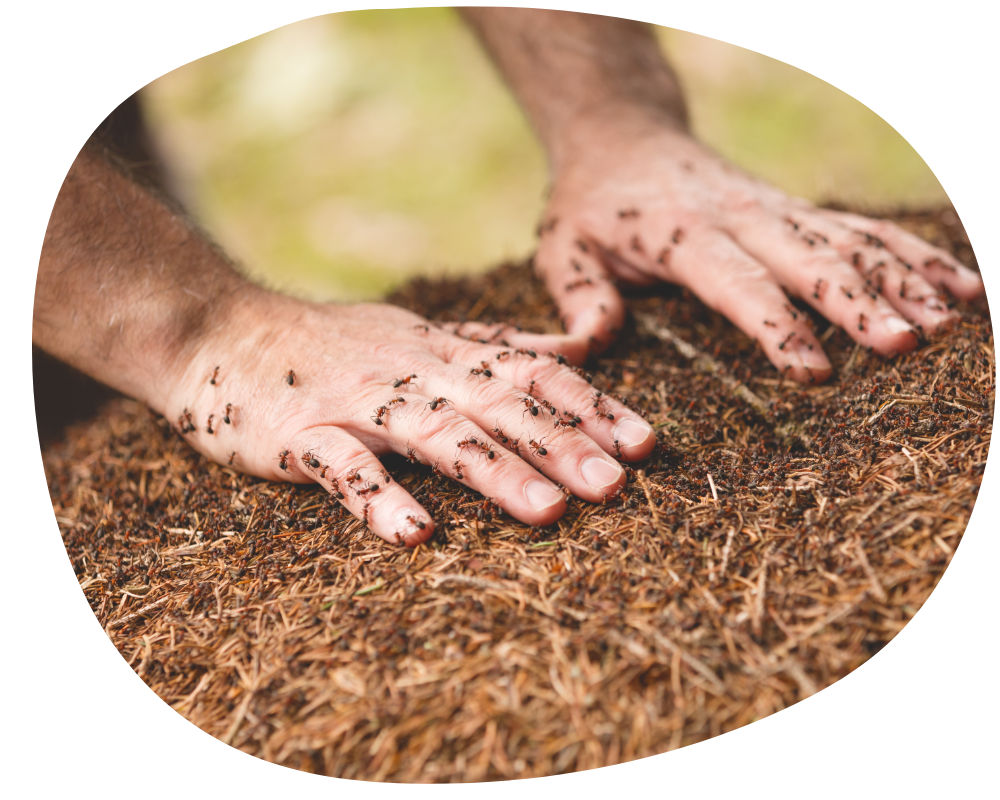
Most ants have jaws, which gives them the capacity to bite. But this doesn’t mean they all will. Some are too tiny (or have mandibles that are too small) to penetrate human skin; others are too docile. When ants do bite, it’s nearly always because they feel threatened; they may bite if you handle them, trap them against your skin, or threaten their colonies.
Instead of biting, some ants use chemical defenses. These tactics include spraying formic acid, deploying antibiotic secretions, and releasing alarm pheromones that call for backup and rally other ants in the colony.
Ants aren’t aggressive, so they’re unlikely to actively seek out human skin to sink their mouthparts into. They also don’t need to bite to survive; they don’t feed on blood like ticks or bedbugs, and they don’t need blood proteins for their reproductive cycles. They’re not especially territorial toward humans (only toward rival colonies), but fire ants are often more defensive than other ant species.
Unlike many pests, ranging from mosquitoes to mice, ants aren’t disease vectors. However, they can transmit bacteria and fungus from their adventures in trash cans, drains, and soil.
Are Ant Bites Painful?
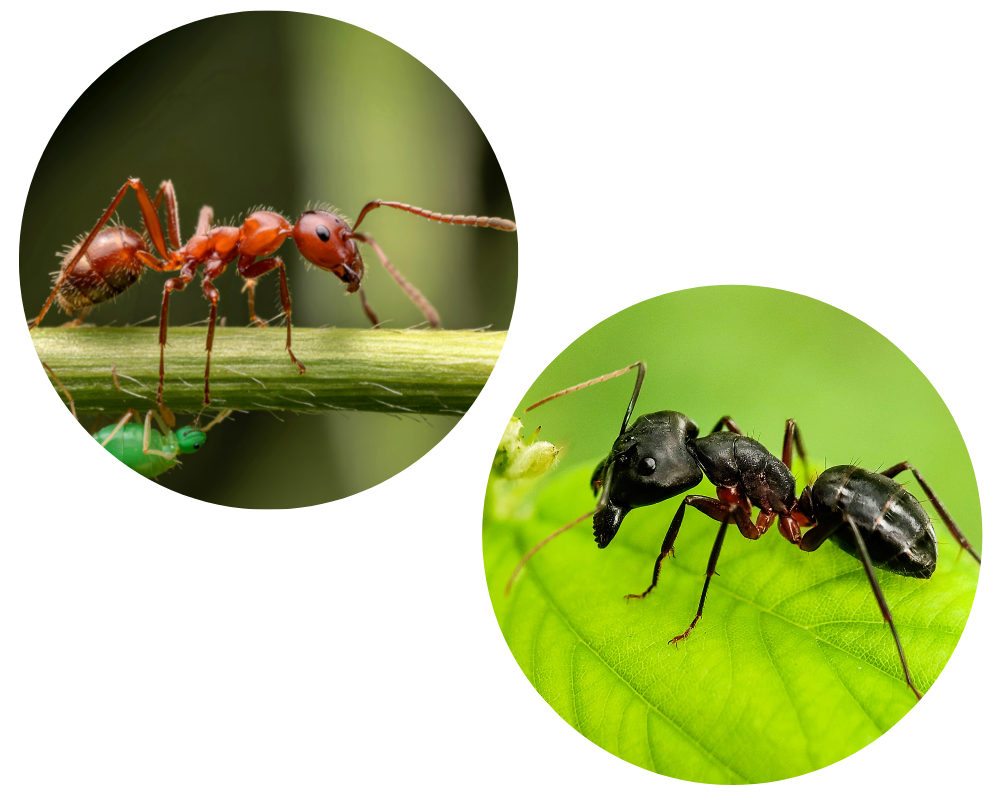
Whether or not ant bites hurt largely depends on the species. Two of the most common ants in New Jersey, carpenter ants and fire ants, are both known for their painful habits.
Carpenter ants have a rather pinching bite, largely because they’re bigger than other ants and have powerful jaws they use to excavate wood and build tunnels. Fire ants also have a painful bite, but it’s not just a bite; it’s a bite-sting one-two punch. They use their jaws to grip the skin before injecting venom through their stingers. The aftereffects can linger for days, causing moderate itching, swelling, and tenderness (though serious allergic reactions are also possible).
Many other ants common in the Garden State either don’t bite or have bites that are too insignificant to notice. Even so, they’re mightier in groups; you might not notice a lone sugar ant biting you, but dozens of them will probably get your attention.
The Dreaded Bullet Ant
What does an ant bite look like? One species answers this question differently: The bullet ant.
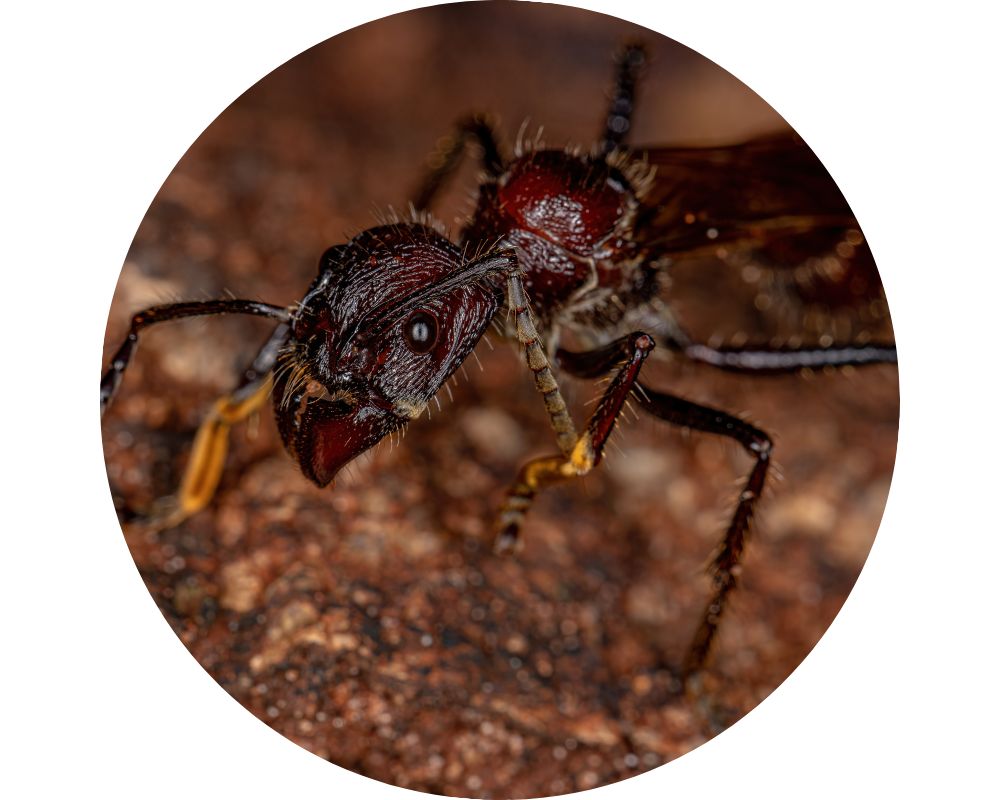
Bullet ants are larger than many other ants; they typically grow up to 1.2 inches long (for comparison, odorous house ants are roughly an eighth of an inch). Although their bite is among the most painful in the insect world, it’s not technically a bite: it’s a sting that delivers poneratoxin, a peptide that disrupts nerve signaling.
The sting of a bullet ant is often described as similar to a bullet ripping through your body (hence the name). Initially, the pain manifests as a sharp burning sensation before hours of intense agony (throbbing sensations, muscle tremors, sweating, shaking, nausea, swelling, and temporary paralysis); some people even experience hallucinations.
One reason a bullet ant sting is so painful is its staying power; while a wasp sting may linger for a few minutes, bullet ant venom can last 24-48 hours (these ants are sometimes called “24-hour ants” for this reason). The pain is so intense that it’s rated a 4 on the Schmidt sting pain index (the highest level); it’s even been compared to walking over flaming hot coals with a rusty nail embedded in your heel. Pain relievers and ice packs help manage the pain somewhat, but they don’t eliminate it completely.
Bullet ants don’t live in New Jersey; they reside in the tropical rainforests of Central America and South America. They gather in colonies, nesting near tree bases and feeding on nectar and small arthropods. Although feared, they play an important role in the rainforest ecosystem.
Despite their reputation, bullet ants aren’t aggressive; they only bite if threatened or disturbed. They’re also rarely fatal; a single bullet ant sting is unlikely to be lethal, but multiple stings can overload the body with toxins.

Avoid Annoying Ants and Other Pests
So, now you know the answer to the question: “What does an ant bite look like?” But that doesn’t stop ants from infesting your home. That’s where Kapture comes in! We provide eco-friendly, family-safe, and fast-acting solutions to treat ants and dozens of other New Jersey pests. We use innovative measures, customized plans, and same-day appointments to restore your home quickly and protect your family, pets, and property.