
Jump To Section

Learn From The Pro's
Millipedes are a type of slow-moving, docile, and long-living arthropod that favor damp areas. Despite their name, only one known species has over 1,000 legs. While occasionally confused with centipedes, these many-legged creatures are gentle; they don’t bite, prey on other animals, or get aggressive.
What are Millipedes?
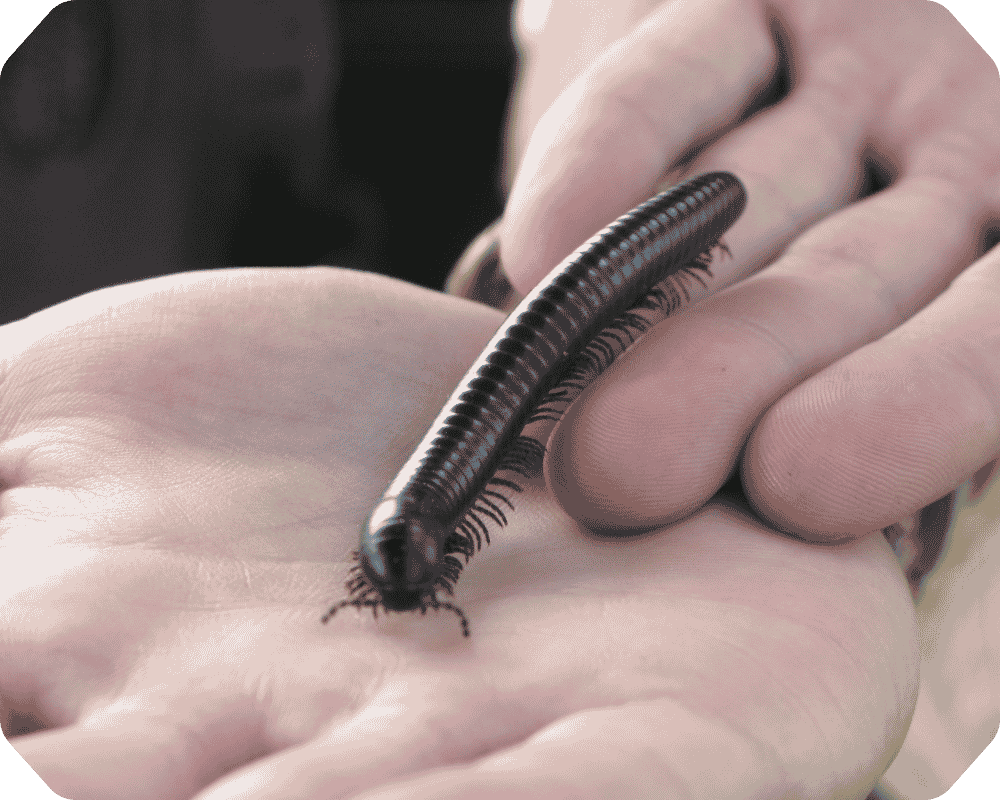
Millipedes are related to insects but are not quite insects themselves. So, what are millipedes, exactly? They are actually slow-moving arthropods with long, segmented bodies and legs on most of their segments, but their name is a bit misleading: the vast majority of species have between 34 and 400 legs rather than 1,000. A notable exception is the Emillipes persephone, a subterranean millipede found in Western Australia. It’s the only known millipede with more than 1,000 legs; in fact, with 1,306, it has more legs than any animal on Earth.
Millipedes favor dark, dank, and cool places and live outside under mulch, decaying logs, stepping stones, rocks, and leaf piles. They feed on organic matter, recycling nutrients back into the soil and playing an important role in the ecosystem. A slow-and-steady species, they’re often sluggish to mature and long-lived; some species can live for several years.
Millipedes are commonly confused with centipedes, but they’re rounder, have shorter legs with two legs per segment, and are nonaggressive decomposers that mostly feed on plant matter. Centipedes, on the other hand, are flatter, have longish legs (one pair per segment), and are fast-moving predators that hunt crickets, spiders, cockroaches, slugs, and more. Giant and tropical centipedes also hunt bats, mice, snakes, and frogs.
Millipedes don’t bite people, not just because of their docile nature but because they lack the mouthparts needed to pierce human skin. Centipedes, however, do bite, using their venom-bearing forcipules to defend themselves when threatened or handled. These bites can be quite painful, especially when delivered by larger species.
Why Millipedes Enter the Home
Now that you know the basics of these creatures, what are millipedes doing in your home? Millipedes live outdoors naturally, but they might wander indoors for several reasons, including hot, dry weather and heavy rain that drives them toward higher ground. They typically get in through foundation cracks, gaps underneath doors, basement window wells, vents, and utility openings, and they favor moisture-prone spaces, like bathrooms, laundry rooms, basements, and crawlspaces.
While millipedes venture indoors on occasion, they don’t flourish inside. They reproduce in soil, mulch, grass, and dense vegetation and rarely find enough food inside to sustain themselves.
Unlike clover mites, stink bugs, and other pests, most millipedes don’t overwinter in homes; they survive cold temperatures by dramatically slowing their activity and hunkering down in stable areas, such as beneath rocks, under mulch, or deep in soil. Some might enter homes when the freeze sets in, but unless they find moist conditions, they don’t survive long.
In other words, millipedes might think your home is lovely, at least from time to time, but they don’t want to live there. If they come indoors too often, they dry out.
Are Millipedes Dangerous?
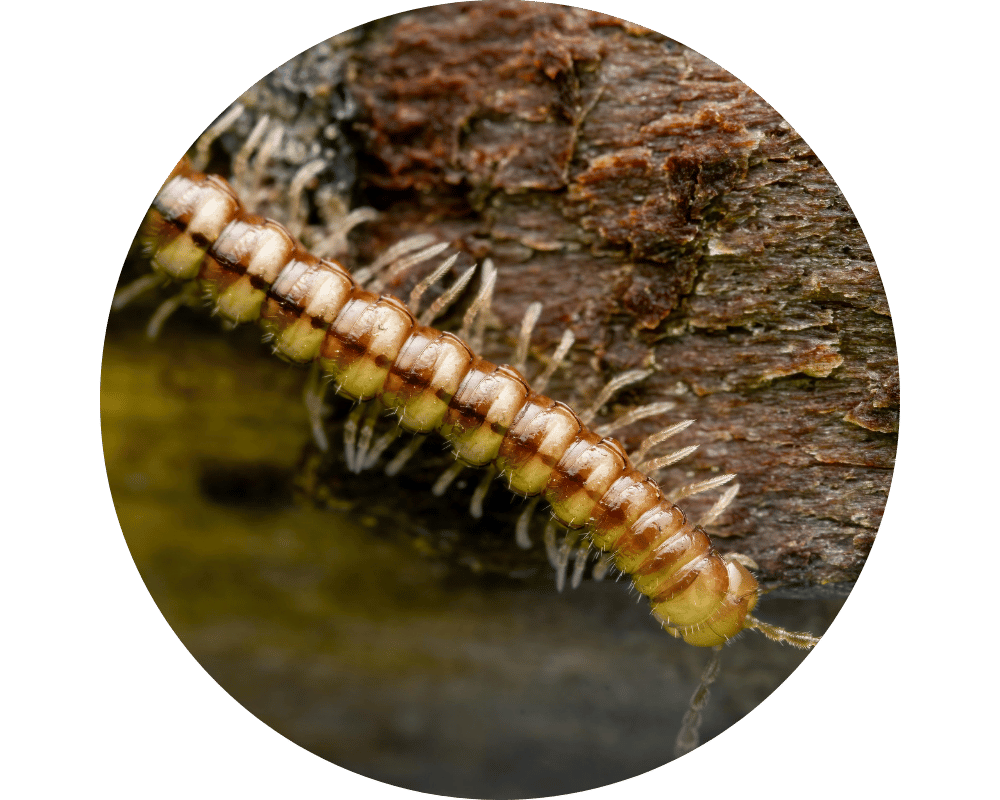
Millipedes aren’t dangerous to people or animals; they don’t bite, sting, or spread disease to humans or pets. Unlike rodents, carpenter ants, and termites, millipedes don’t destroy structures, damage furniture and other belongings, or cost you money in home repairs. They don’t raid pantries or chew through wires.
In short, they’re among the most well-behaved pests in the Garden State.
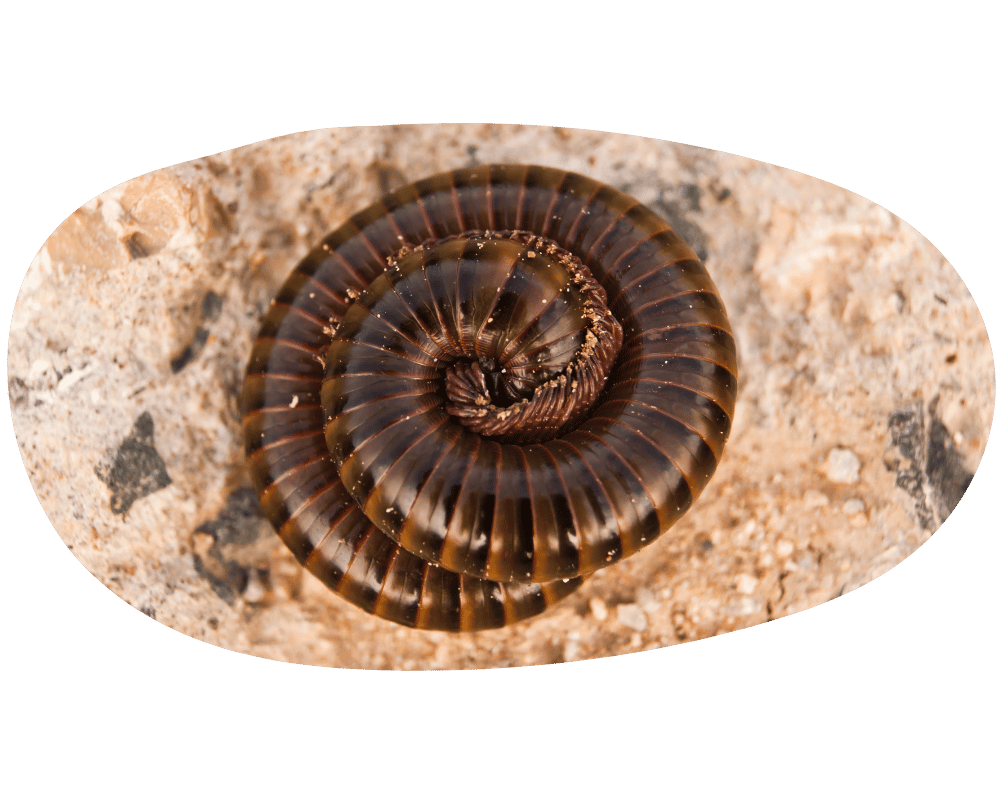
This isn’t to say they have no bad traits. Their main drawback is a foul-smelling defensive odor they release when scared, disturbed, threatened, or squished. If these secretions come into contact with your skin, temporary irritation or discoloration might occur. If they come into contact with your eyes, more significant irritation might be present.
This foul-smelling odor also means millipedes probably don’t taste too savory. This (hopefully) doesn’t apply to people, but pets that eat millipedes might find a bad-tasting meal, leaving them drooling, irritating their mouths, or causing upset stomachs.
Keeping Millipedes Out of Your Home
So . . . what are millipedes’ habits when it comes to sneaking inside your home?
Millipedes are much easier to keep out of your home than pests determined to get in. A little DIY maintenance around the house might be enough to fully deter millipedes . . . and a whole lot of other things.
Start with entry points, closing off gaps and cracks around pipes, utility lines, windows, doors, and anywhere else pests may wiggle through. Replace any worn weatherstripping, door sweeps, and screens; although millipedes can’t fly, they can crawl onto screens and climb through any holes.
If you’ve attracted more millipedes than feels normal, consider reducing indoor humidity with a dehumidifier or improved ventilation. Humidity is most likely to be problematic in basements and crawlspaces. Look outdoors as well; with millipedes, your exterior is usually more attractive than what’s inside.
To make your yard less attractive to millipedes, keep mulch, heavy layers of organic material, and leaf piles away from your foundation, and remove rotted wood, stones, and damp debris (anything that might provide a natural place to hide). Don’t overwater, particularly near your home’s foundation, and keep gutters and downspouts clear so they direct water away from the home. Anything that adds moisture also adds millipedes.
If you see a millipede inside, don’t panic; it’s likely a wayward wanderer rather than a sign of an infestation. As long as you’re comfortable, pick it up with the cup-and-paper method and put it outside. Although millipedes won’t hurt you if you handle them, they can leave their defensive spray on your hand. Picking them up might also harm them, as millipedes, like all small creatures, tend to be fragile.
Millipedes or Centipedes, We Do the Leg Work!
At Kapture, we treat a variety of New Jersey pests, including millipedes, centipedes, and all kinds of crawlies, flyers, and furry fiends. We offer comprehensive assessments, innovative techniques, and fast-and-friendly service. Using eco-friendly, safe, and quick-acting solutions, we’ll treat your infestation, assess entry points and attractants, and use preventative measures to keep pests away for good. Contact us to learn more about our services.
