Jump To Section

Learn From The Pro's
Hornets, yellowjackets, and bees are often confused for one another, but they have different habits, temperaments, and roles in the environment. In New Jersey, only one true hornet exists. You might see this species crashing your cookout, building a nest under your roof eave, or preying on other insects.
Types of Hornets in New Jersey
Hornets belong to the genus Vespa (like the scooter); they’re large social wasps. Although often mistaken for bees, they differ in important ways and play different roles in the ecosystem. New Jersey isn’t home to many types of hornets, but there are a handful of frustrating flyers that never pass up the chance to crash your backyard get-together.
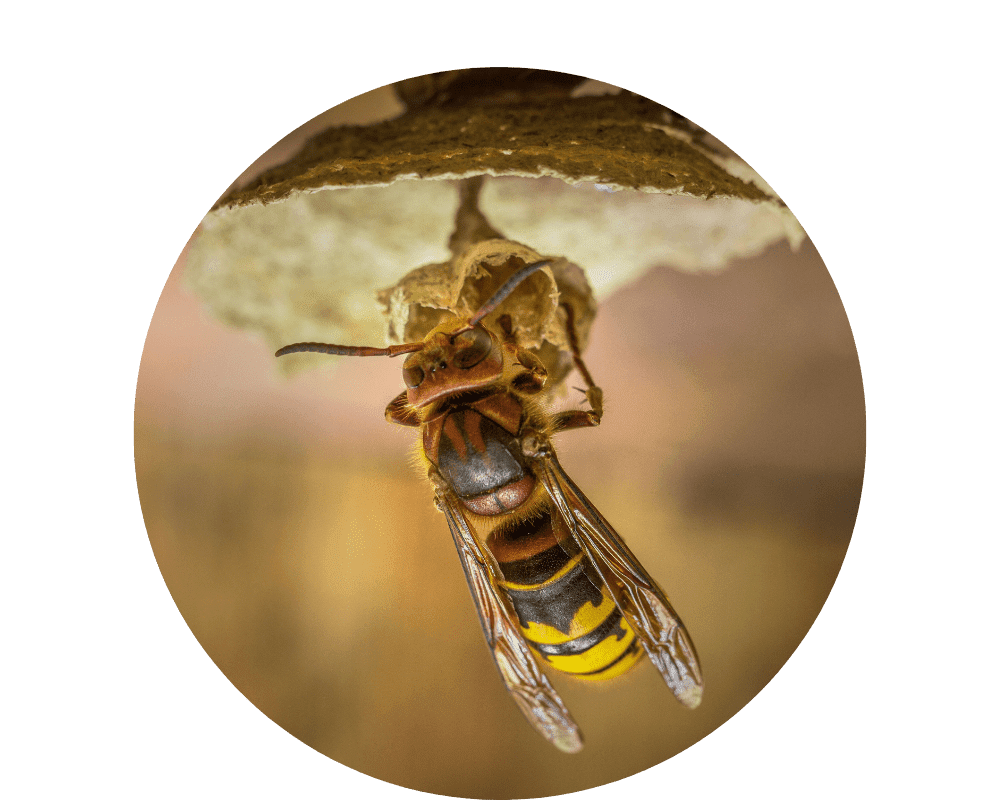
European hornets, as their name insinuates, came from across the pond; people accidentally brought them over to the US in the 1800s. Today, they’re widespread across the country, flourishing on the East Coast and elsewhere. Large, reddish-brown, and covered in yellow stripes and red markings, they are the only true hornets with a strong presence in North America. They build nests in protected areas (such as hollow trees, attics, and wall voids), are active into dusk (like many pests, they’re attracted to lights), and may become aggressive when threatened.
Bald-faced hornets, despite their name, are not true hornets; rather, they’re yellowjackets. They’re mostly black in color with ivory-white markings (making them appear bald and giving them their title), and they build large, football-shaped nests in bushes, trees, and buildings. Much more aggressive than European hornets, bald-faced hornets are bold-faced in their behavior; they’re known for their coordinated attacks, releasing hormones when threatened or angry and signaling other wasps to join in the stinging spree. However, they’re not all bad: beneficial pest hunters, they prey on flies, spiders, and caterpillars for their young.
Yellowjackets aren’t types of hornets, but they’re often placed in the same category. Both species have smooth stingers that allow them to sting repeatedly without the stinger coming out. This is problematic (and painful!) if you encounter a group at a backyard picnic, disturb a nest, or one flies into your shirt.
Hornets Versus Bees
Hornets and bees look alike to some degree, but they have clear distinctions if you look closely enough and study their behavior. Hornets are predatory wasps with smooth bodies, while bees are vegetarian pollinators with a bit of a warm-and-fuzzy essence. Bees are highly important to the environment through pollination; hornets are beneficial due to their apex predator status, providing effective pest control.
Hornets tend to be larger and longer, and they have more colorful markings. Bees are shorter and stouter and tend to follow the prototypical yellow-and-black pattern (although other colors occur, too). Hornets are defensive, territorial, and stubborn; they often overreact to perceived threats, remember people, and hold grudges. Bees don’t want to sting, partly because it kills them and partly because they’re gentle and docile in nature; bees only ever sting in self-defense.
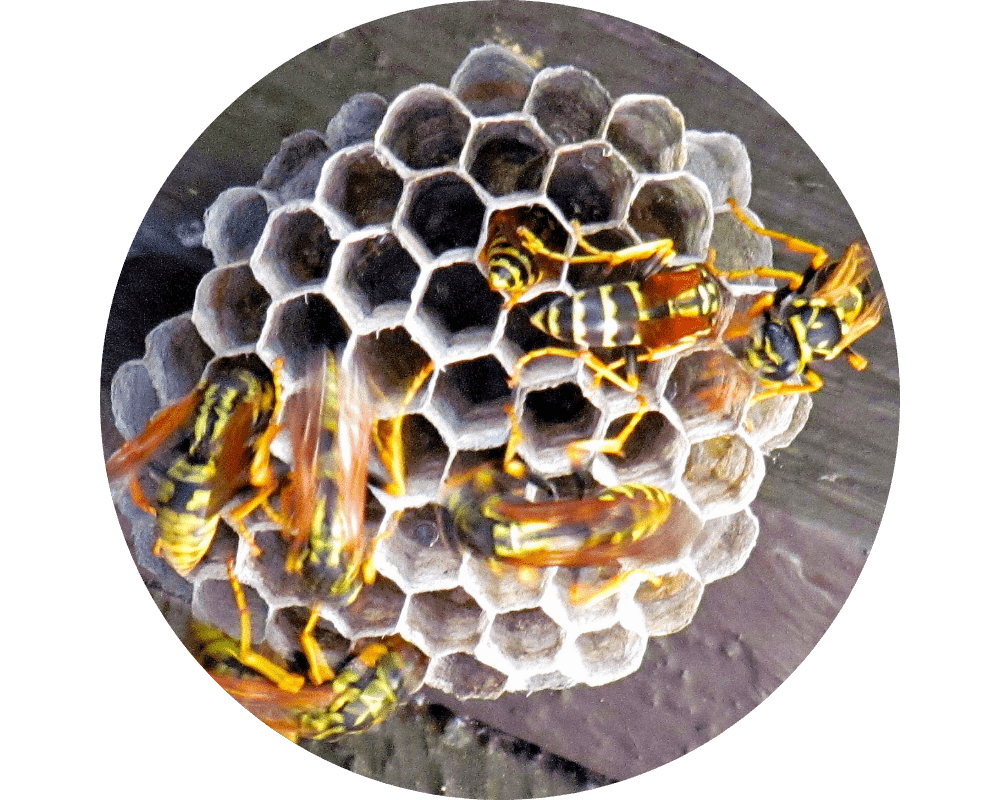
You can also tell them apart by looking at their nests. Hornet nests are made from chewed wood pulp and saliva; bee nests are made of waxy honeycombs. Hornet nests appear tear-shaped with a single entrance hole; bee nests have rows of hexagonal cells. Hornet nests only last for one season, and once winter hits, the nests are abandoned; certain bee colonies can survive the winter, especially if conditions are favorable.
Honeybees are known for grouping together in their hive, surrounding the queen, eating stored honey for energy, and using their flying muscles to generate heat, stay warm, and bide their time until spring beckons.
When Hornets Become Most Problematic
Hornets shine during summer, but they start to stir come spring. By late spring, queens are busy as bees, constructing small nests, laying eggs, and raising the colony’s initial workers. As summer arrives, workers are in their prime, building nests, feeding young, gathering food, and defending the colony. This is when these populations find their footing and thrive.
By late summer and early fall, colonies are generally at their peak and abuzz with activity; hornets get more aggressive and most annoying during this time. During the first freeze, most of the hornets die off, and the colony shuts down, but not all is lost; some queens survive by sheltering inside logs, under leaf litter, beneath bark, or inside hollowed trees. They reappear when the weather warms and reignite the hornet cycle.
Keeping Hornets Out of Your Yard and Home
New Jersey might not be home to several types of hornets, but those that are here make themselves known; nesting nuisances, they seemingly never miss a cookout. Even so, there are ways to make your property less of a hornet heyday. Start with one of the biggest pest attractions: garbage cans! Keep lids on waste bins, discard trash promptly, and clean up messes and spills as quickly as possible. Pet food is another perk for hornets (and other pests), as is overripe fruit fallen from trees.
These fliers are likely to nest in cavities, even slight ones (like eaves, soffits, siding, and rooflines). They usually start with small nests, giving you time to act before your property becomes a hornet haven. Be cautious about removing nests yourself, as these flying fiends are known to attack.
They don’t actively try to enter homes the way roaches, ants, or rodents do, which makes keeping them out of your house a little easier than keeping out pests determined to enter. Still, hornets will make themselves at home if you make it easy for them. Open doors, open windows, and tattered screens all provide access points, allowing hornets to fly right through.
While it might be tempting to swat them away, this can make them defensive and more ornery. Some hornets remember faces (even for weeks at a time), and they’re not above enacting plans of revenge; they may even retaliate against people and pets they’ve previously encountered.
Most types of hornets can peacefully coexist with humans if there aren’t many, their nests are high, and they leave you alone when outside. But if not . . . if you have a true hornet problem, professional pest control is always the best option.
We Help Hornets Buzz Off
At Kapture, we home in on hornets, remove them from your property, and keep them gone for good. Whether you have bald-faced hornets in your barn, yellowjackets in your greenhouse, or European hornets nesting around your garage, we’ll work quickly to remove these buzzkills and keep them away. We offer preventive maintenance and same-day services. Contact us for all the details.