Jump To Section

Learn From The Pro's
Spider Exterminator for Eight-Legged Enemies
Spider exterminators are among the most popular pest controllers, and for one main reason: spiders are scary! Although arachnophobia is officially only present in 3% to 15% of the population, most people don’t want to share their homes with any creepy crawlies . . . especially when they’re big and fuzzy.
The reasons spiders cause distress in so many come down to a variety of factors. Firstly, spiders are strange-looking; with their many eyes and legs, they look like a cross between an octopus and a Kit-Kat Clock. They’re unpredictable too; some are fast, some can jump, some use their webs to quickly repel down from the ceiling, and some only come out at night.
Naturally, evolution plays a role, as humans are innately geared to fear anything potentially venomous, and it’s difficult to tell toxic creatures from harmless ones on sight alone. For those who’ve had a negative experience with spiders in the past: a spider bit you, frightened you, or stole your boyfriend, learned fear factors as well.
The Most Common Spiders in New Jersey
People living in New Jersey often need a spider exterminator because these weavers and hunters are so common across the state. Although they come in a spectrum of varieties (with tens of thousands of documented species), only a handful regularly show up in homes, yards, and businesses.
Wolf spiders are among the most frequently unwanted guests, known for startling homeowners with their giant size, large eyes, and quick speed. Furry and leggy, they summon fear in the majority of people, even those who aren’t normally afraid of spiders. This isn’t entirely warranted, however; wolf spiders aren’t dangerous to people. They can bite, but they rarely do, and their venom is too weak to matter; their default is to run away rather than dig into human skin.
Common house spiders live up to their name by making themselves at home in your home; they live indoors year-round and build messy, tangled webs in the corners of crawlspaces, garages, basements, and laundry rooms. Cellar spiders often live in the same areas and are known for their long bodies.
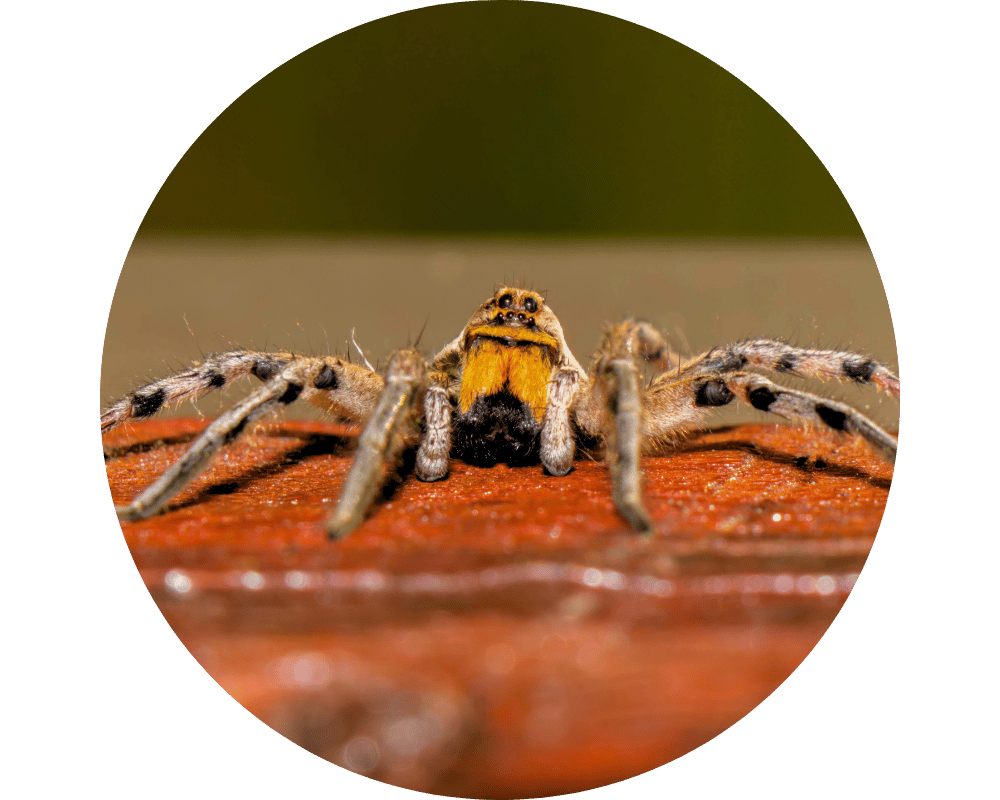
Wolf Spider
Jumping spiders are small but mighty and especially unsettling due to their unpredictability. They’re often found on walls, windows, and door frames, but they don’t stay there for long; taking a leggy leap of faith, jumping spiders can jump anywhere from 20 to 50 times their body length. This is the equivalent of a person being able to jump from one side of Target to the other.
Orb weavers are another common New Jersey nuisance; they construct ornate, sometimes overly complicated webs recognized for their classic circular shape. They are frequently found in gardens and are more prominent in summer.
Yellow sac spiders are common, too; these small, pale yellow-to-brown spiders live outside but frequently take wrong turns and end up indoors. You might have them if you see little silken sacs (they make these rather than webs). They bite when trapped against the skin or threatened, but their venom doesn’t cause a strong reaction; bites are painful and usually feel like a sharp pinch, followed by temporary burning or itching.
The Most Dangerous Spiders in the Garden State
New Jersey isn’t crawling with poisonous spiders, especially not when compared to places like Australia, but it’s not void of venom, either. Black widows are the most medically significant spiders in the region; the females, known for their hourglass marking and shiny skin, aren’t typically aggressive, but they are defensive. They’ll bite when trapped, handled, or feeling threatened.
Black widow venom can cause severe pain, sweating, nausea, headaches, and painful muscle spasms that start right away or build over several hours and last a few days. Life-threatening reactions are rare, but medical attention is warranted for any serious symptoms that won’t let up or involve extreme symptoms, like difficulty breathing, significant weakness, fainting, or repeated vomiting.
Brown recluse spiders are another species known for causing medically significant reactions. These spiders aren’t native to New Jersey (preferring warmer and dustier states like Oklahoma, Texas, and Missouri), but they can still show up in homes after hitching rides in cars and luggage, on furniture, in moving vans, and in shipping boxes.
Unlike black widows, brown recluses don’t usually cause systemic reactions; their venom is far more linked to direct tissue damage at the site of the bite. Bites can be painful, with pain occasionally increasing and swelling, blistering, and a black-and-blue bruise-like hue often developing. The underlying tissue can even die as a result of the bite, although most bites don’t cause this.
Despite their scary reputation, brown recluse bites rarely cause life-threatening reactions. The exception to this is children; in kids, systemic illness can develop (despite not developing in adults), leading to the destruction of red blood cells and kidney damage.
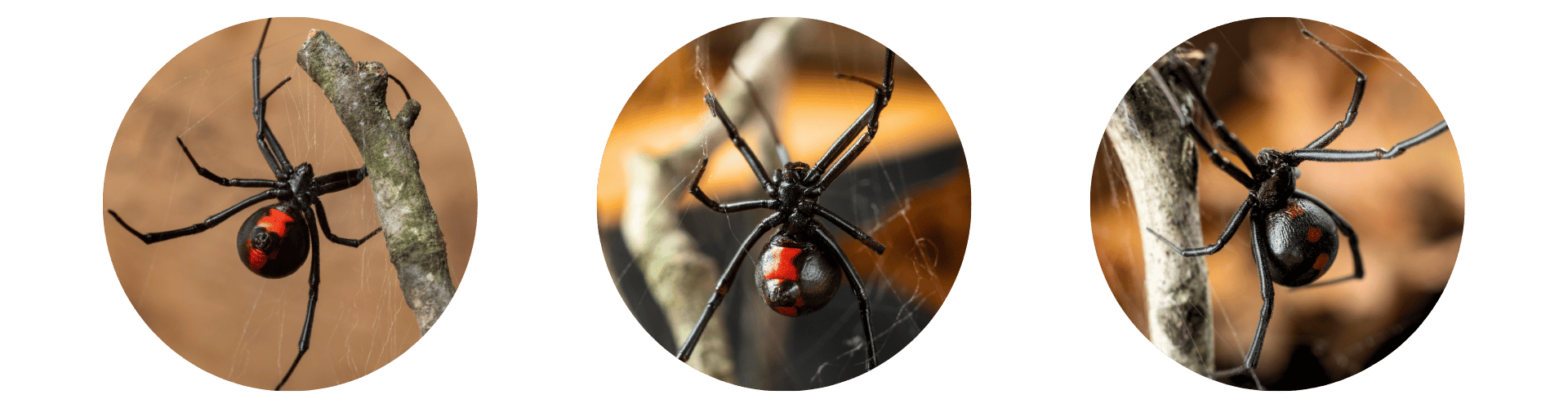
Black Widow Spider
Keeping Spiders Out of the Home
It’s all but impossible to keep every spider out of your house, and odds are high that you’ll see one crawl across your living room wall from time to time. But harboring a single spider every now and then is different from serving as an arachnid Atlantis.
Fortunately, there are several steps you can take to reduce the number of spiders stretching their legs inside your home gym.
The first step is cutting off their access points. Spiders, because of their teeny-tiny size, can crawl through extremely small gaps and cracks around doors, windows, utility lines, and pipes. Sealing these closes off entryways. Door sweeps, which are strips installed at the bottom of doors, prevent spiders from crawling from your garage into your hallway. Repairing window screens, especially if you leave your windows open, is another way to close off access.
Spiders are drawn to clutter, as it gives them places to hide; they’re also drawn to cardboard boxes where it’s easy to nest inside. Keeping things organized, orderly, and ideally stored in sealed plastic containers makes garages, attics, and crawlspaces less inviting. Vacuuming regularly gives you a chance to remove webs and eggs and helps make your home less hospitable to any spiders already inside.
Spiders aren’t generally attracted to crumbs or spills the way mice and ants are, but they are attracted to insects (their prey). If other insects are in your home, spiders will join them: seeing your fly-filled basement as a trendy lunch spot. Spiders are attracted to water, too, as an arachnid’s gotta drink! Fixing leaky pipes removes that draw.
Spending a Saturday spider-proofing your exterior can even decrease the chances of spiders finding their way into your home (particularly spiders like wolf spiders that live outdoors). Add yard work and lighting to your to-do list: trim shrubs and branches back enough so they don’t touch your home’s siding, rake up leaves and remove debris, and reduce outdoor lighting (as it attracts spiders and everything else).