
Jump To Section

Learn From The Pro's
Mud daubers are solitary wasps that build their nests out of mud. While not as likely to infest as other wasps, such as yellowjackets, they’re commonly seen during warm weather months. They hunt spiders outdoors, only venturing inside either by accident or when looking for protected spaces. Although they can sting, they’re not aggressive and rarely get defensive or protective.
Mud Daubers in New Jersey
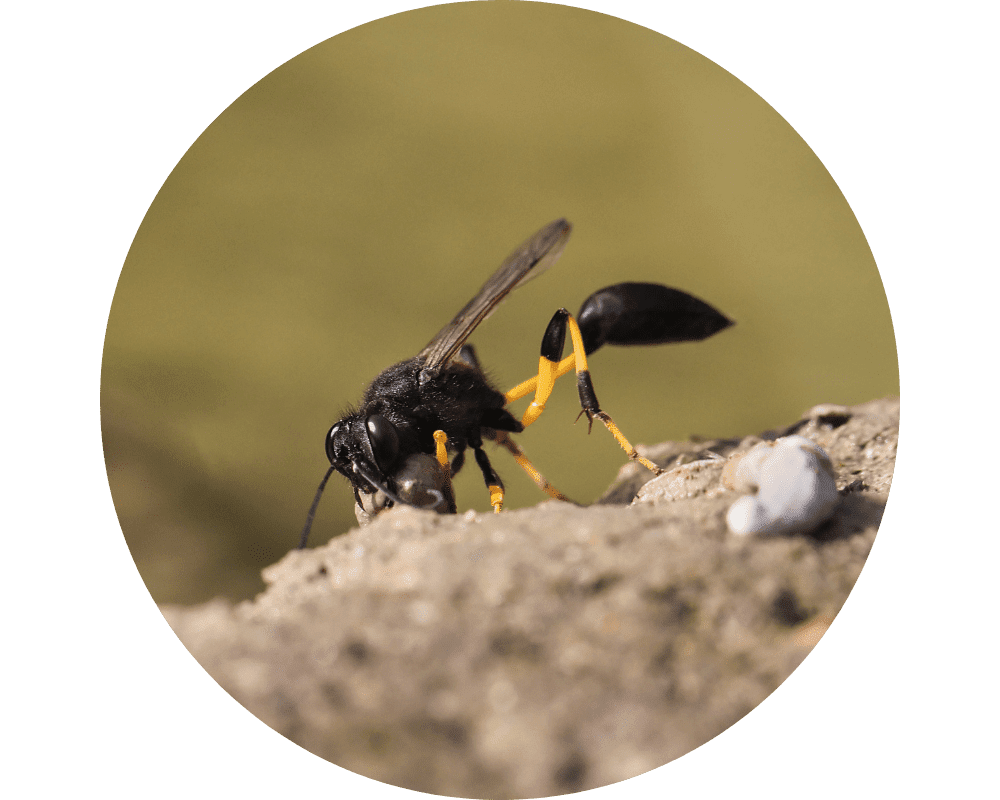
Mud daubers are a type of wasp that dabbles in mud, building their nests out of soil, clay, and sediment. Unlike other types of wasps, such as yellowjackets, these buzzers are solitary, preferring to literally fly solo and live lives of isolation. They have long, narrow waists, connecting the abdomen and thorax, and come in a wide range of colors, including the traditional black and yellow as well as an unusual metallic blue.
Only females actually do the nest-building; males focus their energies on mating, although some species are more gentlemanly than others, sometimes staying near the females’ nests and guarding them. Since males can’t sting, this is more for show (or brownie points!) than anything else.
Common in New Jersey, they especially show themselves when warm weather beckons. You’re most likely to encounter them from May to August, when females are actively looking for mates, hunting spiders for their young (spiders are their main prey), and shuttling mud back and forth to construct their homes.
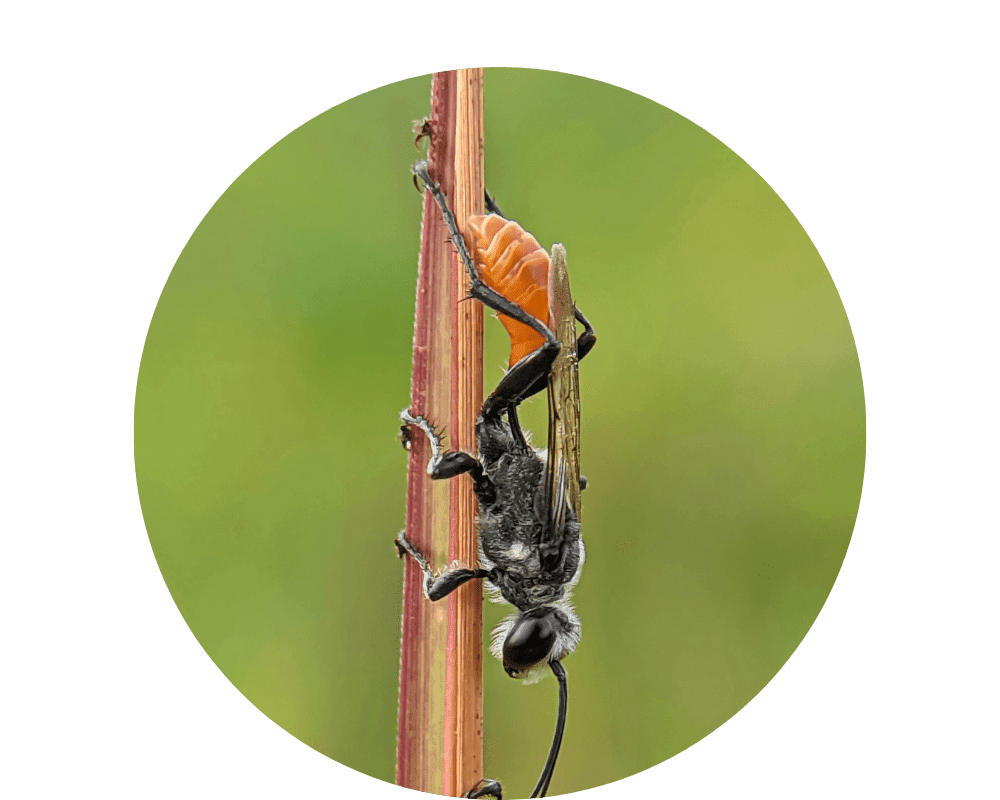
Mud daubers don’t typically invade the way other pests do. Because they are lone wolves, you can have several nests around your property without a full-blown infestation or even much of a problem. These nests are most common under roof eaves, inside garages and sheds, around barns, inside outbuildings, and beneath porches. They are usually tan, gray, or brown (representing the colors of nearby mud or soil), with a texture that is rough, rigid, or lumpy. These nests have variable shapes; some look like pipes, tubes, or rows of mud cells. Their sizes also differ: while single nests are small (about an inch long), some nests have multiple compartments, making them much larger.
How They Enter Your Home
Flying insects frequently get indoors through open doors, open windows, or tattered screens. They can also get in through gaps around or under doors, in siding, in vents, and in rooflines. Because of these fliers’ extreme thinness, they don’t need much space to squeeze through.
While many pests (such as mice, rats, ants, and roaches) enter homes in search of food, these wasps usually hunt outside (though it’s not impossible for one to follow a spider indoors). Adults mainly focus on hunting and paralyzing spiders before bringing them back to their nests to feed their larvae. They hunt a wide range of spiders, including orb weavers, jumping spiders, and crab spiders. Blue ones are especially skilled at hunting black widows, paralyzing them before they have a chance to bite in defense.
Adult mud daubers don’t eat spiders and, instead, consume nectar and other plant liquids; they visit flowers on occasion and contribute to pollination to some degree. Although certain wasp species are well known for crashing barbecues and hovering around hamburgers, soda cans, and garbage bins, these buzzers behave themselves, typically leaving cookouts to the humans.
With their food sources outdoors, they normally enter homes only by accident or when seeking protected spaces to build their nests. Places where they can come and go with ease, such as drafty attics, semi-covered porches, or open garages, are ideal.
Signs of an Infestation
As mentioned above, infestations aren’t as common as other types of wasps, and seeing a handful of nests around your property doesn’t mean you’ve been overrun by these flyers. Still, infestations aren’t impossible, as multiple nests add up.
Signs of an infestation include small tubes or clumps of mud on walls, rafters, and eaves. You might see nests inside protected areas (such as under porches, below awnings, or in the corner of a gazebo). You may also spot these wasps frequently flying around your property (or in and out of your home). You’re unlikely to see paralyzed spiders or spider remains unless you crack open a nest or one falls down and breaks open on its own.
Do These Wasps Sting?
Females can and do sting, but rarely; these wasps are docile and unlikely to attack. Even walking by a nest doesn’t often elicit any kind of defense. They have no colony to defend and thus see you as less of a threat than social wasps might. Their stingers are primarily used to paralyze spiders as part of their larva feeding cycle.
When they do sting, it feels similar to other wasps, and stings can cause redness, localized swelling, and pain. However, because of their nonaggressive nature, these wasps are highly unlikely to sting multiple times, even though they’re able to. They prefer to take a one-and-done route. If both yellowjackets and mud daubers are living on your property, yellowjackets are much more likely to sting you . . . and enjoy it!
With their easygoing nature, these gentle wasps are among the least dangerous ones, but they’re not completely harmless. Just as you can be allergic to bees and other types of wasps, you can also be allergic to their venom. In those especially susceptible, this can cause a severe systemic reaction marked by hives, throat swelling, tongue swelling, and difficulty breathing. Any indication of anaphylaxis is a medical emergency.

No Matter the Wasp, We Have You Covered
Whether you have them setting up nests in your backyard or living in your greenhouse, Kapture can help. We treat a wide variety of New Jersey pests, from wasps, rodents, roaches, and mites to mosquitoes, earwigs, ants, and more. Using innovative techniques, eco-friendly methods, and family- and pet-safe solutions, our friendly, knowledgeable, and experienced team works quickly to remove pests and keep them away for good. Contact us to learn about our same-day services and double-money-back guarantee.