Jump To Section

Learn From The Pro's
If you have holes in your yard, pests may be to blame. While several types of pests dig into soil, wasps are one of the main offenders. Depending on the species, they may dig holes to build nests, lay eggs, or hide young. Lots of holes can indicate a pest infestation and the need for professional pest control.
Holes in Yards and the Wasps that Create Them
Holes in yards may be little more than an annoyance, or they may signal a pest infestation. Wasps, in particular, are known for their soil-digging ways, leaving tiny abysses all over your lawn like some kind of insect calling card. But which wasps are the biggest offenders? It turns out, there are several.
Cicada killer wasps are among the main culprits; these solitary wasps dig burrows in loose soil, leaving behind piles of dirt. The holes they create are usually the size of a quarter (or larger). Great golden digger wasps also dig tunnels in the ground and use those secret chambers as nests. Prolific hunters, they attack grasshoppers, crickets, and katydids for their young. Great black wasps are guilty, too; they are solitary wasps that nest in the ground.
Sand wasps, true to their name, nest in sandy areas and favor well-drained soil in sunny spots. They often nest near one another. Scoliid wasps don’t live in the ground, but they dig into the soil to lay their eggs; you might see them flying low over lawns, searching for food (e.g., a steaming hot plate of beetle grubs).
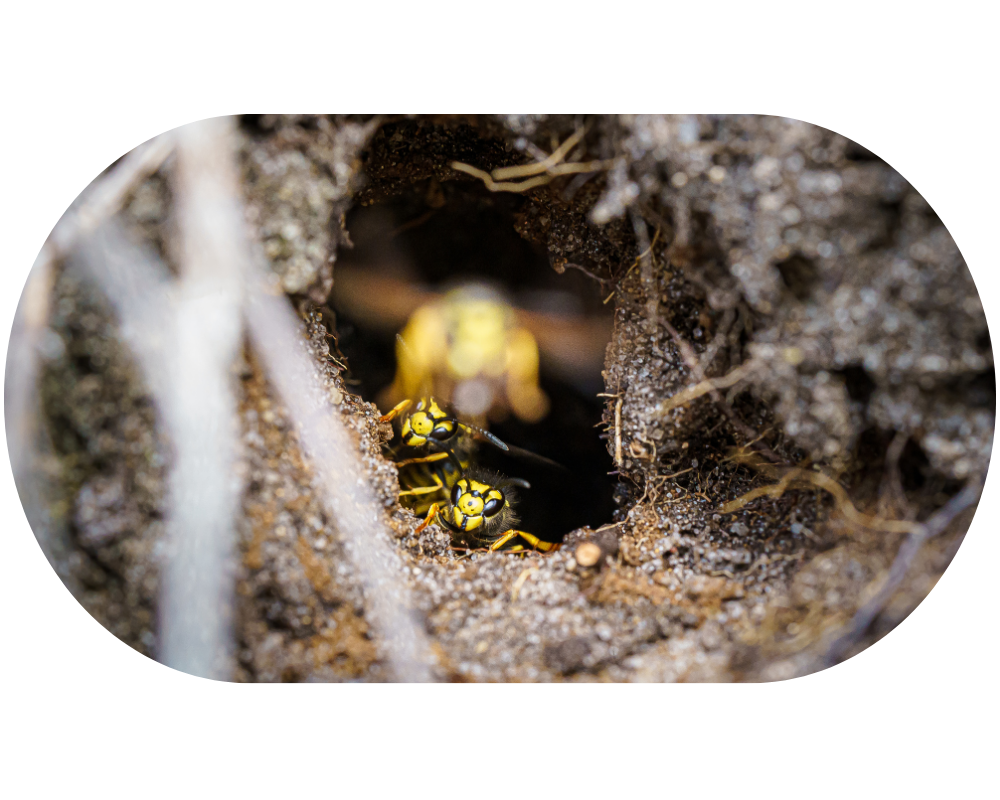
Yellowjackets are perhaps the most dangerous of all ground dwellers. While they can dig holes and nest underground, they often prefer not to get their wings dirty; instead of digging new burrows, they use abandoned ones, moving into pre-existing cavities or old rodent homes. Although they don’t spread disease like other insects (such as mosquitoes and ticks), yellowjackets can be quite angry and defensive, especially when guarding their nests or when food is scarce. This sometimes causes them to sting people or pets who pose no actual threat to them.

Are These Holes Dangerous?
Holes in yards can be dangerous for a few reasons. Extensive burrowing near foundations, patios, or retaining walls may interfere with soil stability or saturate the soil and cause structural issues and costly home repair bills. Holes can be tripping hazards for kids playing soccer and one-way tickets to Stingsville for pets (curious cats and dogs often stick their noses where they don’t belong and disturb wasp nests). These burrows may also damage lawn equipment by interfering with mowing, edging, and other landscaping tasks.
Of course, it’s not just the holes that are dangerous but the hole-makers. Wasps can pose a significant danger to anyone allergic to their venom, as they’re among the insects most likely to cause anaphylaxis. Wasps’ stings cause discomfort, redness, and irritation, even if you’re not allergic. Because they don’t lose their stingers, wasps can sting over and over until they tire or get bored, or you get away.
Even so, not all hole-causing wasps are aggressive; many are solitary and, with no nest to defend, less likely to perceive someone mowing the lawn as a big, bad giant out to get them. Yellowjackets, as mentioned above, present the biggest stinging hazard; they’re social wasps known for overreacting and working together to defend their nests.
How to Keep Wasps Away
Keeping wasps away from your yard requires different tactics than keeping them out of your house. One key step is keeping your lawn healthy; lush, thick grass is less appealing than thin yards with patches of exposed soil. If you see old rodent burrows, fill them or block them off (just make sure they’re empty first). Mulch also deters wasps by creating a barrier between them and the ground.
Food sources don’t encourage digging, but they draw wasps to your property, increasing the odds they’ll decide to stay. To eliminate this attractant, keep garbage cans tightly sealed, store food (including bird or squirrel food) in tight containers, and clean up spills promptly. If you have apple or pear trees, pick up any fallen fruit.
Increasing wasp activity warrants professional pest control. If wasps have established colonies near entrances, decks, porches, playgrounds, or walkways, this is especially important.
Other Pests that Create Lawn Divots
Wasps are lawn lurkers and yard nuisances, but they’re far from the only pest peppering your property with more divots than a golf course. Several other insects and rodents may also create holes in yards.
Ground-nesting bees are common earth excavators; they’re solitary bees that dig small tunnels in areas of the yard with little vegetation. They dig holes for the same reasons as wasps: to lay eggs, protect young, or create shelter. Ants dig small entrance holes in lawns to access their colonies; these holes may be surrounded by mounds of sand-like soil. Earthworms create tiny holes to slither deep into soil where they live and thrive; damp, rich dirt keeps them moist and protects them from birds, their feathered foes.
Mice and rats dig holes to find or hide food, escape predators, warm up, or cool down. Their holes are small but larger than insect holes and may pose a greater hazard or be an aesthetic eyesore. Common New Jersey pests are unlikely to dig giant holes; if you see tons of large holes, it might be time to interrogate your dog.
We Make Your Yard Whole Again
At Kapture, we’re experts in a variety of Garden State pests (including several wasp species). With same-day appointments, friendly service, thorough assessments, and innovative solutions, we treat infestations both big and small. Contact us to learn more about our five-star reviews, double-money-back guarantee, and custom care plans.