
Jump To Section

Learn From The Pro's
Shield bugs don’t bite unless you are a plant. But just because they might not be able to pierce your skin, they can still invade your home and destroy your garden. Fortunately, they don’t cause structural damage or spread disease; they just hunker down until spring.
Do Shield Bugs Bite?
Shield bugs are commonly found in homes once fall arrives; they move into wall voids as the weather cools down, looking for a cozy nook to wait out Old Man Winter until spring beckons. But while these pests are common, just how dangerous are they? In other words, do shield bugs bite?
No, not in technical terms, anyway.
Unlike mosquitoes, ticks, and bed bugs, shield bugs are not parasitic. Unlike wasps and spiders, they’re not venomous. They don’t bite as a rule, not even in an act of self-defense; although they might try, they won’t succeed. Shield bugs have piercing mouthparts that are not sharp enough to penetrate human skin. They can’t successfully bite pets, either.
This isn’t to say that the question, Do shield bugs bite?, is completely straightforward. Shield bugs do bite plants, using their straw-like mouthparts to penetrate leaves, stems, and fruit, before sucking out the fluid inside. Some species may also feast on small insects.
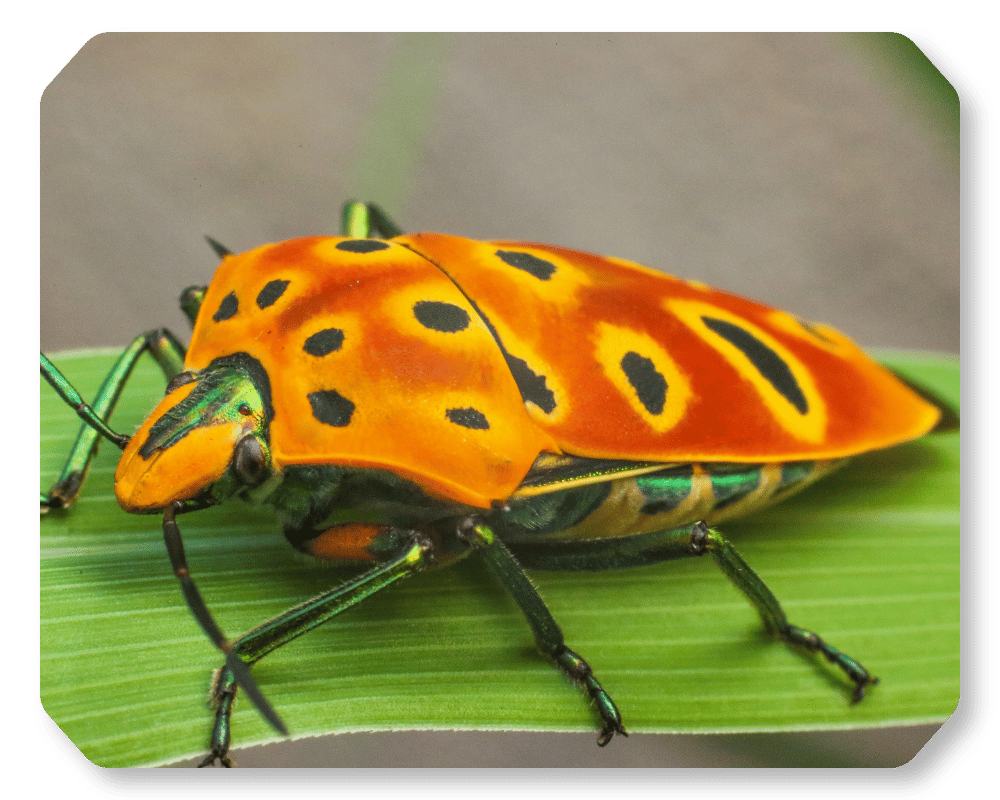
Despite their fangless existence, shield bugs are considered pests for a few reasons. As mentioned above, they commandeer your home when winter approaches; while they don’t eat wood like termites or chew on wires like mice, insects in the walls are certainly unsettling.
In spring and summer, shield bugs might threaten gardens and trees, although this isn’t a hard-and-fast rule. Some are beneficial, especially when they eat beetles, caterpillars, and other pests that frequent Fig Row. Some are fairly neutral, feeding on plants but leaving behind little more than small dimples on tomatoes, beans, and peppers. But some invasive species can do widespread damage.
The brown marmorated stink bug is one of these. Native to Asia, it was first documented in the US in the 1990s in Pennsylvania, likely brought in via shipping cargo. Today, it makes its home across the country, including New Jersey.
This species can invade yards in large numbers (hundreds or thousands), discoloring, deforming, and spoiling produce. Because it lacks many natural predators, infestations can flourish. It’s also one of the shield bugs most likely to overwinter in your wall voids
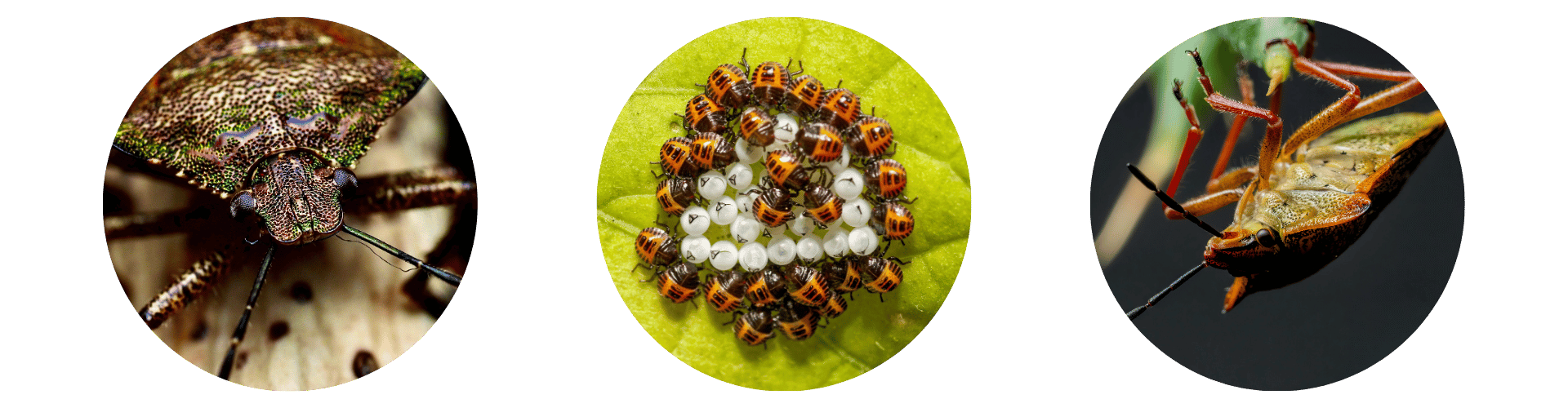
Where Do Shield Bugs Live?
Shield bugs are found in various US states, but they’re most prominent in the East, Midwest, and Southeast, with New Jersey, Pennsylvania, West Virginia, Maryland, and Virginia being among their favorite places. They prefer to live among thriving vegetation, farms, orchards, gardens, and wooded pockets.
Shield bugs live outdoors for part of the year, summering under leaves and near plants. Once autumn nears, they seek any protected shelter they can find, including buildings, sheds, underneath bark, and in homes. In houses, they live in attics, wall voids, crawlspaces, and around windows.
They typically invade at the same time each year, starting in late August through November (depending on how cold the weather gets). Peak activity occurs in September or October, when large groups of shield bugs cluster on sunny, south- and west-facing walls before finding their way indoors.
Even though they’re pests, they are on their best behavior once they infest. They don’t destroy your things or your structures, and they don’t spread disease. In fact, they don’t really do much at all.
During winter, shield bugs effectively enter a dormant stage (diapause), a period of greatly reduced activity or development. They don’t reproduce or feed; they live off energy reserves. Once the weather warms, they reawaken; you might see them flying around your home or crawling near windows, looking for a way back outdoors.
Although they’re programmed to stay in diapause until spring, warm indoor temps might temporarily rouse them and confuse them, tipping you off to their presence.
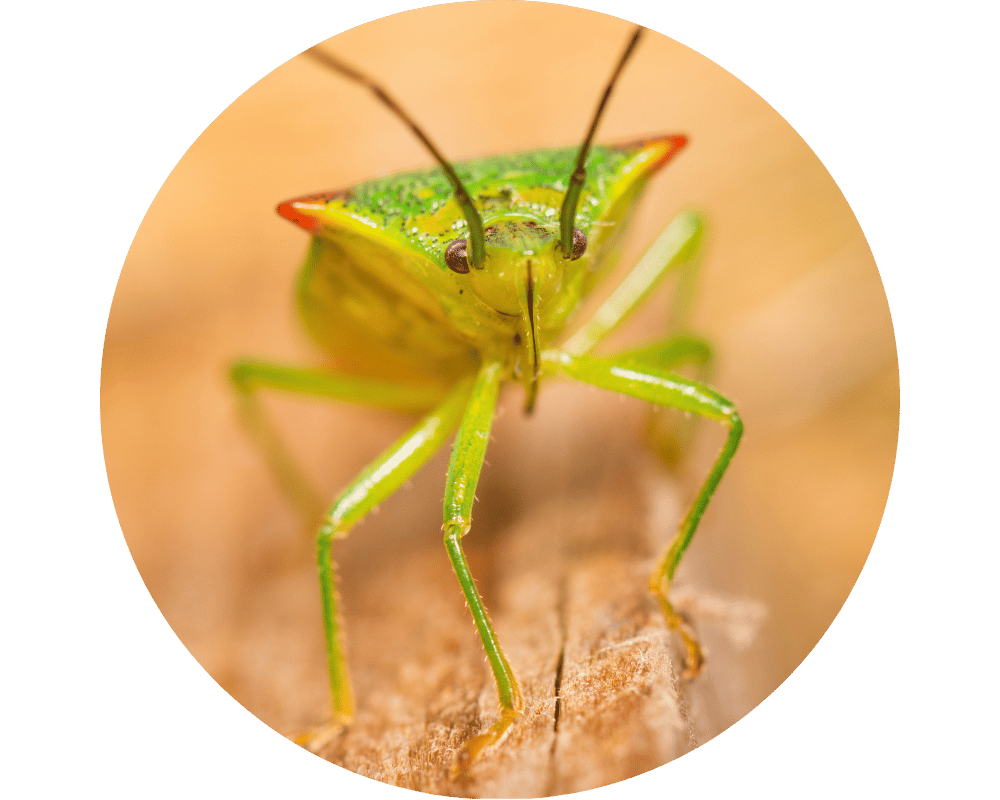
Identifying Shield Bugs
Shield bugs have wide, flat bodies with a distinct triangle-like plate that resembles a medieval shield.
Like the armored cars of the insect world, shield bug bodies are designed to protect them from predators, unfavorable elements, and other dangers. They have five-segmented antennae, partially hardened wings that fold over the back, and straw-like beaks that allow them to pierce vegetation.
Like many insects, shield bugs don’t come in a single color; instead, they embrace many hues. They’re often green (pale or bright), but they can also be various shades of brown, copper, and grey. Some are patterned, with red, orange, black, and white checkerboard or striped markings.
Stink Bugs Versus Shield Bugs
Stink bugs and shield bugs are terms sometimes used synonymously, especially in certain parts of the world. But they’re not exactly the same thing. Shield bugs belong to the superfamily Pentatmoidea, which describes bugs with shield-like bodies and a hard triangular plate on their backs. Stink bugs belong to this superfamily too; they are a type of shield bug, but not the only type.
A smelly subset, stink bugs are known for releasing strong, pungent odors when disturbed, defensive, or squished. But not all shield bugs are as obnoxiously odorous.

Shield Your Home From Shield Bugs
Shield bugs present a dual threat to your property, being a thorn in your side yard in warm weather and an unwanted houseguest in winter. Either way, we’re here to help. We offer comprehensive assessments, fast-acting solutions, and personalized treatment plans. Contact us to learn more.