
Jump To Section

Learn From The Pro's
Carpenter bees don’t eat wood, but they chew through it. Rather than using it for energy, they excavate wood to create nesting tunnels for their eggs. They’re not as damaging as termites (insects that eat wood around the clock), but repeated excavations can cause significant damage in structures. Woodpeckers worsen the damage when eating bee eggs.
Do Carpenter Bees Eat Wood?
Homeowners are protective of their investment, leaving many to wonder: Do carpenter bees eat wood? The answer: no, they prefer a nice cup of pollen to a slab of pine. However . . . just because they don’t dine on your doorways the way termites do, doesn’t mean they’re not still damaging to structures. The reason is their behavior: they might not eat wood, but they do excavate it.
Carpenter bees share part of their name with carpenter ants, a commonality that reflects the two species’ shared habit of tunneling into wooden structures (whether homes, fences, porch railings, or playground posts). Carpenter bees chew tunnels through wood for their nests; females lay eggs in these tunnels, providing safety for their young after they hatch.
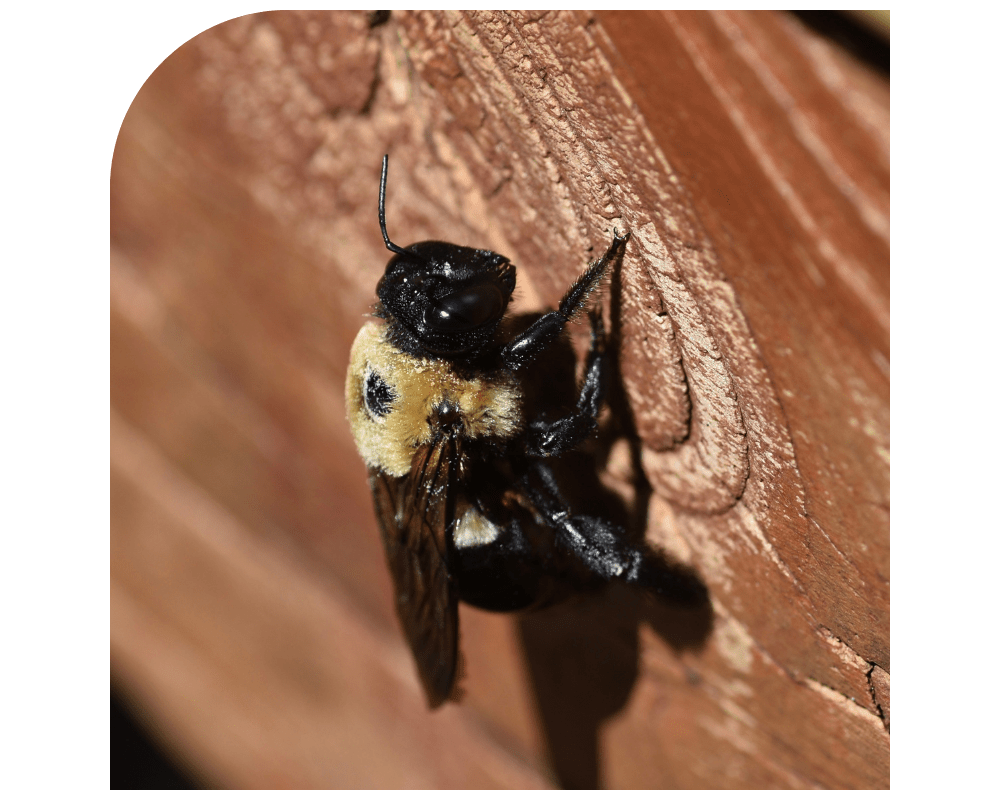
If carpenter bees return to the same tunnels year after year, costly damage to your home or structure becomes more likely. When woodpeckers frequent your yard, this ups the ante as well; these feathered fiends feed on carpenter bee larvae, often pecking into the bees’ tunnels to grab a quick bite (and destroying even more of the structure in the process).
While carpenter bees can tunnel into various types of wood, they prefer softwoods (such as cedar and redwood) because they’re easier to excavate and require less energy. Interestingly, these bees are highly geometrically gifted; the circles they create when tunneling are nearly perfect.
What Are Carpenter Bees?
Carpenter bees aren’t bees that fly around wearing tool belts. Rather, they’re large, solitary bees; unlike honeybees that live in colonies, work together, and protect their queen, carpenter bees fly solo. Female carpenter bees can sting (and painfully!), although they’re unlikely to do so unless they feel threatened, are strongly provoked, or are handled. If they do attack, they can sting more than once; their stingers are smooth, so they don’t lose them the way honeybees do.
As noted above in response to the question, Do carpenter bees eat wood?, they don’t; they excavate it instead as part of their lifecycle. Females do much of the heavy lifting, using their strong jaws to create their nesting tunnels, but males also play a role. They often guard the nests aggressively, which is technically an empty threat, since male carpenter bees can’t sting. Nonetheless, people can’t readily tell a female carpenter bee from her male counterpart, so any bee hovering around a nest likely acts as a deterrent.
Carpenter bees typically stay outdoors, nesting in eaves, railings, decks, fascia boards, outdoor furniture, and more.
Signs of a Buzzing Infestation
The biggest sign of a carpenter bee infestation is perfectly round holes in wood (especially multiple in the same area), most often about half an inch in diameter. Wood that looks more damaged year after year may be a sign of repeated bee customers visiting your property and excavating the same places. Small piles of sawdust are another indication, as they collect beneath nests when bees actively chew up and spit out wood as part of their excavation.
Other signs of a carpenter bee infestation include large bees consistently flying near wooden structures (such as fences, eaves, and porches), yellowish or brownish staining (from bee waste or pollen), buzzing noises from inside wood, and scraping sounds. Woodpeckers hovering nearby may also indicate the presence of carpenter bees.
Carpenter Bee vs Honeybee vs Wasp
So . . . do carpenter bees eat wood? You already know the answer, but their woodworking habits aren’t the only thing confusing people. For the average person, it’s difficult to tell a carpenter bee from a honeybee or wasp.
So, who’s who in the insect world?
Carpenter Bee
Honeybee
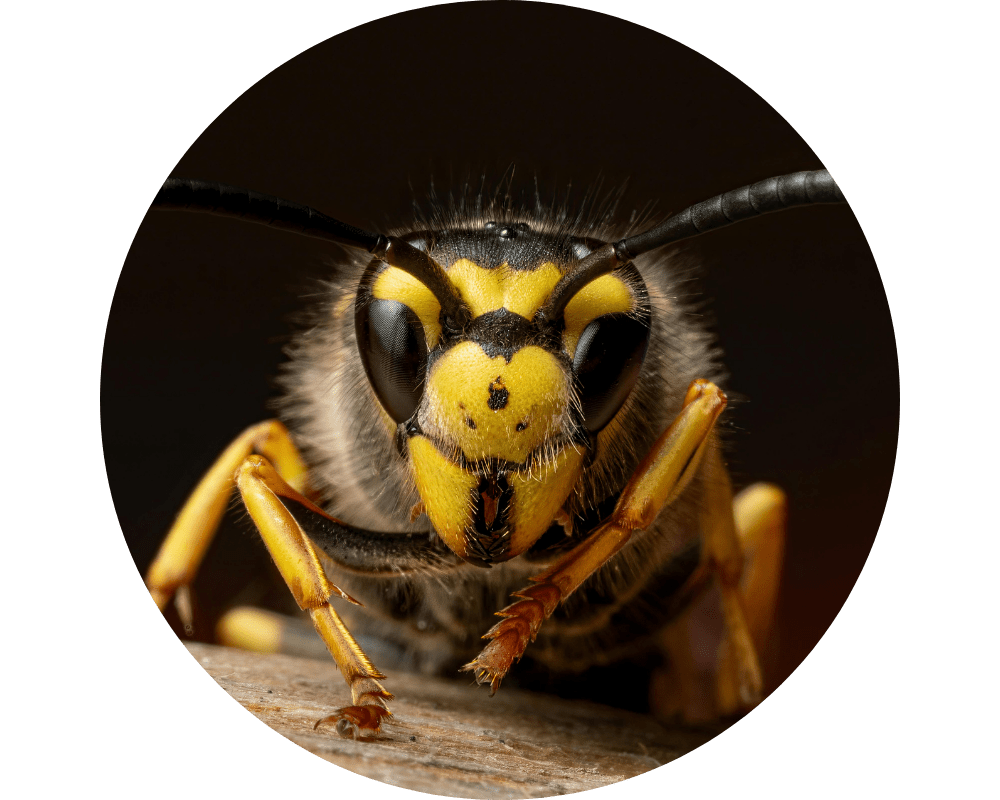
Wasp
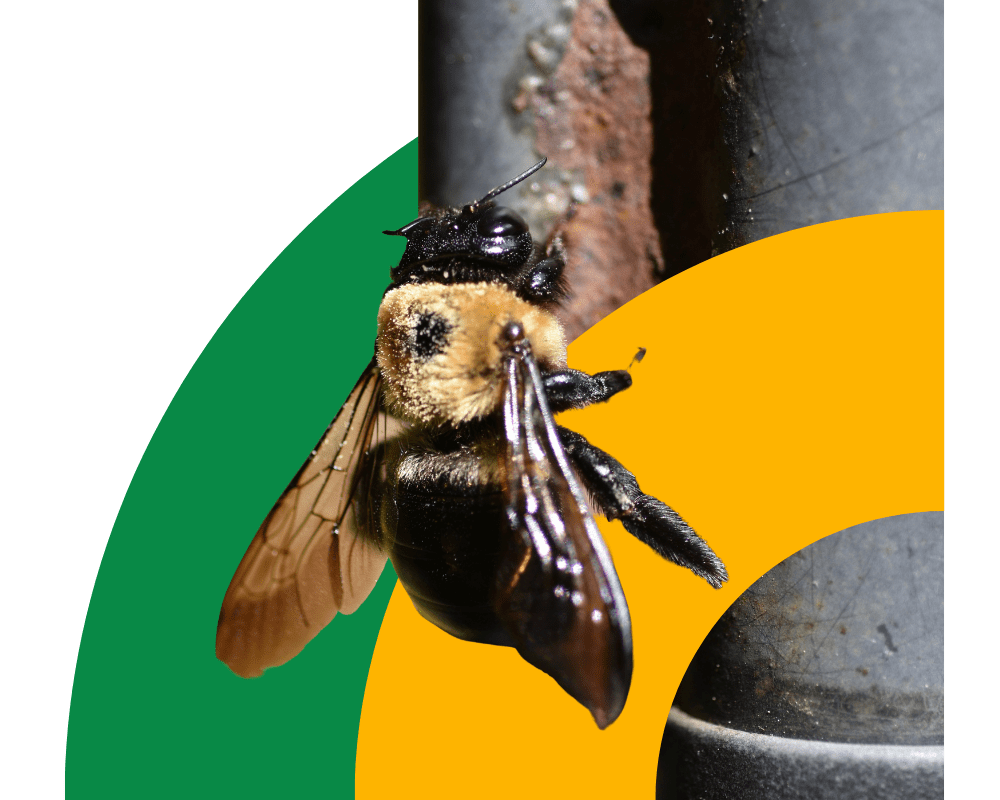
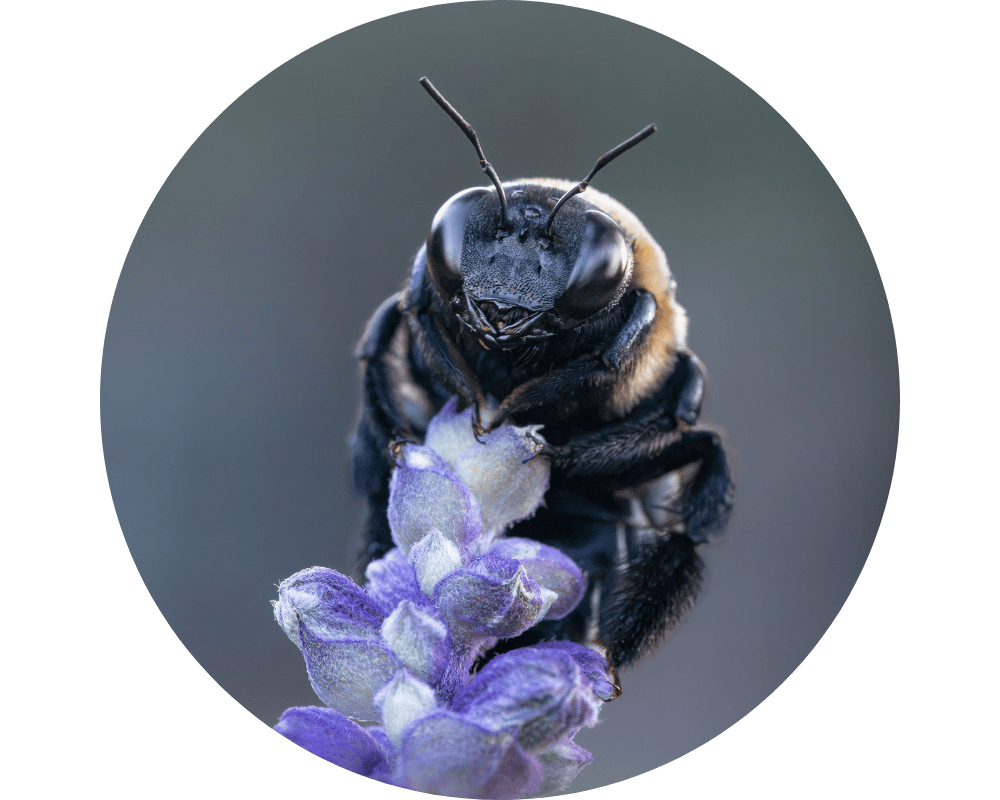
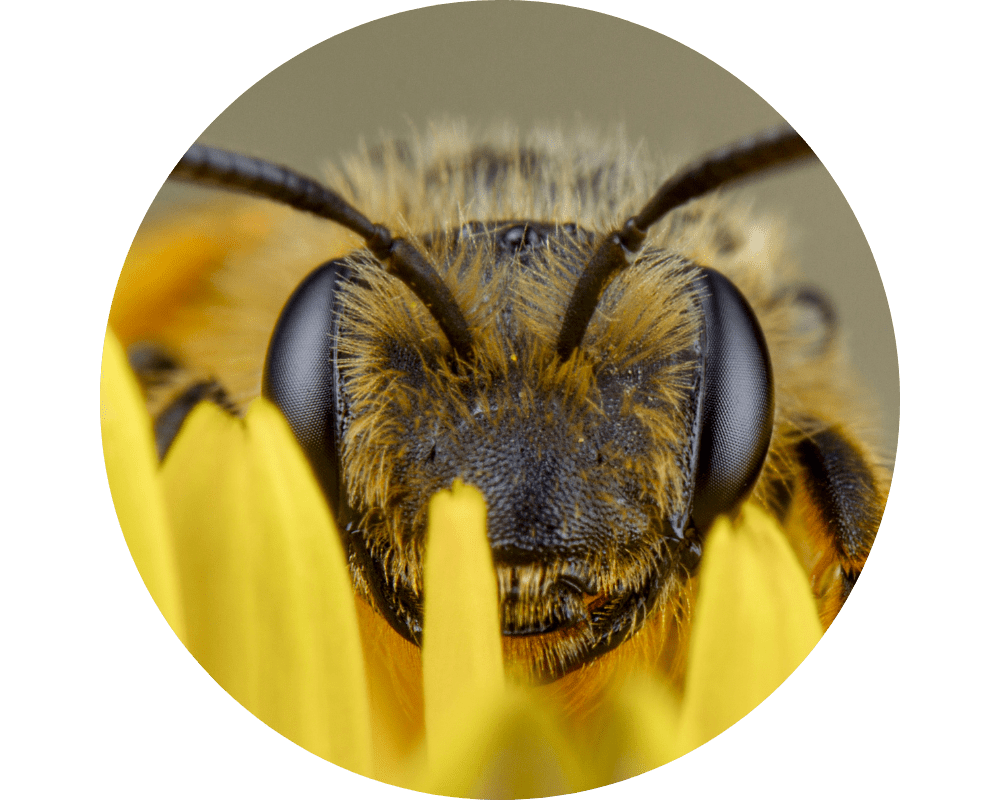
Carpenter bees are large and robust; they are mostly hairless and shiny, although they often have a fuzzy thorax. Honeybees are smaller and much fuzzier; their abdomens are usually golden-brown. Wasps are smooth, shiny, and long; their bodies appear segmented because of their narrow waists.
Carpenter bees lay their eggs in wood via perfectly round holes and excavated tunnels. Honeybees nest in wax combs, often located inside protected cavities. Wasps’ nesting behaviors depend on the species; some wasps nest in papery structures, some in mud cells, and some (like yellowjackets) underground.
Carpenter bees are solitary creatures and not very defensive; males might act aggressively, but they can’t sting. Because they retain their stingers, female carpenter bees can sting over and over (yet most are docile). Honeybees are social insects that work toward the greater good and defend their hive enthusiastically. They’re not very aggressive, however, and don’t want to sting, as doing so nearly always causes them to lose their stingers (a fatal bee injury). Wasps are the angriest of the three and the most defensive. They keep their stingers and sting more readily than other species; they may also signal threats to other wasps and sting in groups.
Carpenter bees pollinate, but their reliability is compromised because they often bore holes into the sides of flowers, accessing nectar without touching pollen. Their solitary habits also make them less efficient pollinators than colony bees. Honeybees are extensive pollinators; they’re Mother Nature’s leading pollinators and extraordinarily important to agriculture and the environment. Wasps can pollinate but don’t do so very efficiently. They mainly eat nectar for fast energy, get protein by hunting other insects, and don’t have the hairs that collect and transport large amounts of pollen.

Carpenter Bee Control Throughout New Jersey
Even though carpenter bees don’t eat wood, they destroy it just the same. If you suspect an infestation or are dealing with other New Jersey pests, we can help. We offer same-day services, comprehensive assessments, and fast-acting, innovative solutions to treat pests and keep them gone for good. Contact us today for all the details.