Jump To Section

Learn From The Pro's
Centipedes aren’t New Jersey’s most dangerous pests, but they’re not creatures you want as houseguests. Fast and predatory, they’re agile carnivores that paralyze their prey. However, they’re not usually dangerous to people. They can bite if threatened or disturbed, but serious reactions are extremely rare.
Are House Centipedes Dangerous?
Centipedes are common in New Jersey, with house centipedes being one of the most frequently spotted. These arthropods are fast-moving and predatory; they often favor damp areas like basements, crawlspaces, bathrooms, and laundry rooms (outdoors, they live under rocks and leaf litter). But are house centipedes dangerous? Or are they more of a nuisance pest?
The house centipedes found in New Jersey aren’t typically dangerous to people, although they might cause painful bites that lead to swelling, irritation, and redness. Unlike other pests (such as mice, ticks, and mosquitoes), centipedes don’t spread disease.
Allergic reactions can happen (and require emergency care when they do!); however, these aren’t nearly as common as wasp or bee allergies. Studies show that roughly 5% of the US population (1 in 20 people) are allergic to bees or wasps; centipede allergies aren’t tracked because they’re so rare.
While not dangerous to most people, centipedes are dangerous to other pests; they’re strictly carnivorous and feed on a wide variety of insects and arachnids, including silverfish, spiders, crickets, cockroaches, bedbugs, ants, moths, earwigs, and beetle larvae. They don’t eat crumbs, fabric, glue, or human food, and they like the thrill of the hunt; they chase and feast on live, moving prey.
House centipedes are mainly nocturnal, coming out at night like vampires. They use large and specialized antennae to find food, and they rely on their fast speed, quick reflexes, and venomous fangs to capture it. This makes them beneficial pest controllers, but they’re also pests themselves.
When a 100-Legger Is in Your Home
Now you know the answer to the question: “Are house centipedes dangerous?” But just because they’re essentially harmless, you probably don’t want one as your roommate. So how do you get them off your property if you find them running around the kitchen floor or in the bathroom shower?
If you find a single centipede (or a handful), you can catch it with a cup or container, slide a piece of paper or cardboard underneath, take it outside, and release it in a sheltered location. If you’re afraid of getting too close, a broom and dustpan might do the trick; just be gentle . . . centipedes are more afraid of you than you are of them.
A couple of centipedes here and there is different from an infestation. If you notice several centipedes, see different ones (with varying colors and markings), or find centipede bodies or body parts, you might have a full-blown pest problem that requires professional pest control.
We can treat infestations, assess entry points, and figure out what’s attracting centipedes to your humble adobe. Because these arthropods may enter in search of prey, their presence can indicate another pest problem (such as ants, spiders, or crickets).
Why They Enter Homes and Buildings
As mentioned above, one of the main reasons centipedes go indoors is because they see your property as a pest buffet; if you have roaches in your kitchen, beetles in your basement, or silverfish wiggling around your crawlspace, you’ll unwittingly advertise a room for rent to these leggy creatures.
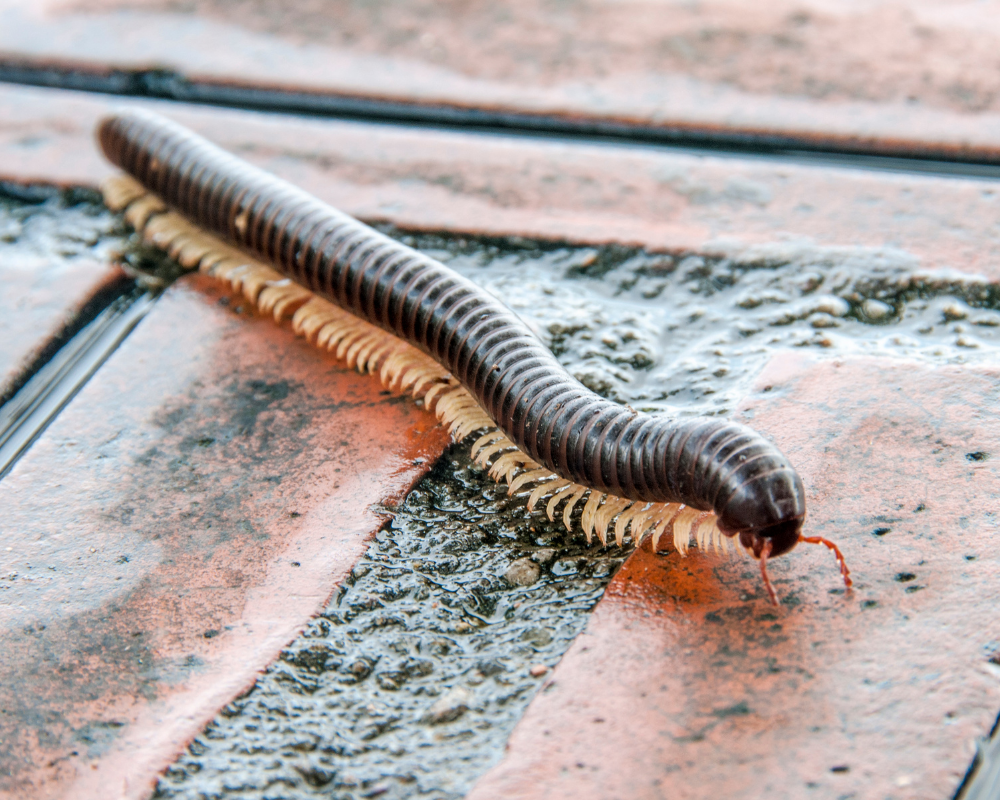
But the way to a centipede’s heart isn’t just through its stomach; centipedes are also drawn to moisture. They’re not as dampness-driven as their millipede cousins (millipedes need consistent outdoor moisture to survive, while centipedes can thrive in moist indoor conditions), but they’re still attracted to leaky faucets and humid rooms.
Centipedes, like mice, roaches, beetles, and many other pests, enjoy clutter because it provides shelter, darkness, and protection. Storage areas full of boxes, garages full of sports equipment and dusty camping gear, and basements full of abandoned toys and outgrown clothing give centipedes plenty of places to hide.
For the same reason, outdoor debris attracts them; centipedes may hide in leaf litter, mulch, firewood, gardening equipment, and recycling bins, then ditch the great outdoors for the even better indoors. If your home has entry points, including cracks, gaps, and other openings near foundations, doors, and windows, they can easily crawl in. They’re more likely to infest when outside conditions become unfavorable (too hot, too cold, or too dry).
Foot-Long Centipedes
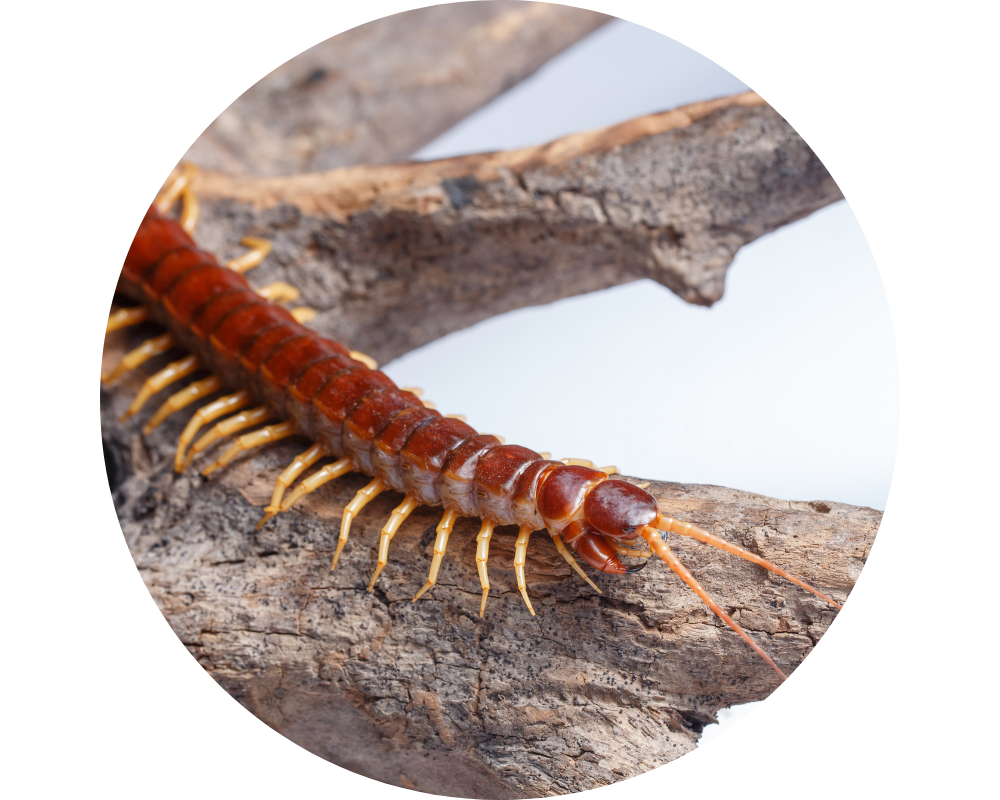
The answer to “Are house centipedes dangerous?” might be no, but what about other types? The Amazonian giant centipede (Scolopendra gigantea) can reach a foot long (or more). This species is not found in New Jersey but instead calls South America and the Caribbean home.
Unlike house centipedes that eat small pests, the Amazonian giant centipede has a more diverse palate; it preys on insects, spiders, lizards, frogs, small mammals, and, occasionally, bats.
Like other centipedes, giant ones never have 100 legs; they always have an odd number of leg pairs, so 100 legs is nearly impossible. Giant centipedes also don’t spread disease to people.
Their giant size makes their bites extremely painful but normally not deadly; giant centipede-related fatalities are documented, but exceedingly rare and, even then, it’s difficult to rule out an allergic reaction as a contributing or main factor.
They might defend themselves or react to threats, yet they’re not aggressive to people. Their size alone makes them scary, regardless, as most of us are averse to the idea of sharing space with a foot-long pest of any kind.
We Stay a Step Ahead
At Kapture, we stay a step ahead of centipede (and other pest) infestations with custom solutions, innovative methods, and family-safe treatments to remove pests, seal off entryways, and keep critters and creatures from returning for an encore. We offer same-day service, preventative maintenance, and an industry-unique double-money-back guarantee.