
Jump To Section

Learn From The Pros
There are many different types of beetles that can be confused with ladybugs and ladybug larvae. It’s important to be able to tell the difference between native ladybugs and the invasive species which plague New Jersey and the rest of the United States. Learn how to recognize their coloring differences and call us if you are worried an infestation could be plaguing your home.
About Ladybugs and Ladybug Larvae
As a Garden State resident, you’re probably familiar with the various insects that plague the area. Not all bugs are bad. Some of them such as ladybugs eat harmful bugs and can greatly benefit your lawn and garden. However, there are imposter insects that look like our ladybug friends who often trick people into thinking they are a safe addition to cultivated green spaces. Knowing how to recognize all stages of a ladybug from the egg stage to ladybug larvae to adult can go a long way in protecting your hard work.
Meet the Native Lady Beetles
Images of bespeckled ladybugs have graced literature, art, and jewelry for centuries. Ladybugs are small beetles belonging to the coleoptera order and in the coccinellidae family. They also have characteristics like two sets of wings that make them true bugs.
Entomologists say ladybugs may have been on the earth before dinosaurs appeared. They live in places all around the globe, except in extreme deserts and arctic climates. Since they often feed on smaller insects like aphids, ladybugs migrate to wherever the food is plentiful—often your very own garden.
There are approximately 5,000 ladybug species worldwide, with at least 450 native to North America. Scientists further estimate that 400 of them call the United States home.

Physical Characteristics
Ladybugs are readily identified by their oval-shaped bodies with black spots. Although your mind may first picture the classic red ladybug, their colors often vary by species. Some may be orange, yellow, pink, or even gray.
Their size may range from 1 mm (about 0.04 in) to slightly over 10 mm (about 0.39 in.) You’ll also recognize the iconic black dots on their bodies. However, some species have red or white markings or sometimes bold stripes. If you can see close enough to count them, you may find that some ladybugs can have as many as 13 spots on their wings’ upper section.
As true bugs, ladybugs have a double set of wings, so they can fly wherever they need. It’s no wonder why many Europeans call these insect aviators ladybirds. Researchers estimate that some ladybugs can fly up to 74 miles in a single flight.
Life Cycle
During the warmer months, male and female ladybugs may mate several times, and females can lay up to 1,000 eggs in one season.
The mother ladybug will lay a cluster of five to 30 tiny yellow eggs on the underside of leaves. They instinctively deposit eggs with plenty of aphids for the ladybug larvae to eat.
Ladybug Larvae
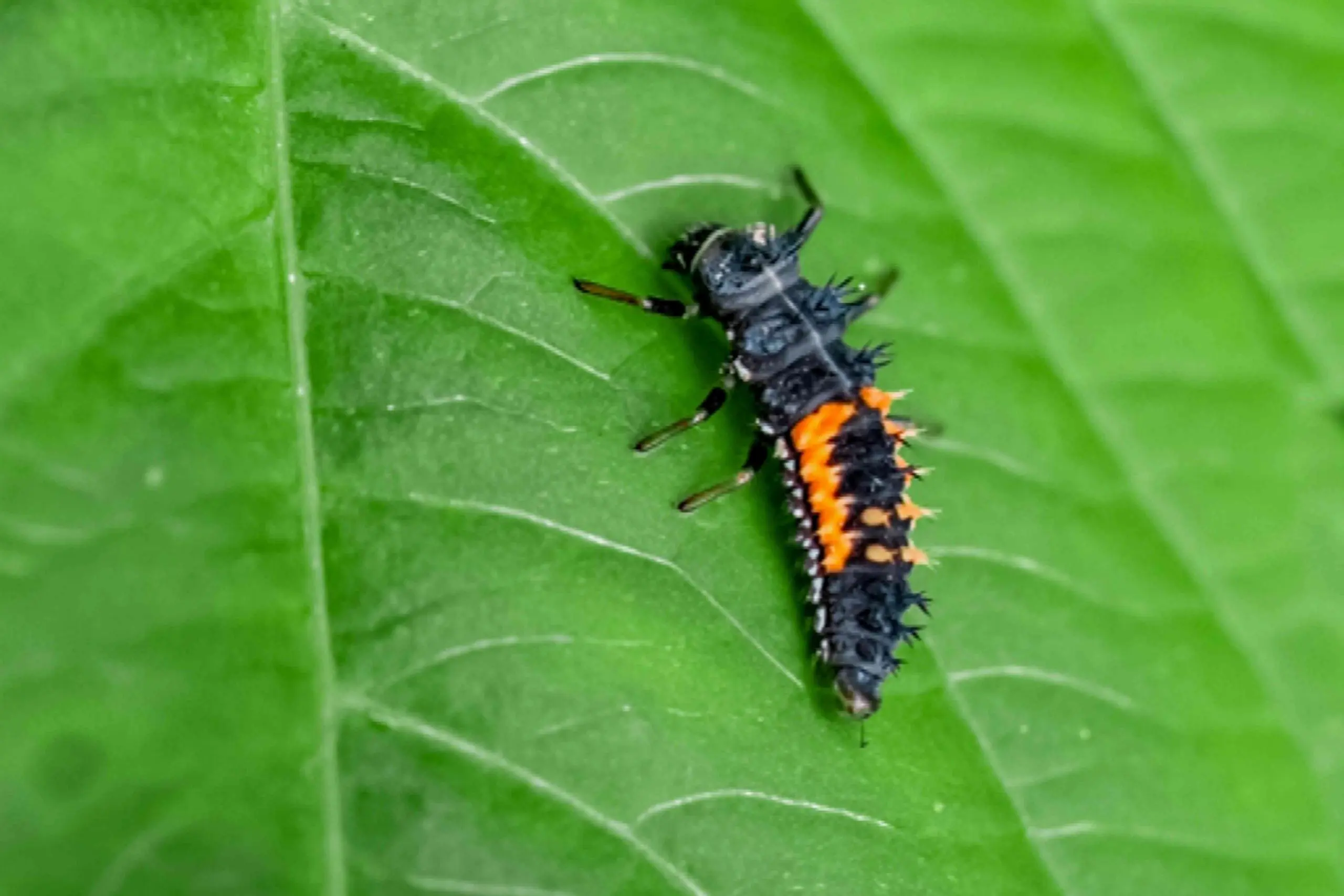
Depending on the outside temperature, it takes approximately two to ten days for the ladybug eggs to hatch into larvae. The bitsy larvae are black with bright spots on their bumpy bodies. Any infertile eggs that didn’t hatch will become a quick snack for the newly emerged nymphs.
Just because they are minuscule doesn’t mean their appetite is just as small. During the next two weeks, ladybug larvae feed insatiably. Their favorite prey is aphids and other garden pests like mites, adelgids, and scale insects. A single larva can devour 400 aphids before its next life stage.
As the larvae gorge on pests, they grow too big for their hard exoskeleton, so they molt into a bigger one. They will usually molt four times before they enter their pupal stage. The larvae attach to leaves or stems and pupate for up to 14 days then emerge as adult ladybugs.
These new adults have soft exoskeletons and are usually pale yellow. Soon, their exoskeletons will harden, and their body color will fully develop into a vibrant red or another hue. They fly around eating garden pests, mate during spring and summer, and live for about a year.
Habitat
One of the reasons that ladybugs have thrived for thousands of years is their versatility. They can live happily in many environments with plenty of vegetation and soft-bodied insect prey. You can find these helpful bugs in the woods, suburbs, or even big cities in New Jersey. When colder weather moves in, ladybugs will go into diapause. UNLESS they find respite in your warm and comfy house. In that case, they can stay active throughout the year.
What Do Ladybugs and Ladybug Larvae Eat?
Fortunately, helpful ladybug species aren’t picky about their food. They are constantly munching on pests and harmful molds. A typical menu for them includes the following:
- Aphids, mealybugs, scale insects, mites, and other soft-bodied pests
- Nectar from flowers, honeydew, and morning dew drops
- Harmful plant fungal and mold growths
Ladybug larvae will eat aphids (their primary source of food), mealybugs, scale insects, whiteflies, mites, and other soft-bodied pests. They find their food through scent and movement detection and use signs like honeydew from aphids to locate their prey. Once they find their prey, they pierce it with their mandibles. Then they suck out the fluids and soft tissue leaving behind the exoskeleton.
Which Species are Pests?
Not all ladybug species in the Garden State are the typical cute red bugs with black polka dots. These are the gardener’s friends, and if they come inside your home, it’s by accident. On the other hand, some species are pests and notorious for house infestation.
Native Vs. Invasive
As you travel throughout New Jersey and the rest of the United States, many of the ladybugs you’ll see are native. Unfortunately, profound consequences often result when humans mess with the ecological balance. In 1918, American researchers purposely imported a ladybug species from Asia to control the aphid population.
Gradually, this species overpopulated the U.S. and was declared a nuisance in 1988. They’ve also been an ongoing threat to native species. Unlike their American cousins, harlequin/Asian ladybugs have been infesting homes and other human spaces since their arrival.
Asian lady beetle larvae eat similar things to ladybug larvae but will also eat insect eggs and other small larvae, including their own.
Color Identification
The color and markings of the ladybugs depend on the species, region, and diet. They use their colors as camouflage and a way to ward off predators.
These are some color distinctions of various species and what they mean:
- Red: Many native and beneficial ladybugs have the iconic red color with black dots. Their scarlet hue may be a turnoff to predators, but the color usually reads “beneficial” to people.
- Orange: Harlequin/Asian ladybugs are commonly orange with black markings. Their musk carries the most risk for allergic reactions.
- Brown: If you see a brown ladybug, it’s probably a larch variety. The brown hue expertly camouflages them in the brush. They carry the least allergen risks.
- Black: Pine ladybugs are black with small red dots, and they are a high risk for allergic reactions.
Some other small beetles are easily mistaken for ladybugs and usually have the same lifecycle and habitat. Those ladybug twins include the scarlet lily beetle, the Colorado potato beetle and the cleridae beetle.
Solitary vs. Swarming
Most beneficial ladybug species prefer to hunt and fly alone. However, you can sometimes see ladybugs swarm during mating season. Conversely, invasive species like the harlequin/Asian ladybug travel and infest yards and homes in massive swarms.

What Should You Do for a Ladybug Infestation?
Sometimes, these polka-dotted bugs get into your home no matter what preventatives you try. If an invasive species infests your home in spring and summer, it will overwinter and be a more significant issue the following year.
Consider trying these methods to get rid of them:
- Crushing invading ladybugs inside isn’t a great idea. They’ll produce smelly musk as they die, which could become an allergen to you and your family. It can make you itch, sneeze, or break out into hives.
- Instead, use a hose attachment and quickly suck them up into your vacuum. Empty the debris canister into a bucket of warm soapy water. It will kill the bugs, and you won’t deal with the bad smell.
- Consider purchasing inexpensive light traps from a home improvement store or online. The light attracts the invasive ladybugs into the web, and you can dispose of them outside in a water bucket. These lights are effective in any season.
- Sprinkle diatomaceous earth around the perimeters of your house, along window seals and thresholds. The gritty silicon in DE is harmless to people and animals, but it destroys the ladybugs’ exoskeleton and kills them. DE is cheap and can be found at most lawn and garden stores or online.
When is it Time to Call the Professionals?
Little red ladybugs in gardens and storybooks may be cute, but some species can cause extensive home infestations. They can make your house stink and stain walls and upholsteries. Plus, their smelly musk can lead to severe allergic reactions in you, your family, and your pets.
If you’ve had it with invasive ladybugs in your New Jersey home, it’s time to call Kapture. Our experienced and professional technicians know how to recognize invasive ladybugs and ladybug larvae. We will eliminate these pests and keep them from returning. You can enjoy quality time with family and friends at home without unwelcome beetles joining the festivities.
